
About Edmonia Lewis
Lived 1844 – 1907 (aged 63). Edmonia Lewis was an American sculptor and artist.
Mary Edmonia Lewis, also known as "Wildfire" (c. July 4, 1844 – September 17, 1907), was an American sculptor. Born in Upstate New York of mixed African-American and Native American (Mississauga Ojibwe) heritage, she moved to Rome, Italy in 1866, where she spent most of her career.
She was the first African-American and Native American sculptor to achieve national and then international prominence. She began to gain prominence in the United States during the Civil War; at the end of the 19th century, she remained the only Black woman artist who had participated in and been recognized to any extent by the American artistic mainstream.
Her work is known for incorporating themes relating to Black people and indigenous peoples of the Americas into Neoclassical-style sculpture.
Life and career Early life
According to the American National Biography, reliable information about her early life is limited, and Lewis "was often inconsistent in interviews even with basic facts about her origins, preferring to present herself as the exotic product of a childhood spent roaming the forests with her mother's people." On official documents she variously gave 1842, 1844, and 1854 as her birth year. She was born near Albany, New York.
Her mother, Catherine Mike Lewis, was African-Native American, of Mississauga Ojibwe and African-American descent. She was an excellent weaver and craftswoman. Two different African-American men are mentioned in different sources as her father. The first is Samuel Lewis, Other sources say her father was the writer on African Americans Robert Benjamin Lewis. Her half-brother Samuel, who is treated at some length in a history of Montana, said that their father was "a West Indian Frenchman" and his mother "part African and partly a descendant of the educated Narragansett Indians of New York state". (The Narragansett people are originally from Rhode Island.)
By the time Lewis reached the age of nine, both her parents had died; Catherine Lewis died in 1847 and Robert Benjamin Lewis in 1853. Her two maternal aunts adopted her and her older half-brother Samuel. There Lewis met many of the leading activists who would become her mentors, patrons, and possible subjects for her work as her career developed. In a later interview, Lewis explained her early departure from the school:
However, her academic record at Central College (1856–fall 1858) shows that her grades, "conduct", and attendance were all exemplary. Her classes included Latin, French, grammar, arithmetic, drawing, composition, and declamation.
Education In 1859, when Edmonia Lewis was about 15 years old, her brother Samuel, who had made a fortune in the California gold rush, before entering Oberlin Collegiate Institute (since 1866, Oberlin College), one of the first institutions of higher-learning in the U.S. to admit women and Black people. The Ladies' Department was designed "to give Young Ladies facilities for the thorough mental discipline, and the special training which will qualify them for teaching and other duties of their sphere." She changed her name to Mary Edmonia Lewis and began to study art. At Oberlin, with a student population of one thousand, Lewis was one of only 30 students of color. Lewis boarded with Reverend John Keep and his wife from 1859 until she was forced from the college in 1863.
Mary said later that she was subject to daily racism and discrimination. She and other female students, were rarely given the opportunity to participate in the classroom or speak at public meetings.
During the winter of 1862, several months after the start of the US Civil War, an incident occurred between Lewis and two of her roommates and fellow Oberlin classmates, Maria Miles and Christina Ennes. Miles and Ennes planned to go sleigh riding with some young men later that day. Before they left, Lewis served the two girls a drink of spiced wine. Shortly after, several miles into the sleigh ride, Miles and Ennes fell severely ill with intense stomach pains. Doctors examined them and concluded that the two girls had been poisoned (reportedly with cantharides also known as "Spanish Fly", a reputed aphrodisiac) and claimed they were likely to die. However days later, it became apparent that the two women would recover and authorities initially took no action. A few days after the attack, local authorities arrested Lewis, charging her with the poisoning. However, she had been so badly injured in the attack, she could not even walk, and the trial was postponed. Her attackers were never identified.
Oberlin College awarded her a degree posthumously in 2022.
Career in Boston
After college, Lewis moved to Boston, the center of the abolitionist movement, in early 1864, where she began to pursue her career as a sculptor. It was on her first trip to Boston, according to stories she would later tell, that she encountered a statue of Benjamin Franklin, not knowing what it was or what to call it, but concluding she could make a "stone man" herself.
Reverend Keep wrote a letter of introduction on Lewis's behalf to abolitionist William Lloyd Garrison in Boston, as did Henry Highland Garnet. Finding an instructor, however, was not easy for her. Three male sculptors refused to instruct her before she was introduced to the moderately successful sculptor, Edward Augustus Brackett (1818–1908), who specialized in marble portrait busts. His clients were some of the most important abolitionists of the day, including Henry Wadsworth Longfellow, William Lloyd Garrison, Charles Sumner, and John Brown. Anne Whitney, a fellow sculptor and friend of Lewis', wrote in an 1864 letter to her sister that Lewis's relationship with her instructor did not end amicably, but did not disclose the reason.
Her subjects in 1863 and 1864 included some of the most famous abolitionists of her day, including John Brown and Union Colonel Robert Gould Shaw. Lewis then made plaster-cast reproductions of the bust and sold one hundred of these copies at $15 apiece. It was her most famous work at the time; Anna Quincy Waterston, a poet, then wrote a poem about Lewis and Shaw.
Between 1864 to 1871, Lewis was written about or interviewed by Lydia Maria Child, Elizabeth Peabody, Anna Quincy Waterston, and Laura Curtis Bullard, all important women in Boston and New York abolitionist circles. Lewis was aware of her reception in Boston. She was not opposed to the coverage she received in the abolitionist press, and she was not known to turn down financial assistance, but she could not tolerate false praise. She knew that some did not really appreciate her art, but used her as an opportunity to demonstrate their support for human rights.
Early works that proved highly popular included her medallion portraits of the abolitionists John Brown, described as "her hero",
Career in Rome While in Rome, Lewis adopted the neoclassical style of sculpture, as seen in Bust of Dr. Dio Lewis (1868).
The success and popularity of the works she created in Boston, particularly the reproductions of her bust of Shaw, allowed Lewis to finance a trip to Rome in 1866. On her 1865 passport is written, "M. Edmonia Lewis is a Black girl sent by subscription to Italy having displayed great talents as a sculptor". The established sculptor Hiram Powers gave her space to work in his studio. She entered a circle of expatriate artists and established her own space within the former studio of 18th-century Italian sculptor Antonio Canova, just off the Piazza Barberini.
Lewis spent most of her adult career in Rome, where Italy's less pronounced racism allowed a black artist increased opportunity. There Lewis enjoyed more social, spiritual, and artistic freedom than she had had in the United States. She was Catholic and Rome allowed her both spiritual and physical closeness to her faith. In America, Lewis would have had to continue relying on abolitionist patronage; but Italy allowed her to make her own in the international art world. The surroundings of the classical world greatly inspired her and influenced her work, in which she recreated the classical art style—such as presenting people in her sculptures draped in robes rather than in contemporary clothing.
Lewis was unique in the way she approached sculpting abroad. She insisted on enlarging her clay and wax models in marble herself, rather than hire native Italian sculptors to do it for her – the common practice at the time. Male sculptors were largely skeptical of the talent of female sculptors, and often accused them of not doing their own work. Harriet Hosmer, a fellow sculptor and expatriate, also did this. Lewis also made sculptures before receiving commissions for them or sent unsolicited works to Boston patrons requesting that they raise funds for materials and shipping. Lewis had many major exhibitions during her rise to fame, including one in Chicago, Illinois, in 1870, and another in Rome in 1871. A major coup in her career was participating in the 1876 Centennial Exposition in Philadelphia. For this, she created a monumental 3,015-pound marble sculpture, The Death of Cleopatra, portraying the queen in the throes of death, which was her largest and most significant sculpture.
A testament to Lewis's renown as an artist came in 1877, when former U.S. President Ulysses S. Grant commissioned her to do his portrait. He sat for her as a model and was pleased with the finished piece. She also contributed a bust of Massachusetts abolitionist Senator Charles Sumner to the 1895 Atlanta Exposition.
In the late 1880s, neoclassicism declined in popularity, as did the popularity of Lewis's artwork. She continued sculpting in marble, increasingly creating altarpieces and other works for Catholic patrons. A bust of Christ, created in her Rome studio in 1870, was rediscovered in Scotland in 2015.
The events of her later years are not known. According to her death certificate, the cause of her death was chronic kidney failure (Bright's disease).
For many years after her death, the location of Lewis' grave was unknown. There were once theories that Lewis died in Rome in 1907 or, alternatively, that she had died in Marin County, California, and was buried in an unmarked grave in San Francisco. The work was done by the E M Lander Co. in London.
Reception As a black artist, Edmonia Lewis had to be conscious of her stylistic choices, as her largely white audience often gravely misread her work as self-portraiture. In order to avoid this, her female figures typically possess European features.
In her 2007 work, Charmaine Nelson wrote of Lewis:
After being placed in storage, the statue was moved to the 1878 Chicago Interstate Exposition. It was later acquired by a gambler by the name of "Blind John" Condon, who purchased it from a saloon on Clark Street to mark the grave of a racehorse named "Cleopatra", which was located in the Chicago suburb of Forest Park. It remained for nearly a century. The sculpture was moved to a construction storage yard in Cicero, Illinois. Through their advocacy the sculpture was donated by the Forest Park Historical Society to the Smithsonian American Art Museum in 1994. Written about in Olio, which is a book of poetry written by Tyehimba Jess that was released in 2016. That book won the 2017 Pulitzer Prize for Poetry. Honored with a Google Doodle on February 1, 2017. Stone Mirrors: The Sculpture and Silence of Edmonia Lewis, by Jeannine Atkins (2017), is a juvenile biographical novel in verse. A belated obituary was published in The New York Times in 2018 as part of their Overlooked series. Lewis is the subject of a stage play entitled Edmonia by Barry M. Putt Jr., presented by Beacon Theatre Productions in Philadelphia, PA in 2021. "Edmonia" stage play. Lewis had a U.S. postal stamp unveiled in her honor on January 26, 2022.
List of major works
John Brown medallions, 1864–65 Colonel Robert Gould Shaw (plaster), 1864 Anne Quincy Waterston, 1866 A Freed Woman and Her Child, 1866 The Old Arrow-Maker and His Daughter, 1866 The Marriage of Hiawatha, 1866–67 Forever Free, 1867 Colonel Robert Gould Shaw (marble), 1867–68 Hagar in the Wilderness, 1868 Madonna Holding the Christ Child, 1869 Henry Wadsworth Longfellow, 1869–71 Bust of Abraham Lincoln, 187022, Asleep, 1872 Awake, 1872 Poor Cupid, 1873 Moses, 1873 Bust of James Peck Thomas, 1874, collection of the Allen Memorial Art Museum, her only known portrait of a freed slave Hygieia, 1874 Hagar, 1875 The Death of Cleopatra, marble, 1876, collection of Smithsonian American Art Museum John Brown, 1876, Rome, plaster bust Henry Wadsworth Longfellow, 1876, Rome, plaster bust General Ulysses S. Grant, 1877–78 Veiled Bride of Spring, 1878 John Brown, 1878–79 The Adoration of the Magi, 1883 Charles Sumner, 1895
Gallery
Posthumous exhibitions Art of the American Negro Exhibition, American Negro Exposition, Chicago, Illinois, 1940. Howard University, Washington, D.C., 1967. "The White, Marmorean Flock": Nineteenth-Century Women Neoclassical Sculptors," Vassar College, New York, 1972. Michael Rosenfeld Gallery, New York, 2008. Edmonia Lewis and Henry Wadsworth Longfellow: Images and Identities at the Fogg Art Museum, Cambridge, Massachusetts, February 18 –May 3, 1995. Smithsonian American Art Museum, Washington, D.C., June 7, 1996 – April 14, 1997. Wildfire Test Pit, Allen Memorial Art Museum, Oberlin College, Oberlin, Ohio, August 30, 2016 – June 12, 2017. Hearts of Our People: Native Women Artists, (2019), Minneapolis Institute of Art, Minneapolis, Minnesota, United States. Edmonia Lewis's Bust of Christ, Mount Stuart, UK Edmonia Lewis: Said in Stone, Peabody Essex Museum, Salem, Massachusetts, February 14 – June 7, 2026, Georgia Museum of Art, Athens, Georgia, August 8, 2026 – January 3, 2027, and North Carolina Museum of Art, Raleigh, North Carolina, April 3 – July 11, 2027.
Don’t just read it —
keep it.
Full-length biographies made to live with: read them, listen on the way to work, watch them tonight.
- E-book
- Audio
- Video
Instant download · yours to keep · every purchase keeps this site free
Important facts
People in Edmonia Lewis's life
Named in this biography and alive at the same time

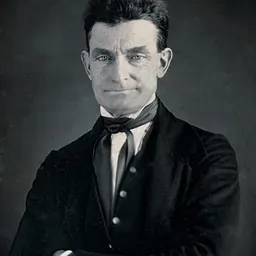



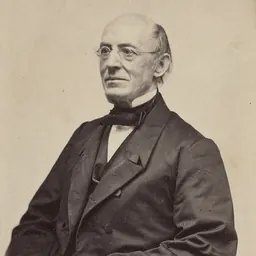
Related people
Same field, nearest in time



Contemporaries
People whose lives overlapped Edmonia Lewis's
Frequently asked questions
Who was Edmonia Lewis?
African American sculptor (1844–1907)
When was Edmonia Lewis born?
Edmonia Lewis was born on 4 July 1844 in Rensselaer County, Greenbush.
When did Edmonia Lewis die?
Edmonia Lewis died on 17 September 1907 in London, Hammersmith.
What was Edmonia Lewis's occupation?
Edmonia Lewis was a sculptor and artist.
What nationality was Edmonia Lewis?
Edmonia Lewis was American.
Sources & further reading
Cite this page
APA: Biography.guide. (2026). Edmonia Lewis. https://biography.guide/edmonia-lewis/
MLA: "Edmonia Lewis." Biography.guide, https://biography.guide/edmonia-lewis/.
Chicago: "Edmonia Lewis." Biography.guide. https://biography.guide/edmonia-lewis/.
Data last updated: 2026-09-20 · Spot an error? Report a correction.
Page generated 2026-09-27 05:27 UTC