
About Edmond Tulasne
Lived 1815 – 1885 (aged 70). Edmond Tulasne was a French botanist and mycologist.
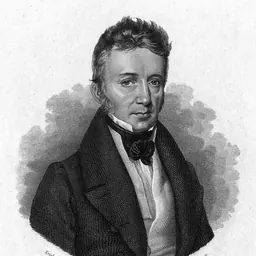
Louis René Étienne Tulasne, a.k.a. Edmond Tulasne (12 September 1815 – 22 December 1885) was a French botanist and mycologist born in Azay-le-Rideau.
He originally studied law at Poitiers, but his interest later turned to botany. As a young man he assisted botanist Auguste de Saint-Hilaire (1779–1853) with studies of Brazilian flora. From 1842 until 1872 he worked as a naturalist at the Muséum national d'histoire naturelle in Paris. In 1854 he succeeded Adrien-Henri de Jussieu (1797–1853) as a member of the Académie des sciences. He died in Hyères on 22 December 1885, age 70.
Tulasne's specialized study was the science of mycology. His microscopic investigation of fungi, particularly parasitic species, contributed much to the understanding on the complexities of their nature and development. He is credited with introducing the concept of "pleomorphy" in regard to fungi. Pleomorphy states that an individual fungus, growing in different substrates can have dramatically different forms. In 1853 he introduced his views on the reproduction cycle of Claviceps purpurea (ergot). Around this time he also developed an interest in lichens, and in 1852 Tulasne published an anatomical and morphological study of this group. It was in this work he introduced the term to describe the asexual fruiting body found in many species of fungi.
A number of mycological species, as well as the genera Tulasneinia and Tulasnella (family Tulasnellaceae) are named after him. He is credited with providing classification taxa for the following genera: Crucibulum, Glomus, Sebacina, Terfezia, Tilletia and Hypomyces (the latter genus with Elias Magnus Fries). in which he included what are now the Lauralean families Siparunaceae and Atherospermataceae.
Tulasne published over 50 scientific articles during his career. Some of his best work was done in collaboration with his brother, Charles Tulasne (1816–1884), such as "Fungi hypogaei" (1851) and the three-volume "Selecta fungorum carpologia" (1861–65). The latter work is known for its superb detailed illustrations, being created by Charles Tulasne.
Many of his works were published under the Latinized name "Ludovicus-Renatus".
Don’t just read it —
keep it.
Full-length biographies made to live with: read them, listen on the way to work, watch them tonight.
- E-book
- Audio
- Video
Instant download · yours to keep · every purchase keeps this site free
Important facts
People in Edmond Tulasne's life
Named in this biography and alive at the same time


Related people
Same field, nearest in time



Contemporaries
People whose lives overlapped Edmond Tulasne's



Frequently asked questions
Who was Edmond Tulasne?
French mycologist (1815-1885)
When was Edmond Tulasne born?
Edmond Tulasne was born on 12 September 1815 in Azay-le-Rideau.
When did Edmond Tulasne die?
Edmond Tulasne died on 22 December 1885 in Hyères.
What was Edmond Tulasne's occupation?
Edmond Tulasne was a botanist and mycologist.
What nationality was Edmond Tulasne?
Edmond Tulasne was French.
Sources & further reading
Cite this page
APA: Biography.guide. (2026). Edmond Tulasne. https://biography.guide/edmond-tulasne/
MLA: "Edmond Tulasne." Biography.guide, https://biography.guide/edmond-tulasne/.
Chicago: "Edmond Tulasne." Biography.guide. https://biography.guide/edmond-tulasne/.
Data last updated: 2026-09-20 · Spot an error? Report a correction.
Page generated 2026-09-27 05:28 UTC