
About Edmond Pourchot
Lived 1651 – 1734 (aged 82–83). Edmond Pourchot was a French philosopher, physicist and hebraist.
Edmond Pourchot (1651, Poilly – 1734, Paris) was a university professor noted for his controversial advocacy of Cartesianism (and the Cartesian theory of mechanics) in place of Aristotelianism. The change within the University of Paris from Aristotelianism to Cartesianism during the 1690s was important in the history of the development of natural philosophy in France and continental Europe.
Pourchot was named Professor of Philosophy in 1677, and he was a long-standing vice-chancellor/rector of the University of Paris, where he taught for 26 years. He authored a popular multi-volume Latin text entitled Institutiones philosophicae ad faciliorem veterum, ac recentiorum philosophorum lectionem comparatae (Paris, 1695; Paris, 1700; Lyon, 1711; Venice, 1715; Lyon, 1716–1717; Venice, 1730 [standard edition]; Paris & Lyon & Padua, 1733; Padua, 1751; Venice, 1755). This text was well regarded among other French intellectuals, and gained followers for Cartesianism in many other countries including Turkey and Poland. He was also a scholar of the Hebrew language. The Latin form of his name was Edmundus Purchotius (Edmundi Purchotii).
Volume 1 - Logic and metaphysics Volume 2 - Geometry and general physics (including optics, hydrodynamics, simple machines, thermodynamics, and dynamics featuring projectiles, pendulums, etc.) Volume 3 - Cosmology (heliocentric and geocentric), botany, zoology, human anatomy, meteorology, astronomy, magnetism, metallurgy, and geography including a world map showing Terra Australis, the Prime Meridian passing through El Hierro, and the Island of California (Table 24) including a presentation of heliocentric Cartesian ethereal vortices in/around the Solar System (Table 20)... this theory was supported by many notable scientists (for example Christiaan Huygens and Johann Bernoulli) prior to being supplanted by Newtonian mechanics (published 1686) including an armillary sphere showing the plane of the ecliptic on the celestial sphere (Table 16) including an illustration of magnetic field lines which were not fully understood for another 150 years until Faraday and Maxwell (Table 26) Volume 4 - Ethics Volume 5 - Philosophy (including metaphysics and ontology)
Plates (Tables 16, 20, 24, 26) from Institutiones Philosophicae (Pourchot, 1717)
Don’t just read it —
keep it.
Full-length biographies made to live with: read them, listen on the way to work, watch them tonight.
- E-book
- Audio
- Video
Instant download · yours to keep · every purchase keeps this site free
Important facts
People in Edmond Pourchot's life
Named in this biography and alive at the same time
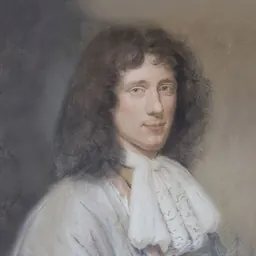

Related people
Same field, nearest in time


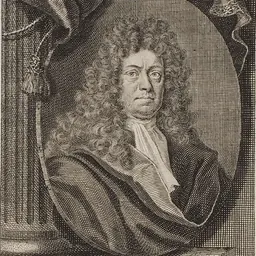

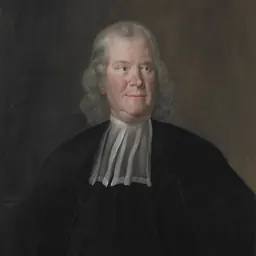

Contemporaries
People whose lives overlapped Edmond Pourchot's





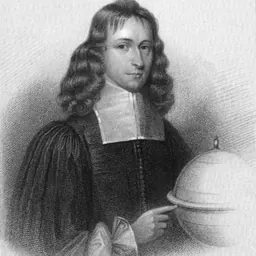
Frequently asked questions
Who was Edmond Pourchot?
French physicist
When was Edmond Pourchot born?
Edmond Pourchot was born in 1651 in Poilly-sur-Tholon.
When did Edmond Pourchot die?
Edmond Pourchot died on 22 June 1734 in Paris.
What was Edmond Pourchot's occupation?
Edmond Pourchot was a philosopher, physicist and hebraist.
What nationality was Edmond Pourchot?
Edmond Pourchot was French.
Sources & further reading
Cite this page
APA: Biography.guide. (2026). Edmond Pourchot. https://biography.guide/edmond-pourchot/
MLA: "Edmond Pourchot." Biography.guide, https://biography.guide/edmond-pourchot/.
Chicago: "Edmond Pourchot." Biography.guide. https://biography.guide/edmond-pourchot/.
Data last updated: 2026-09-24 · Spot an error? Report a correction.
Page generated 2026-09-27 05:06 UTC