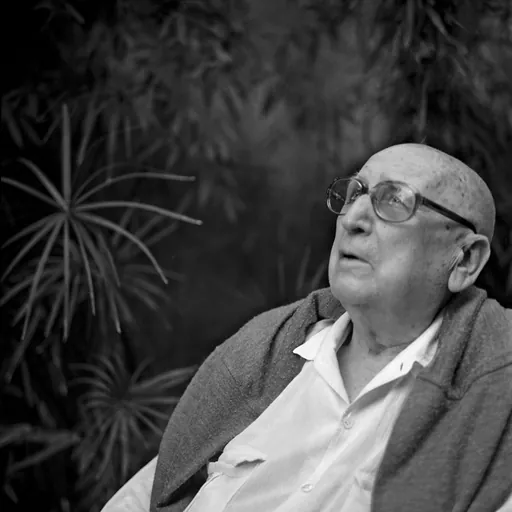
About Edmond Charlot
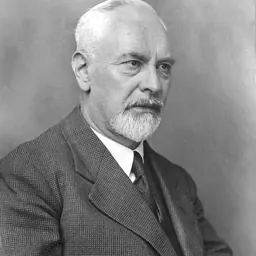
Lived 1915 – 2004 (aged 89). Edmond Charlot was a French publisher and librarian.
Biography Edmond Charlot was born on 15 February 1915 in Algiers and died on 10 April 2004 in Béziers, close to where he lived in Pézenas in the south of France in the department of Hérault. He was a publisher and ran specialist bookshops in Algiers and Pézenas as well as being an editor in Paris. He published the first works of Albert Camus and many other important authors, including a translation of Gertrude Stein. He exhibited artwork and was a leading cultural figure in French literature, especially of the Mediterranean region on both the European and African shores. His contribution to literature, visual arts and French culture had been little recognised in his lifetime – even by close friends. Since his death his work and influence on the arts and literature has been discussed in colloquia, articles and books.
Charlot as a publisher Charlot's first foray into publishing was in May 1936, with a print run of five hundred, a play co-written by Camus, Jeanne-Paule Sicard, Yves Bourgeois and Alfred Poignant called Révolte dans les Asturies. This concerned a revolt by Spanish miners brutally suppressed by the Spanish government. A group of friends, including Charlot, intended to put the play on. The play was censored by the Algerian authorities and the group lost money on the venture. Charlot published it to refinance his friends.
Charlot was influenced by , a writer who celebrated the Mediterranean. Charlot explicitly acknowledged the debt to Audisio when he said he wanted to create a collection of classics of the Mediterranean, not simply Algeria. However, Charlot was not a simple disciple of Audisio. Audisio had a clear vision of the Mediterranean that was influenced by the Greeks rather than the later Roman domination of the region. that an environment of revolt in Algeria may explain the acceptance of risk. Loss of freedom was a reality for Charlot as he was imprisoned briefly after publishing a translation of Paris France by Gertrude Stein (who had described Charlot as a dynamic and resistant editor she was proud to work with – "resistant" was a word with a particular resonance for the Vichy and German authorities of occupied France) for what he later described as the "astonishing claim" that he was presumed to be a Gaullist and communist sympathiser. He was not attached to a political grouping and, unlike Camus, he was never a Communist party member.
As the war progressed things became increasingly difficult. He was released from prison into house arrest and only after he had used one of his contacts (Marcel Sauvage who was close to the Minister of the Interior, Pierre Pucheu) was he released from that. There were practical problems due to scarcity of supplies – made worse as publishers who did not publish those on the Otto list were given supplies and conversely those who refused to comply with the Vichy regime were penalised. Even basics such as paper and ink were difficult to come by. Books were made with any scraps of paper Charlot could cobble together and the covers resembled butchers' wrapping paper, Charlot recalled, and he used staples to bind the pages and ink made from soot. Despite these constraints he sold everything he could put out.
When the Anglo-American forces arrived in 1942, Algeria became the only part of France to be liberated, Algiers became the capital of Free France, Charlot, the "publisher of Free France", and a wave of writers and artists came to Algeria. Charlot's titles included work by André Gide and Jules Roy. In 1944, he published and edited L’Arche, a review created by the poet Jean Amrouche with the explicit blessing of Gide and Charles de Gaulle. The benediction of Gide is illuminating as he was one of the three co-founders in 1909 of the Nouvelle Revue Française, which L’Arche could be said to have culturally replaced during the years of German occupation of France.
After French liberation (the German garrison surrendered Paris on 25 August 1944), Edmond Charlot in December 1944 joined the Ministry of Information in Paris. Living in the barracks, he searched for a place to install his publishing centre near to Saint-Germain-des-Prés, first at the hôtel de la Minerve, rue de la Chaise that Camus had advised him to take, then in the autumn 1945 at 18 rue de Verneuil. He moved it finally in 1947 to a former "maison close" (brothel) at la rue Grégoire-de-Tours, which had counted Apollinaire among its clients. The new law initiated by Marthe Richard ordered the closure of all brothels. Charlot published about a dozen volumes each month, notably the works of Henri Bosco (Le Mas Théotime, 1945, Prix Renaudot), Jean Amrouche (Chants berbères de Kabylie, 1946), Marie-Louise-Taos Amrouche (Jacinthe noire, 1947), Jules Roy (La Vallée heureuse, 1946, Prix Renaudot), Emmanuel Roblès (Les Hauteurs de la ville, 1948, Prix Fémina) and blank verse of Jean Lescure (La Plaie ne se ferme pas, with a lithograph of Estève, 1949).
In 1947 Charlot, who passed to his sister-in-law his first bookshop at Algiers Les Vraies Richesses (English, "Our True Wealth"), started the publication of "ten best French novels" chosen by Gide. Among the titles published under his care were those of Georges Bernanos (1944), (1946), Albert Cossery (Les Hommes oubliés de Dieu, 1946; La Maison de la mort certaine, 1947) and Arthur Adamov (1950). However "the finances of Charlot were not a success. Missing a solid cash reserve, lack of insurance and mistreated by his rivals and exposed to the ferocity and jealousy of the older publishing houses, he floundered" wrote Jules Roy. Despite the support of the Association des éditeurs résistants, his financial difficulties grew from 1948 and Charlot could not find the capital nor obtain loans, and was forced into debt to reprint and had to leave the Paris base which carried on some further months (1949-1950) under the direction of Amrouche and .
One of the most interesting publications was by Général Tubert. The anodyne title (L'Algérie vivra française et heureuse – Algeria will live to be French and happy) disguised a rather disturbing story. For the contents of this volume dated 1943 and by a fictional imprimatur was in fact the 1945 report of Tubert to the Assemblée consultative provisoire (following a massacre in the Constantinois – a region of north-eastern Algeria). The "typographical errors" of the cover are repeated on the title page and were a deliberate effort to disguise the real content and allow the report to be disseminated to avoid the notice of the authorities. From 1936 until his death, but primarily in the 1940s-1950s he published widely, see the table below using information from the 2015 Catalogue raisonné.
1936 5 works including Révolte dans les Asturies by Camus et al. 1937 8 works including L’Envers et l’Endroit by Camus and Santa-Cruz et autres paysages africains by Genier 1938 9 works including two by Audisio and two issues of the review Rivages 1939 5 works including Noces by Camus 1940 3 works including Prologue by Lorca 1941 16 works including those by Lorca, Clot, Roblès and Paris, France by Stein 1942 21 works including the Sonnets of Shakespeare 1943 20 works including those by Gide and Roy and a further 15 works within Editions France 1944 32 works and issues 1-6 of L’Arche 1945 28 works (many translations including Persuasion by Jane Austen) and issues 7-11 of L’Arche 1946 68 works and issues 12-22 of L’Arche 1947 42 works and issues 23-27 of L’Arche 1948 4 works 1949 12 works 1950-56 14 works 1957-2003 10 works and director of the Méditerranée vivante (Domens) book series
In his career Charlot worked with three Nobel Laureates, Camus (whose first works he published), Aleixandre (who wrote in the first issue of Rivages) and Gide (who encouraged him to run L’Arche). Other writers in his publishing house won other prestigious prizes such as le prix Renaudot (for Bosco's Le Mas Théotime) and le prix Femina for work by Roblès.
Finally, one notes Charlot published books for children. One of these L’enfant et la rivière became one of the most successful French children's books. It sold 5,000 copies in 1945 but when republished by Gallimard in 1953 sold eventually 1,800,000 copies. After the war there was a "porosity" between Paris and Algeria and many Algerian artists exhibited in Paris
On his return to Algiers, after the Second World War, in 1948, Charlot continued with his interest in art. "Charlot went to show (…) the best Algerian visual art or sculptures and, just as he had naturally made it by written works in the 1940s, in the years 1954-1962 he took up the challenge with canvases by Algerian painters", recounted Jacqueline Moulin. Over decades he would organise in his bookshops, then for the gallery Comte-Tinchant, exhibitions, notably of Nicole Algan, , , Charles Brouty, , , Henri Caillet, Henri Chouvet, J.A.R Durand, , Maria Moresca, Pierre Rafi, , , Maria Manton, , , Hacène Benaboura and others.
After his spell in Paris (1963-5) in ORTF (Office de Radiodiffusion-Télévision Française, which was the national public broadcasting service) he opened the gallery Pilote in Algiers where he again set up exhibitions of young Algerian painters such as Baya, Aksouh and Mohammed Khadda.
Charlot and radio
After his return to Algeria in 1948, in addition to setting up a new bookshop/gallery he continued to publish and edit. He had close links with many who went on to be influential in French Algerian radio such as Marcel Amrouche (later chief editor of Radio-Alger), José Pivin (who had a long radio career in France after years in Algeria) and El Boudali Safir (who created programmes in Arabic and Kabyle but also five musical ensembles and helped set up the National Institute of Music).
Towards the end of the Algerian war Charlot worked with three men who went on to take important posts. ) on the fourth anniversary of his death. The only reason the material survived was that Camus had made his own recording of it and Charlot had kept it. which has an English translation as A Bookshop in Algiers.
There is video footage (in French) of an interview with Edmond Charlot taken shortly before his death.
In his obituary, the poet James Kirkup described Edmond Charlot as "a man whose life was devoted to international understanding between Arabs and Europeans; an impassioned bibliophile and literary enthusiast who started the careers of many famous authors. He also defended the idea of "Mediterranean civilisation" as a force for peace and artistic excellence in a world rent asunder by politics and war." His bookshop Les Vraies Richesses is mentioned in a 2022 issue of Geo (in French) on the Algerian war.
Don’t just read it —
keep it.
Full-length biographies made to live with: read them, listen on the way to work, watch them tonight.
- E-book
- Audio
- Video
Instant download · yours to keep · every purchase keeps this site free
Important facts
People in Edmond Charlot's life
Named in this biography and alive at the same time
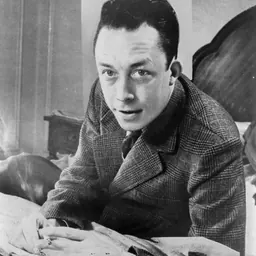


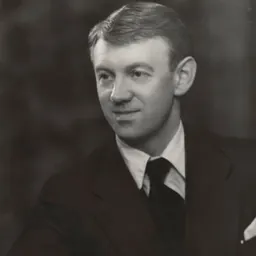

Related people
Same field, nearest in time



Contemporaries
People whose lives overlapped Edmond Charlot's



Frequently asked questions
Who was Edmond Charlot?
French publisher (1915–2004)
When was Edmond Charlot born?
Edmond Charlot was born on 15 February 1915 in Algiers.
When did Edmond Charlot die?
Edmond Charlot died on 10 April 2004 in Béziers.
What was Edmond Charlot's occupation?
Edmond Charlot was a publisher and librarian.
What nationality was Edmond Charlot?
Edmond Charlot was French.
Sources & further reading
Cite this page
APA: Biography.guide. (2026). Edmond Charlot. https://biography.guide/edmond-charlot/
MLA: "Edmond Charlot." Biography.guide, https://biography.guide/edmond-charlot/.
Chicago: "Edmond Charlot." Biography.guide. https://biography.guide/edmond-charlot/.
Data last updated: 2026-09-23 · Spot an error? Report a correction.
Portrait: Wikimedia Commons · author & licence
Page generated 2026-09-27 05:05 UTC