
About Edith Clarke
Lived 1883 – 1959 (aged 76). Edith Clarke was an American electrical engineer, engineer, physicist, inventor and university teacher, known for Alpha–beta transformation and Clarke calculator.
Edith Clarke (February 10, 1883 – October 29, 1959) was an American electrical engineer and academic. Clarke specialized in electrical power system analysis and is credited with laying the foundation for the smart grid - helping the electric grid of the future grow, remain stable and reliable. She was the first person who used an analyzer to obtain data about power networks. The U.S. Department of Energy calls her efforts “the first step toward smart grid technology. She could be called the Smart Grid’s ‘Founding Mother.’”. She wrote the textbook used by power engineers for decades titled Circuit Analysis of A-C Power Systems.
Clarke's legacy includes being the first woman to be professionally employed as an electrical engineer in the United States She was the first woman to deliver a paper at the American Institute of Electrical Engineers.
Early life and education One of nine children, Edith Clarke was born in Howard County, Maryland to lawyer John Ridgely Clarke and Susan Dorsey Owings on February 10, 1883. After being orphaned at age 12, she was raised by an older sister. She used her inheritance to study mathematics and astronomy at Vassar College, where she graduated in 1908 with honors (Phi Beta Kappa).
After college, Clarke taught mathematics and physics at a private school in San Francisco and at Marshall College. She then spent the 1911-1912 academic year studying civil engineering at the University of Wisconsin–Madison, but left to become a "computer" at AT&T in 1912. She computed for George Campbell, who applied mathematical methods to the problems of long-distance electrical transmissions. While at AT&T, she studied electrical engineering at Columbia University at night. Her thesis at MIT was supervised by Arthur E. Kennelly and was titled "Behavior of a lumpy artificial transmission line as the frequency is indefinitely increased."
Unable to find work as an engineer, Clarke went to work for General Electric as a supervisor of computers in the Turbine Engineering Department. Here she directed women computers who were calculating the mechanical stresses in turbines.
Career In 1922, when she returned from Turkey, she was offered a job by GE as a salaried electrical engineer in the Central Station Engineering Departmentthe first professional female electrical engineer in the United States. This was one of the three patents she received over the course of her career.
Her background in mathematics helped her achieve fame in her field. She authored or co-authored 18 technical papers during her employment at GE and was an expert on hyperbolic functions, equivalent circuits, and graphical analysis of electric power systems. On February 8, 1926, she showed the use of hyperbolic functions for calculating the maximum power that a line could carry without instability. The paper was of importance because transmission lines were getting longer, leading to greater loads and more chances for system instability, and Clarke's paper provided a model that applied to large systems. Two of her later papers won awards from the AIEE: the Best Regional Paper Prize in 1932 and the Best National Paper Prize in 1941.
In 1943, Clarke wrote an influential textbook in the field of power engineering, Circuit Analysis of A-C Power Systems, based on her notes for lectures to GE engineers. This two-volume textbook teaches the method of symmetrical components. This is a mathematical means for engineers to study and solve problems of power system losses and the performance of electrical equipment. Clarke adopted this system to the three-phase components that are the basis of the electrical grid in the United States. This textbook was used as the basis of education for electrical engineers for many years.
She retired from General Electric in 1945 and bought a farm in Howard County, Maryland. But she did not stay retired for long. "in recognition of her many original contributions to stability theory and circuit analysis." Clarke was selected for inclusion in Women of Achievement in Maryland History in 1998 and was also included in American National Biography and Notable American Women of the Modern Period. In 2016, the University of Texas at Austin established the Edith Clarke Woman of Excellence Award to honor outstanding female faculty.
Legacy Clarke was the first woman to earn as MS in electrical engineering from MIT. She was the first woman to be professionally employed as an electrical engineer in the United States
Clarke is credited with helping the electric grid grow, with helping that grid remain stable and reliable, and laying the foundation for the smart grid – the grid of the future. She was the first person who used an analyzer to obtain data about power networks. The U.S. Department of Energy calls her efforts “the first step toward smart grid technology. She could be called the Smart Grid’s ‘Founding Mother.’”
Don’t just read it —
keep it.
Full-length biographies made to live with: read them, listen on the way to work, watch them tonight.
- E-book
- Audio
- Video
Instant download · yours to keep · every purchase keeps this site free
Important facts
People in Edith Clarke's life
Named in this biography and alive at the same time
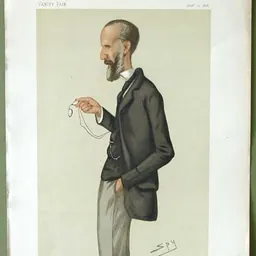


Related people
Same field, nearest in time

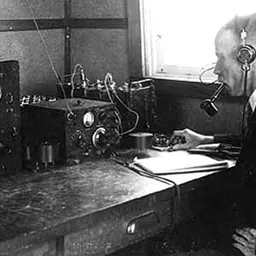
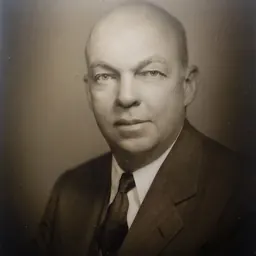
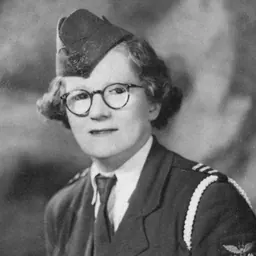

Contemporaries
People whose lives overlapped Edith Clarke's



Frequently asked questions
Who was Edith Clarke?
American electrical engineer (1884–1959)
When was Edith Clarke born?
Edith Clarke was born on 10 February 1883 in Baltimore.
When did Edith Clarke die?
Edith Clarke died on 29 October 1959 in Baltimore.
What was Edith Clarke's occupation?
Edith Clarke was an electrical engineer, engineer, physicist, inventor and university teacher.
What was Edith Clarke known for?
Edith Clarke was known for Alpha–beta transformation and Clarke calculator.
What nationality was Edith Clarke?
Edith Clarke was American.
Sources & further reading
Cite this page
APA: Biography.guide. (2026). Edith Clarke. https://biography.guide/edith-clarke-electrical-engineer/
MLA: "Edith Clarke." Biography.guide, https://biography.guide/edith-clarke-electrical-engineer/.
Chicago: "Edith Clarke." Biography.guide. https://biography.guide/edith-clarke-electrical-engineer/.
Data last updated: 2026-09-20 · Spot an error? Report a correction.
Page generated 2026-09-27 05:05 UTC