
Edgar Selden Bloom
American engineer and telecommunications executive
About Edgar Selden Bloom
Lived 1874 – 1955 (aged 80). Edgar Selden Bloom was a mechanical engineer.
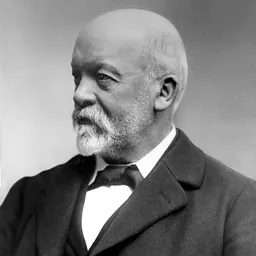
Edgar Selden Bloom (December 17, 1874 – August 14, 1955) was an American mechanical engineer and telecommunications executive. He was president of Western Electric, the manufacturing arm of the Bell System, from 1926 until 1939. Earlier in his career he was an engineer and executive of several Bell operating companies, headed the Central Union Telephone Company, served as the first president of Indiana Bell, and became a vice president of American Telephone and Telegraph Company (AT&T). During the opening phase of the Second World War, he left Western Electric to become director of purchases in the United States for the British Purchasing Commission.
Early life and education
Bloom was born in Bloomsbury, New Jersey, on December 17, 1874, the son of Krastus Starner Bloom and Mary Taylor Smith Bloom. After attending preparatory schools in Philadelphia, he studied mechanical engineering at the University of Pennsylvania, receiving a Bachelor of Science degree in 1895 and the professional degree of Mechanical Engineer in 1896.
Bell System career
Operating companies and AT&T
Bloom entered the telephone industry in 1896 with the New York Telephone Company. During the next decade he worked successively as a service inspector, assistant traffic engineer, supervising construction foreman and construction engineer. He was superintendent of plant for the New York and New Jersey Telephone Company from 1906 to 1909 and worked for the Pacific Telephone and Telegraph Company in 1909–1910. In January 1910 he joined AT&T as an engineer of plant operation.
In January 1914 Bloom, then a Bell System vice president in St. Louis, was selected with banker David R. Forgan and telephone engineer Frank F. Fowle to serve as a receiver of the Central Union Telephone Company during a dispute with minority shareholders. State regulatory records show that he continued as one of the company's receivers through 1919. By June 1919 he was president of Central Union.
When AT&T consolidated Bell properties in Indiana into the newly incorporated Indiana Bell Telephone Company in 1920, Bloom became the company's first president. The new company began with $15 million in capital, 90 exchanges, 30,000 miles of long-distance circuits, about 170,000 telephones and nearly 5,000 employees. On October 27, 1921, he resigned the presidency in favor of Indianapolis-based executive Curtis H. Rottger and was elected chairman of the board. Bloom subsequently became an AT&T vice president.
Western Electric presidency
On August 6, 1926, Western Electric's directors elected Bloom president, succeeding Charles Gilbert Du Bois. Bloom had been serving as an AT&T vice president, while Du Bois remained associated with Western Electric as chairman.
Bloom's presidency coincided with the Bell System's rapid conversion to dial switching, the beginnings of commercial transatlantic radiotelephone service and the spread of synchronized motion-picture sound. A company history credited Western Electric during his administration with supplying equipment for the first commercially practical talking pictures and for AT&T's transatlantic service, expanding production and installation of step-by-step and panel dial exchanges, and beginning construction of the Point Breeze Works in Baltimore in 1929.
Film historian Douglas Gomery describes Bloom as the senior Bell executive to whom Warner Bros. financier Waddill Catchings appealed while the studio and Western Electric were negotiating the agreement that created the Vitaphone Corporation. The resulting arrangement licensed Western Electric sound equipment to the studio and helped establish sound film as a commercial business. When John E. Otterson left the presidency of Western Electric's sound-film subsidiary, Electrical Research Products, Inc. (ERPI), in 1935, Bloom assumed that office in addition to the Western Electric presidency, effective June 17. Whitford Drake succeeded him at ERPI on April 13, 1937, allowing Bloom to concentrate on Western Electric.
Western Electric contracted sharply during the Great Depression. For 1932 Bloom reported sales of $117.85 million, of which $112.497 million represented supplies furnished to Bell-associated companies. He also emphasized industrial safety, reporting that the company's accident rate had been reduced substantially from its 1924 level. In 1936, during a Federal Communications Commission inquiry into the Bell System, Bloom testified about Western Electric, while investigators examined its relationship with the employee-owned Graybar and the prices of telephone equipment.
Bloom retired from Western Electric on December 31, 1939, upon reaching the company's mandatory retirement age of 65. Clarence G. Stoll, who had been vice president in charge of operations, succeeded him on January 1, 1940.
Wartime and later career
Before his Western Electric retirement took effect, Arthur B. Purvis, director-general of the British Purchasing Commission in New York, appointed Bloom the commission's director of purchases in the United States on November 30, 1939. In that role he helped connect British officials with American industry. During the 1940 Tizard Mission, British official A. V. Hill asked Bloom to arrange contact with Bell Laboratories president Frank B. Jewett concerning American aircraft-detection technology.
By December 1940 Bloom was president of Agwilines Inc. Banking directories continued to identify him as its president through 1946 and as chairman by 1948. He also served as a director of Manufacturers Trust Company and later was chairman of the New York and Cuba Mail Steamship Company.
Personal life
Bloom married May Gladys Wallace in New York City on October 16, 1905. They had one daughter, Eleanor Wallace Bloom.
Bloom was an alumni trustee of the University of Pennsylvania from 1928 to 1934. In 1929 he established a student-aid fund whose selection criteria emphasized character, service and leadership. The university later named him a recipient of its Alumni Award of Merit.
Bloom died at his home in New York on August 14, 1955, aged 79.
Don’t just read it —
keep it.
Full-length biographies made to live with: read them, listen on the way to work, watch them tonight.
- E-book
- Audio
- Video
Instant download · yours to keep · every purchase keeps this site free
Important facts
People in Edgar Selden Bloom's life
Named in this biography and alive at the same time





Related people
Same field, nearest in time




Contemporaries
People whose lives overlapped Edgar Selden Bloom's

Frequently asked questions
Who was Edgar Selden Bloom?
American engineer and telecommunications executive (1874–1955)
When was Edgar Selden Bloom born?
Edgar Selden Bloom was born on 17 December 1874.
When did Edgar Selden Bloom die?
Edgar Selden Bloom died on 14 August 1955.
What was Edgar Selden Bloom's occupation?
Edgar Selden Bloom was a mechanical engineer.
Sources & further reading
· Wikipedia: Edgar Selden Bloom
Cite this page
APA: Biography.guide. (2026). Edgar Selden Bloom. https://biography.guide/edgar-selden-bloom/
MLA: "Edgar Selden Bloom." Biography.guide, https://biography.guide/edgar-selden-bloom/.
Chicago: "Edgar Selden Bloom." Biography.guide. https://biography.guide/edgar-selden-bloom/.
Data last updated: 2026-09-20 · Spot an error? Report a correction.
Page generated 2026-09-27 05:05 UTC