
About Eddy Brown
Lived 1926 – 2012 (aged 86). Eddy Brown was a British association football player and association football coach.
Edwin Brown (28 February 1926 – 12 July 2012) was an English footballer who played as a centre forward. He played professionally for a number of clubs, but the peak of his career was spent with Birmingham City during their most successful period in the 1950s. Over a professional career of nearly 400 appearances in the Football League, he scored at a rate of one goal every two games. He was a pioneer of the goal celebration.
Early life Brown was born in Jutland Street, Preston, Lancashire and attended St Ignatius primary school in the town. He was a religious boy, and at the age of twelve began to attend the De La Salle Catholic college on Guernsey with a view to taking Holy Orders. He studied at the college for eight years, during which time the boys were evacuated to the mainland when the Germans invaded, a disruption which did not prevent Brown achieving four A levels (in English, French, Latin and History) and laying the foundations for his lifelong love of Shakespeare.
Football career Preston North End However, after the war he returned to Preston and in August 1948 was persuaded to defer his calling to make use of his gift for football instead. He presented himself at Deepdale and said "I am a centre forward." Preston took him at his word and he scored a hat-trick on his debut for the "A" team which secured him a professional contract.
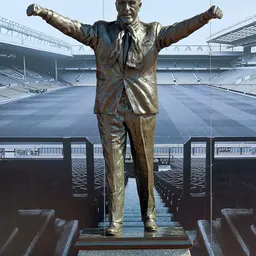
He joined Preston at a time when Bill Shankly was nearing the end of his Preston playing career; Brown believes his success in the game owed much to the lessons learned from Shankly in that first year: He said football was all about the soul, enjoying your life, but always keep striving for that bit extra. He could be crude, rude and outspoken, but it would be football for breakfast, dinner and tea. He was an astonishing and genuine man and football was his obsession. Bill was a preacher, but he always preached with a smile on his face. If I hadn't started at Preston and not met Bill Shankly, who was so kind to me, I don't think I'd have made a living out of football.
When Brown joined Southampton, he found it difficult to replace Wayman who had become a cult-hero with The Dell crowds. After his retirement, Brown admitted that "strolling around (Southampton) soon after his transfer, he wondered what he had done as everywhere he turned there were reminders of just how popular Wayman had become." despite scoring 34 goals in 59 starts while at the club, and in March 1952, having lost his place to Walter Judd, he was granted a transfer to Coventry City of the Third Division (South), where he continued to score goals at an impressive rate.
Birmingham City In October 1954, following a run of five games without a win, Coventry sold him to Birmingham City of the Second Division for £9,000, a decision which provoked the resignation of Coventry's manager Jack Fairbrother.
Brown's career at Birmingham coincided with probably the best period in the club's history. He arrived in mid-October 1954, and in that first part-season scored 14 goals in 28 League games, including a hat-trick in a 9–1 demolition of Liverpool which remains their record defeat. His goals helped Birmingham to the 1954–55 Second Division championship.
The following season, 1955–56, they achieved their highest ever finishing position, sixth in the First Division; Brown, playing alongside Peter "Spud" Murphy and Welsh international Noel Kinsey and with Alex Govan and England international Gordon Astall on the wings, finished top scorer with 21 League goals. He scored another seven in the run which took the club to their second ever FA Cup Final, only to lose 3–1 to a Manchester City side inspired by Don Revie. This was the match best remembered for Manchester City's goalkeeper Bert Trautmann breaking a bone in his neck and still finishing the game.
In 1956–57 Brown scored 20 goals in all competitions and played in the semi-final of the FA Cup, losing to Manchester United's Busby Babes. He was also a pioneer of European competition, as part of the Birmingham side which reached the semi-final of the Inter-Cities Fairs Cup 1955–58, where he scored two goals in the 4–3 home leg win over Barcelona before Birmingham eventually lost out in a replay. His last full season at Birmingham, 1957–58, produced another 15 League goals.
Later career He moved on to Second Division Leyton Orient in December 1958, where despite arriving halfway through the season he still finished joint leading scorer.
In 1961–62, Brown moved to Scarborough, then in the Northern Counties League, as player-manager; aged 36, he again was his club's top scorer. The next season, he led the club to the championship of the re-formed North Eastern League, the North Eastern League Cup, and the first round proper of the FA Cup, where they only lost by the odd goal in a replay against Crewe Alexandra. The following season, still as player-manager, he led them to runners-up spot in the Midland League.
Style and personality The strengths of Brown's game were his pace and movement and a good right-foot finish, in his own words:
He describes himself as "eccentric". ''The Times report of a match in which he scored a hat-trick described him thus:
He was fond of quoting Shakespeare, whether at press conferences or in the dressing room, and while at Birmingham wrote (without a ghostwriter) a weekly column in the local paper, the Birmingham Mail.
Later life After leaving professional football, Brown returned home to Preston and worked in the family carpet firm as a sales representative. He went on to teach games at Preston Catholic College; one of his pupils was Mark Lawrenson, future Irish international footballer and European Cup-winner with Liverpool. When it became obligatory for teachers to be qualified, Brown enrolled at Durham University at the age of 54 where he acquired his teaching certificate, armed with which he taught French until his retirement. His humour, extrovert nature and managerial ability came out in his pre-Cup Final team talk:
His influence extended throughout the club, from acting as "front man" for club functions to looking after the pitches. At the age of 70 he was running the club's third team, and, as of January 2009, was still "helping out" on the committee.
Brown was married, with four children and several grandchildren. He spent the last months of his life in a Preston nursing home and died, aged 86, on 12 July 2012.
Honours As a playerBirmingham CityFootball League Second Division: 1954–55 FA Cup runner-up: 1955–56
As a player-managerScarboroughNorth Eastern League: 1962–63 North Eastern League Cup: 1962–63 Midland League runner-up: 1963–64
As a managerBroughton Amateurs''' Lancashire Amateur League Premier Division: 1980–81, 1982–83 Lancashire Football Association Cup: 1980–81 Lancashire Amateur League Cup: 1984–85
Don’t just read it —
keep it.
Full-length biographies made to live with: read them, listen on the way to work, watch them tonight.
- E-book
- Audio
- Video
Instant download · yours to keep · every purchase keeps this site free
Important facts
People in Eddy Brown's life
Named in this biography and alive at the same time




Related people
Same field, nearest in time
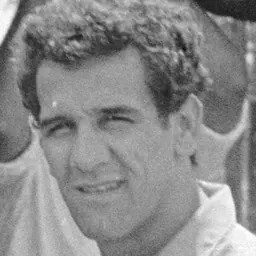
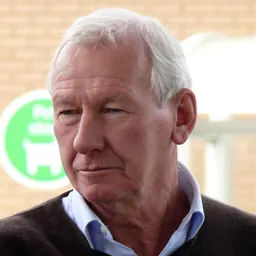


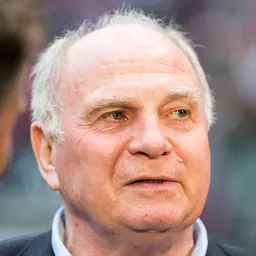
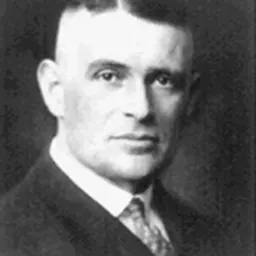
Contemporaries
People whose lives overlapped Eddy Brown's
Frequently asked questions
Who was Eddy Brown?
English footballer (1926–2012)
When was Eddy Brown born?
Eddy Brown was born on 28 February 1926 in Preston.
When did Eddy Brown die?
Eddy Brown died on 12 July 2012 in Preston.
What was Eddy Brown's occupation?
Eddy Brown was an association football player and association football coach.
What nationality was Eddy Brown?
Eddy Brown was British.
Sources & further reading
Cite this page
APA: Biography.guide. (2026). Eddy Brown. https://biography.guide/eddy-brown/
MLA: "Eddy Brown." Biography.guide, https://biography.guide/eddy-brown/.
Chicago: "Eddy Brown." Biography.guide. https://biography.guide/eddy-brown/.
Data last updated: 2026-09-20 · Spot an error? Report a correction.
Page generated 2026-09-27 05:05 UTC