
Ebenezer Mackintosh
Shoemaker and riots leader (born June 1737)
About Ebenezer Mackintosh
Lived 1737 – 1816 (aged 78–79). Ebenezer Mackintosh was a cobbler.
Ebenezer Makintosh (June 20, 1737 – 1816) was a shoemaker who lived in New England in the 18th and 19th centuries. He is known for his role as a leader in Boston riots protesting the Stamp Act.
Early life Ebenezer Mackintosh was born on June 20, 1737, in Boston to impoverished parents Mary Everet and Moses Macintosh, an intermittent soldier in the 1730s and 1740s. Ebenezer lived with them until 1751 when Mary died and Moses departed Boston, leaving the 14-year-old as apprentice to his shoemaker uncle, Ichibod Jones. This gave Mackintosh few career possibilities as well as limited opportunities for social mobility; shoemakers in Boston were usually lower class. Mackintosh enlisted in the militia in 1754 and was part of the British-colonial mission to Fort Ticonderoga in 1758. In 1760, Mackintosh joined Fire Engine Company No. 9 in Boston's South End. Meanwhile, he married Elizabeth Maverick in August 1766, with whom he had two children, one of whom was named Paschal Paoli for the Corsican rebel who was at the time leading his ethnically Italian island in revolt against French rule.
Rise to popularity and recognition In the 1760s, Mackintosh gained notoriety as a popular leader among the poor in Boston's South End. In August 1765 the Loyal Nine arranged the unification of the North and South End crowds. The group also found a mob captain among the common people to do their bidding: Ebenezer Mackintosh. The crowds were brought together by feelings of discontent and anger about economic depression and unemployment as well as the Stamp Act; only basic leadership was necessary. Mackintosh was a good choice as he was lower class and had a small government position – he had been chosen that year for the unpaid town position of sealer of leather.
On August 14, Mackintosh led a destructive wild riot of more than 3,000 in protest of the Stamp Act. The crowd invaded the house of soon-to-be stamp distributor Andrew Oliver. The crowd also destroyed, in less than 30 minutes, an office that he had built, and then used the timbers for a bonfire. Furthermore, rioters hung both an effigy of Andrew Oliver and a boot that represented the British men of power, the Earl of Bute and George Grenville. The next day Andrew Oliver resigned through letter from the position of stamp distributor. Samuel Adams was pleased with the crowd's actions and described it as "deliberately [and] … rationally destroying property, after trying every method to preserve it…when the men in power had rendered the destruction of that property the only means of securing the property of all."
Not long after, on August 26, Ebenezer Mackintosh led a riot that destroyed three houses, including that of lieutenant governor Thomas Hutchinson. Afterwards, Mackintosh had to run for his life, breaking up his possessions, including his many manuscripts, and stealing his money. He was, however, caught and arrested, but leading Whigs stopped the Suffolk County policeman Stephen Greenleaf from keeping him by swearing peace would be maintained in Boston only if Mackintosh was set free. Andrew Eliot, a witness of the events, wrote in a letter to a colleague, Thomas Hollis, in England: "The good people of Boston are very careful to distinguish between the 14th and the 26th of August. The attack on Secretary Oliver…it is supposed was under direction of some persons of character. It is certain, people in general were not displeased. The 26th of August was under a very different direction. It was a scene of riot, drunkenness, profaneness and robbery." Today there is debate about whether Mackintosh and his companions went beyond the tame protests wanted by the wealthier class. Additionally, Mackintosh criticized economic superiority and mocked those with more wealth than him, those who he often took directions from, and criticized with his elaborate garb on Pope's Day 1765.
Memorials A New Hampshire historical marker (number 104) in Haverhill, New Hampshire, reads:
Born in Boston and a veteran of the 1758 Battle of Ticonderoga. As a known participant in the Boston Tea Party, for his own and his children’s safety, he walked to North Haverhill in early 1774. He later served in the Northern Army under Gen. Gates in 1777. He was a shoemaker by trade and practiced his vocation here for the rest of his life. He is buried nearby in Horse Meadow Cemetery.
Don’t just read it —
keep it.
Full-length biographies made to live with: read them, listen on the way to work, watch them tonight.
- E-book
- Audio
- Video
Instant download · yours to keep · every purchase keeps this site free
Important facts
People in Ebenezer Mackintosh's life
Named in this biography and alive at the same time

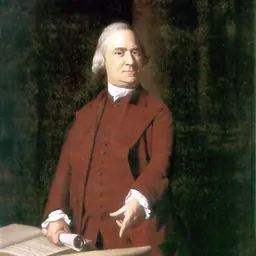
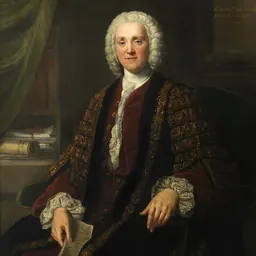
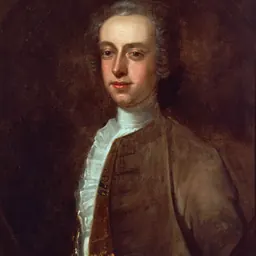
Related people
Same field, nearest in time
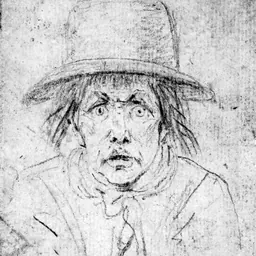



Contemporaries
People whose lives overlapped Ebenezer Mackintosh's




Frequently asked questions
Who was Ebenezer Mackintosh?
shoemaker and riots leader (born June 1737)
When was Ebenezer Mackintosh born?
Ebenezer Mackintosh was born on 20 June 1737.
When did Ebenezer Mackintosh die?
Ebenezer Mackintosh died in 1816.
What was Ebenezer Mackintosh's occupation?
Ebenezer Mackintosh was a cobbler.
Sources & further reading
· Wikipedia: Ebenezer Mackintosh
· DBpedia: Ebenezer Mackintosh
Cite this page
APA: Biography.guide. (2026). Ebenezer Mackintosh. https://biography.guide/ebenezer-mackintosh/
MLA: "Ebenezer Mackintosh." Biography.guide, https://biography.guide/ebenezer-mackintosh/.
Chicago: "Ebenezer Mackintosh." Biography.guide. https://biography.guide/ebenezer-mackintosh/.
Data last updated: 2026-09-20 · Spot an error? Report a correction.
Page generated 2026-09-27 05:28 UTC