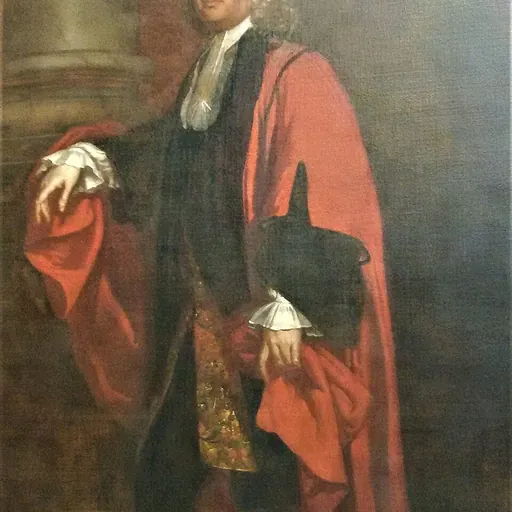
About Eaton Stannard
Lived 1685 – 1755 (aged 69–70). Eaton Stannard was a judge.
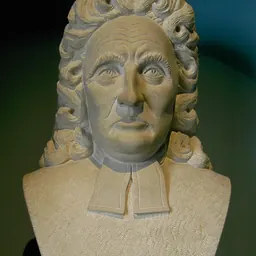
Eaton Stannard (1685–1755) was a leading politician and lawyer in 18th-century Ireland. He was a popular Recorder of Dublin, a very unpopular serjeant-at-law (Ireland), and an experienced parliamentarian who represented Midleton in the Irish House of Commons for many years. He is mainly remembered now as a close friend of Jonathan Swift, whose last known letter was written to him.
Family
He was born in County Cork, son of George Stannard of Ballyhealy, and his wife and cousin Martha Aldworth, daughter of Boyd Aldworth MP. George was the grandson of Captain Robert Stannard of Kilmallock (died 1655). Robert married Martha Travers, daughter of Sir Robert Travers, Judge of the Irish Court of Admiralty and MP for Clonakilty and his second wife Elizabeth Boyle, a cousin of the Earl of Cork. The Stannards and Travers families were part of a wide-reaching network of interrelated landowning families: Eaton himself married one of his Travers cousins, Elizabeth, a great-granddaughter of Sir Robert Travers, while his mother Martha Aldworth was yet another Travers descendant.
Career
He entered Trinity College Dublin in 1702, and the Middle Temple in 1710. He was called to the Bar in 1714, and became King's Counsel and a Bencher of the King's Inns in 1726. The following year he entered Parliament as member for Midleton, which he represented until his death. Swift's last known letter, dated 8 June 1741, was to Stannard, asking him to use his influence with his colleagues to advance the career of his young cousin William Swift, who had just started in practice at the Bar.
Serjeant-at-law
Stannard had been a popular Recorder of Dublin, but the decision to appoint him prime serjeant in 1754 in place of Anthony Malone proved highly unpopular. Malone, who had been dismissed for querying the Crown's right to appropriate revenue, was regarded by the government as effectively a member of the opposition, but he was held in high regard by the public, and despite Stannard's long experience of law and politics he was not Malone's equal as a lawyer. Even so, this hardly explains the level of popular fury against Stannard, who was burnt in effigy. '' John had two daughters and co-heiresses: Cassandra, who married the Reverend Charles Eustace of Robertstown, County Kildare in 1801, and had five children; Alicia, who married George Powell of Newgarden, County Limerick, but had no issue.
As a result of Cassandra's marriage the Stannard lands at Ballydoyle, County Cork, passed into the Eustace family. George founded a longer-lasting branch of the Stannard family, who lived at The Priory, County Cork
Don’t just read it —
keep it.
Full-length biographies made to live with: read them, listen on the way to work, watch them tonight.
- E-book
- Audio
- Video
Instant download · yours to keep · every purchase keeps this site free
Important facts
People in Eaton Stannard's life
Named in this biography and alive at the same time


Related people
Same field, nearest in time




Contemporaries
People whose lives overlapped Eaton Stannard's

Frequently asked questions
Who was Eaton Stannard?
1685 - 1755
When was Eaton Stannard born?
Eaton Stannard was born in 1685.
When did Eaton Stannard die?
Eaton Stannard died in 1755.
What was Eaton Stannard's occupation?
Eaton Stannard was a judge.
Sources & further reading
Cite this page
APA: Biography.guide. (2026). Eaton Stannard. https://biography.guide/eaton-stannard/
MLA: "Eaton Stannard." Biography.guide, https://biography.guide/eaton-stannard/.
Chicago: "Eaton Stannard." Biography.guide. https://biography.guide/eaton-stannard/.
Data last updated: 2026-09-21 · Spot an error? Report a correction.
Portrait: Wikimedia Commons · author & licence
Page generated 2026-09-27 04:59 UTC