
About Earl King
Lived 1934 – 2003 (aged 69). Earl King was an American singer-songwriter, songwriter, composer, guitarist, jazz musician and musician.
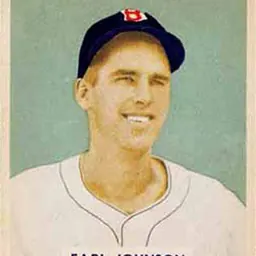
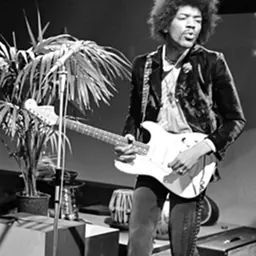
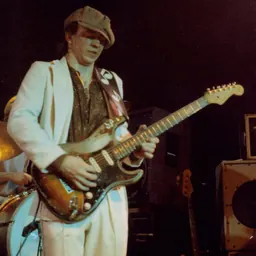
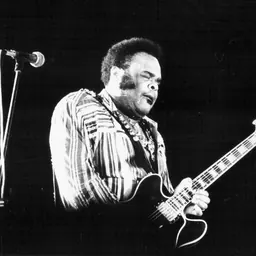
Earl Silas Johnson IV (February 7, 1934 – April 17, 2003), known as Earl King, was an American singer, guitarist, and songwriter, most active in blues music. A composer of blues standards such as "Come On" (covered by Jimi Hendrix, Freddie King, Stevie Ray Vaughan) and "Big Chief" (recorded by Professor Longhair), he was an important figure in New Orleans R&B.
Biography King was born in New Orleans, Louisiana, United States. His father was a piano player. King started imitating Slim, and his presence had a big impact on his musical direction. In 1954, Slim was injured in an automobile accident (right around the time he had the number 1 R&B hit "The Things That I Used To Do"), and King was deputized to continue a tour with Slim's band, representing himself as Slim. After succeeding in this role, King became a regular at the Dew Drop Inn. He continued to record for Ace for the next five years. During that time, he also he started writing songs for other artists, such as Roland Stone and Jimmy Clanton.
In 1960, Dave Bartholomew invited King to record for Imperial Records. and he continued to perform off and on locally in New Orleans until his death. just a week before the New Orleans Jazz & Heritage Festival. His funeral was held on April 30, during the festival, and many musicians attended it, including Dr. John, Leo Nocentelli and Aaron Neville. His Imperial recordings, which had long been out of print, were reissued on CD soon after he died. The June 2003 issue of OffBeat, a local music magazine, paid tribute to King with a series of articles on him.
Discography Albums 1977: That Good Old New New Orleans Rock 'n Roll (Sonet) 1981: Street Parade (Charly, recorded in 1972) 1986: Glazed with Roomful of Blues (Black Top) 1990: Sexual Telepathy (Black Top) 1993: Hard River to Cross (Black Top)
Compilations 1982: Trick Bag: The Best of Earl King (Imperial/Pathe Marconi) -Imperial material 1997: Earl's Pearls: The Very Best of Earl King 1955–1960 (Westside) -Ace material 2003: Come On: The Complete Imperial Recordings (Okra-Tone) -Imperial material 2005: New Orleans Blues (Tomato) -unreleased material recorded in 1972 for Atlantic Records 2006: The Chronological Earl King 1953–1955 (Classics [Blues & Rhythm Series]) -Savoy, Specialty, Ace material 2016: Come On: 40 Original Rhythm & Blues Classics (Not Now Music) 2-CD 2016: Let The Good Times Roll: Singles As & Bs 1955–1962 (Jasmine) 2018: The Singles Collection 1953–62 (Acrobat) 2-CD 2019: More Than Gold: The Complete 1955–1962 Ace & Imperial Singles (Soul Jam)
Singles "Have You Gone Crazy" / "Beggin' at Your Mercy" [as Earl Johnson] (Savoy 1102) Jul 1953 "A Mother's Love" / "I'm Your Best Bet, Baby" (Specialty 495) May 1954 "What Can I Do?" / "'Til I Say Well Done" (Specialty 497) Jun 1954 "No One But Me" / "Eating and Sleeping" (Specialty 531) Sep 1954 "Those Lonely, Lonely Nights" / "Baby You Can Get Your Gun" (Ace 509) Jul 1955 "Little Girl" / "My Love Is Strong" (Ace 514) Jan 1956 "It Must Have Been Love" / "I'll Take You Back Home" (Ace 517) May 1956 "Mother Told Me Not to Go" / "Is Everything All Right" (Ace 520) Jul 1956 "Those Lonely, Lonely Feelings" / "You Can Fly High" (Ace 529) Jun 1957 "Well'O Well'O Well'O Baby" / "I'll Never Get Tired" (Ace 543) Jan 1958 "Everybody Got to Cry" / "I Met a Stranger" (Vin 1003) 1958; recorded 1955 "Everybody's Carried Away" / "Weary Silent Night" (Ace 564) Jun 1959 "Don't You Know You're Wrong" / "Buddy It's Time to Go" (Ace 598) Jul 1960 "Come On (Let the Good Times Roll)" (Parts 1 & 2) (Imperial 5713) Nov 1960 "Darling Honey Angel Child" / "I Can't Help Myself" (Rex 1015) Jan 1961 "Love Me Now" / "The Things That I Used to Do" (Imperial 5730) Feb 1961 "You Better Know" / "Mama and Papa" (Imperial 5774) Sep 1961 "Trick Bag" / "Always a First Time" (Imperial 5811) Jan 1962 "We Are Just Friends" / "You're More to Me Than Gold" (Imperial 5858) Jun 1962 "A Case of Love" / "Come Along with Me" (Imperial 5891) Nov 1962 "Don't You Lose It" / "Don't Cry My Friend" (Post 10004) Dec 1962 "You'll Remember Me" / "She's My Drivin' Wheel" (Amy 942) Nov 1965 "Poor Sam" / "Feeling My Way Around" (Hot Line 908; Checker 1167) Apr 1967
Don’t just read it —
keep it.
Full-length biographies made to live with: read them, listen on the way to work, watch them tonight.
- E-book
- Audio
- Video
Instant download · yours to keep · every purchase keeps this site free
Important facts
People in Earl King's life
Named in this biography and alive at the same time




Related people
Same field, nearest in time





Contemporaries
People whose lives overlapped Earl King's





Frequently asked questions
Who was Earl King?
American songwriter and guitarist (1934–2003)
When was Earl King born?
Earl King was born on 7 February 1934 in New Orleans.
When did Earl King die?
Earl King died on 17 April 2003 in New Orleans.
What was Earl King's occupation?
Earl King was a singer-songwriter, songwriter, composer, guitarist, jazz musician and musician.
What nationality was Earl King?
Earl King was American.
Sources & further reading
Cite this page
APA: Biography.guide. (2026). Earl King. https://biography.guide/earl-king/
MLA: "Earl King." Biography.guide, https://biography.guide/earl-king/.
Chicago: "Earl King." Biography.guide. https://biography.guide/earl-king/.
Data last updated: 2026-09-20 · Spot an error? Report a correction.
Page generated 2026-09-27 05:19 UTC