
About Earl Caldwell
Born 1935. Earl Caldwell is an American journalist.
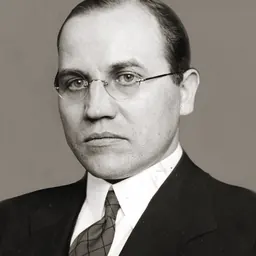
Earl Caldwell (born c. 1939) is an American journalist. He documented the Black Panther Party from the inside in 1969, and became embroiled in a landmark 1972 decision by the U.S. Supreme Court clarifying reporters' rights. The case started when the FBI pressured Caldwell unsuccessfully to be an informant against the Black Panther Party.
Caldwell has worked for The New York Times, the New York Daily News, The New York Amsterdam News, The New York Post and on the radio in New York City. His career as a journalist spans more than four decades. He witnessed and chronicled some of the most important civil rights events from the 1960s onwards. He was the only reporter present when Martin Luther King Jr. was assassinated. Caldwell rose to fame as a reporter at The New York Times when he refused to disclose information to the FBI and the Nixon administration involving his sources in the Black Panther party. The case, United States v. Caldwell, reached the U.S. Supreme Court in 1972 when the court ruled against him. The "Caldwell Case" led to the enactment of shield laws in many states that allow reporters to protect sources and information. In addition to his work for The New York Times, Caldwell wrote for the New York Daily News.
Caldwell is a founding member of the steering committee of the Maynard Institute for Journalism Education, as well as the Washington-based Reporters Committee for Freedom of the Press. In 2009, he was inducted into the National Association of Black Journalists Hall of Fame.
Early life and education From Clearfield Pennsylvania, and as the youngest of six, Caldwell was strongly encouraged by his parents to pursue an education. His family often discussed the possibility of him becoming an educator, and his mother hoped he would become a minister.
Caldwell graduated from the University of Buffalo as a business major. He is a native of Clearfield, Pennsylvania, a predominantly white area, and it was not until attending school in Buffalo that he was surrounded by a larger Black population for the first time. then to work for the Intelligencer Journal in lancaster, Pennsylvania, in 1960, and the Democrat and Chronicle in Rochester, New York.
In 1964, friends of Caldwell successfully persuaded him to join the Democrat and Chronicle, where general manager Al Neuharth was actively working to break the color line at the Rochester newspaper. Caldwell was assigned to report on the 1964 Rochester race riot. He later worked with one of his favorite reporters, Jimmy Breslin, of the New York Herald Tribune. The two collaborated closely, reading and editing each other's work. Caldwell’s close association with Breslin eventually led to him receiving a position at the Herald Tribune. Caldwell then had a brief stint at The New York Post.
Notable reporting work at The Times Reporting for The New York Times, Caldwell went coast-to-coast to cover the riots that swept black America in the summers of 1967 and 1968. During the summer of 1967, in his first year at the paper, Caldwell worked alongside Gene Roberts to investigate the causes of the riots. Due to the volume and geographic spread of the uprisings, the two eventually divided their coverage.
In April 1968, he was the lone reporter to witness the assassination of Martin Luther King Jr. at the Lorraine Motel in Memphis, Tennessee. He also reported on the streets of Chicago in 1968, covering the riots as the police challenged demonstrators during the Democratic National Convention.
Caldwell covered the trial of Angela Davis, the controversial black scholar accused of a central role in the murder of a Marin County, California, judge during an escape attempt from San Quentin Prison. He also spent months in Atlanta covering the child murders and the subsequent trial of convicted killer Wayne Williams. In the late 1970s and early 1980s, Caldwell extensively covered incidents of police brutality and abuse in the judicial system while working in New York.
Legal complications and press freedom Assigned by The New York Times to cover the Black Panther Party from San Francisco, Caldwell was able to establish connections with key figures, including Kathleen and Eldridge Cleaver, which enabled him to develop extensive coverage and detailed files.
However, this proximity to the Panthers caused concern for Caldwell and his family. In an interview, he recalled, "And I used to pray, God, please let me get down those stairs, don't let anybody shoot me," Caldwell also developed a close friendship with former Supreme Court Justice Thurgood Marshall, and frequently visited him in Washington DC. During his time at the Daily News, Caldwell often spoke out against the mass media industry in the United States for discriminatory actions both in its portrayals and in its employment practices.
In the 1980s, Caldwell also wrote a featured piece in Ebony magazine in honor of his parents' 75th wedding anniversary. The article garnered national attention, prompting Pulitzer-Prize winning Moneta Sleet Jr. to travel to their small hometown to photograph the couple.
Caldwell is writer-in-residence at the Robert C. Maynard Institute for Journalism Education in Oakland, California, where he is writing The Caldwell Journals, a serialized account of the black journalist movement spawned by the 1960s civil rights movement. He previously served as the Scripps Howard Endowed Chair at Hampton University. Caldwell also taught a summer at Columbia University's school of journalism.
In addition to teaching, Caldwell has organized efforts to videotape/audiotape African-American journalists selected for an oral history collection.
Recent activities The Caldwell Chronicle radio program (Friday 4-6 p.m.) originates at WBAI (99.5 FM), the Pacifica radio outlet in New York, and can be heard live over the Internet (www.wbai.org).
As writer-in-residence at Hampton University, Virginia, in addition to teaching, Caldwell has organized efforts to videotape/audiotape African-American journalists selected for an oral history collection.
Books Walker, Kenneth; Caldwell, Earl; Rackley, Lurma. Black American Witness: Reports from the Front (1994). Lion House Pub.
Don’t just read it —
keep it.
Full-length biographies made to live with: read them, listen on the way to work, watch them tonight.
- E-book
- Audio
- Video
Instant download · yours to keep · every purchase keeps this site free
Important facts
People in Earl Caldwell's life
Named in this biography and alive at the same time




Related people
Same field, nearest in time

Contemporaries
People whose lives overlapped Earl Caldwell's



Frequently asked questions
Who is Earl Caldwell?
American journalist
When was Earl Caldwell born?
Earl Caldwell was born in 1935.
What is Earl Caldwell's occupation?
Earl Caldwell is a journalist.
What nationality is Earl Caldwell?
Earl Caldwell is American.
Sources & further reading
· DBpedia: Earl Caldwell (journalist)
Cite this page
APA: Biography.guide. (2026). Earl Caldwell. https://biography.guide/earl-caldwell/
MLA: "Earl Caldwell." Biography.guide, https://biography.guide/earl-caldwell/.
Chicago: "Earl Caldwell." Biography.guide. https://biography.guide/earl-caldwell/.
Data last updated: 2026-09-20 · Spot an error? Report a correction.
Page generated 2026-09-27 05:17 UTC