
About E. Chambré Hardman
Lived 1898 – 1988 (aged 89). E. Chambré Hardman was a British photographer.
Edward Fitzmaurice Chambré Hardman (25 November 1898 – 2 April 1988) was an Anglo-Irish photographer, later based for most of his career in Liverpool. He was a landscape photographer by vocation, although his business was largely dependent on portraiture. He was the third child and only son of the keen amateur photographer Edward Hardman by his marriage to Gertrude Davies. Hardman described his family as Anglo-Irish, and his father as "a land agent for various estate owners and landlords in County Dublin". He also claimed that there family connections with the British Raj.
Whilst stationed at the Khyber Pass he met Captain Kenneth Burrell (1893–1953), a man who had not planned on an army career but rather hoped to set up a photographic studio back home in Liverpool, England. Hardman and Burrell decided to go into business together and in 1923, Burrell & Hardman took a lease on business premises at 51a Bold Street in Liverpool's fashionable commercial centre. Burrell was in most respects what one source describes as "a silent partner", but he brought to the partnership his excellent contacts in the Liverpool business community. Starting the business was difficult, and Hardman resorted to selling and repairing wirelesses to subsidise the studio. Eventually it gained a reputation for being the place for anyone with distinction in Merseyside to be photographed by Burrell & Hardman. Photographs attributed to Burrell & Hardman are held in the Conway Library at The Courtauld Institute of Art, London, whose archive, of primarily architectural images, is being digitised under the wider Courtauld Connects project.
Hardman was largely self-taught as a landscape photographer, although he was evidently influenced by various contemporaries such as Alexander Keighley. He received some practical instruction in photography from his father, and, by his own account, also received important lessons from Margaret Mills, who later became his wife:
She was a talented photographer in her own right, and one with sharp business instincts. and "Martigues".
In 1926, Hardman appointed seventeen-year-old Margaret Mills as his assistant. At first, she would look after the studio in Hardman's absence when he was in the South of France that year. In 1929, Margaret left the studio to train as a photographer in Paisley, Scotland. Margaret and Hardman kept in touch through frequent affectionate letters. In the same year Kenneth Burrell left the business entirely to Hardman.
In 1930, Hardman was awarded 1st prize in the American Annual of Photography and a gold medal in London for his picture "Martigues" taken whilst in Martigues, France in 1926. The prize included a welcome $100 cash element. he aged 33 and she 23, and they rented a flat at 59 Hope Street, Liverpool. The marriage was a close one but childless. They worked long hours at the studio, but still found time for weekend expeditions, strapping camera equipment onto their bicycles and riding out into the countryside to shoot landscapes. In the same year Hardman won a contract with the Liverpool Playhouse theatre to provide portraits and production shots of actors. These included Ivor Novello, Patricia Routledge, Robert Donat and Hugh Paddick.
Hardman was elected a fellow of the Royal Photographic Society and took many landscape photographs in Scotland, as well as a notable portrait of prima ballerina Margot Fonteyn. Other portrait subjects included Michael Redgrave, Ivor Novello and (the then youthful) John Moores. Margaret Hardman died of cancer. Hardman not only lost his wife, but his business partner, photographic companion and a very skilful darkroom printer. Following her death, Hardman himself declined, so much so that he came to the attention of Liverpool's Social Services department. He became a recluse and worked less, but did continue to send exhibition prints to the London Salon.
In March 1975, an exhibition of Hardman's work entitled "Fifty Years of Photography" was displayed at the University of Liverpool. A year later Lancashire Life magazine included an article and profile of Hardman, in which he was described as selling negatives from his collection to Liverpool's local history archive. Liverpool Daily Post had recorded "140,000 negs. from 1925 handed over to Central Library".
By 1979, Hardman made few excursions out of his home and found increasing difficulty in walking and suffering a fall. When Peter Hagerty, director of Liverpool's Open Eye Gallery, visited him he said of the experience:
Hardman accepted Hagerty's suggestion that he should set up a trust, subsequently deciding to bequeath the bulk of his estate. Exhibitions and articles of Hardman's work continued to be presented throughout the 1980s and he was made an Honorary Fellow of the Royal Photographic Society. Throughout the decade exhibitions of Hardman's work continued, while he suffered long stays in hospital.
On 2 April 1988, Hardman died at Sefton General Hospital, Liverpool, and was cremated on 11 April 1988 at Springwood Crematorium, Liverpool. His house and studio, at 59 Rodney Street, were taken over by the E. Chambré Hardman Trust to conserve his work, which was later transferred to the National Trust.
Works Photographs by Hardman include: A Memory of Avignon, 1923
In late 2019, the National Trust appointed an archivist and a digitisation conservator to conserve their collection of his prints, negatives and letters, at the Liverpool Records Office. The negatives had been found in 2003 to be "actively deteriorating" smelling of vinegar.
Don’t just read it —
keep it.
Full-length biographies made to live with: read them, listen on the way to work, watch them tonight.
- E-book
- Audio
- Video
Instant download · yours to keep · every purchase keeps this site free
Important facts
People in E. Chambré Hardman's life
Named in this biography and alive at the same time



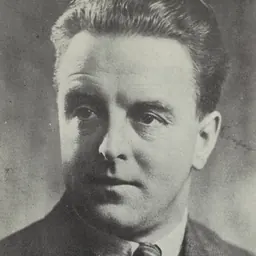
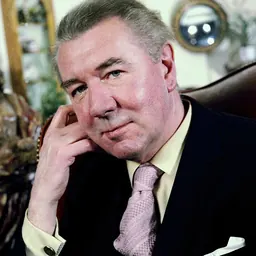
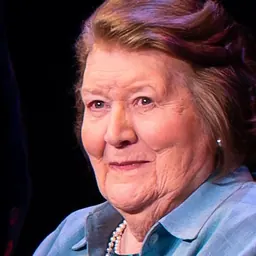

Related people
Same field, nearest in time
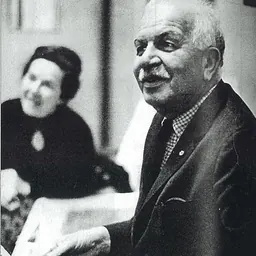


Contemporaries
People whose lives overlapped E. Chambré Hardman's



Frequently asked questions
Who was E. Chambré Hardman?
Irish photographer (1898–1988)
When was E. Chambré Hardman born?
E. Chambré Hardman was born on 25 November 1898 in Foxrock.
When did E. Chambré Hardman die?
E. Chambré Hardman died on 2 April 1988 in Sefton.
What was E. Chambré Hardman's occupation?
E. Chambré Hardman was a photographer.
What nationality was E. Chambré Hardman?
E. Chambré Hardman was British.
Sources & further reading
· Wikipedia: E. Chambré Hardman
Cite this page
APA: Biography.guide. (2026). E. Chambré Hardman. https://biography.guide/e-chambre-hardman/
MLA: "E. Chambré Hardman." Biography.guide, https://biography.guide/e-chambre-hardman/.
Chicago: "E. Chambré Hardman." Biography.guide. https://biography.guide/e-chambre-hardman/.
Data last updated: 2026-09-22 · Spot an error? Report a correction.
Page generated 2026-09-27 05:25 UTC