
About E. B. Babcock
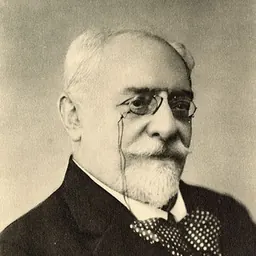
Lived 1877 – 1954 (aged 77). E. B. Babcock was an American botanist and geneticist.
Ernest Brown Babcock (July 10, 1877 – December 8, 1954) was an American plant geneticist and botanist at the University of California, Berkeley. He was a pioneer in applying genetic and cytological approaches to the study of plant evolution and is best known for his extensive research program on the genus Crepis, which became an important model system for evolutionary genetics and cytogenetics in plants.
He was among the early leaders in integrating genetics, cytology, and systematics to understand plant evolution and speciation.
Early life and education
Babcock was born in Edgerton, Wisconsin, the son of Emilius Welcome Babcock and Mary Eliza Brown. His early interest in plants began while caring for a family conservatory as a teenager, where he developed a fascination with plant variation and breeding. From his work in Babcock's lab, Navashin described unusual chromosomal variants in Crepis, including one of the earliest documented ring chromosomes in plants.
Over several decades Babcock continued to expand the project, collecting and studying species across the Mediterranean and Eurasia. The research culminated in his two-volume monograph The Genus Crepis (1947), which synthesized taxonomic, cytological, and evolutionary evidence for nearly 200 species and represented one of the first comprehensive genetic analyses of plant evolution at the level of an entire genus.
Later work and influence
Babcock retired from Berkeley in 1947 but continued research and writing. He later collaborated on studies of self-incompatibility in Crepis foetida, identifying a new type of genetic mechanism controlling self-sterility in plants.
He also became involved in efforts to promote the application of genetics to forestry. In the early 1950s he helped organize the Forest Genetics Research Foundation, which sought to strengthen research on genetic improvement of forest trees.
Babcock was elected to the United States National Academy of Sciences in 1946 and served as president of several scientific societies, including the Society for the Study of Evolution.
Legacy
Babcock played an important role in establishing plant genetics and cytogenetics as tools for understanding evolution. His research program on Crepis demonstrated how genetic, cytological, and systematic data could be integrated to reconstruct the evolutionary history of plant groups, an approach that influenced later studies in evolutionary biology and plant systematics.
Don’t just read it —
keep it.
Full-length biographies made to live with: read them, listen on the way to work, watch them tonight.
- E-book
- Audio
- Video
Instant download · yours to keep · every purchase keeps this site free
Important facts
People in E. B. Babcock's life
Named in this biography and alive at the same time
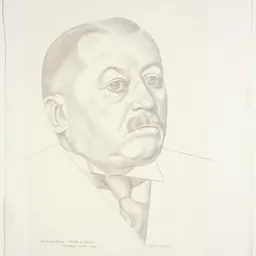
Related people
Same field, nearest in time
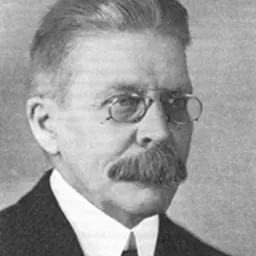
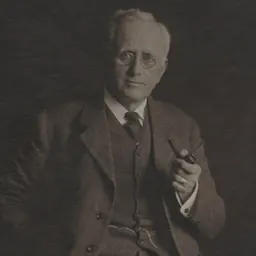

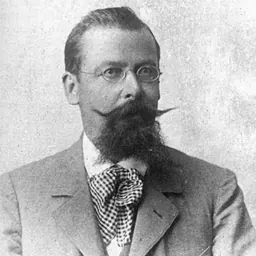

Contemporaries
People whose lives overlapped E. B. Babcock's





Frequently asked questions
Who was E. B. Babcock?
American geneticist (1877-1954)
When was E. B. Babcock born?
E. B. Babcock was born on 10 July 1877 in Edgerton.
When did E. B. Babcock die?
E. B. Babcock died on 8 December 1954.
What was E. B. Babcock's occupation?
E. B. Babcock was a botanist and geneticist.
What nationality was E. B. Babcock?
E. B. Babcock was American.
Sources & further reading
Cite this page
APA: Biography.guide. (2026). E. B. Babcock. https://biography.guide/e-b-babcock/
MLA: "E. B. Babcock." Biography.guide, https://biography.guide/e-b-babcock/.
Chicago: "E. B. Babcock." Biography.guide. https://biography.guide/e-b-babcock/.
Data last updated: 2026-09-20 · Spot an error? Report a correction.
Page generated 2026-09-27 05:30 UTC