
Dumitru Caracostea
Romanian folklorist, literary historian and critic
About Dumitru Caracostea
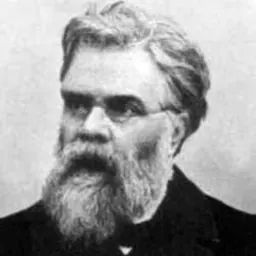
Lived 1879 – 1964 (aged 85). Dumitru Caracostea was a Romanian historian, literary historian, literary critic and folklorist.
Dumitru Caracostea (March 10, 1879–June 2, 1964) was a Romanian folklorist, literary historian and critic.
Biography Origins and early career He was born in Slatina, Olt County to Nicolae Caracostea, a magistrate of Aromanian descent, and his wife Eufrosina (née Bichan), a French teacher. He attended primary school and one year of high school in his native town, completing his secondary education at Saint Sava High School in Bucharest in 1900. That year, he enrolled in the literature and philosophy faculty of the University of Bucharest, which he attended intermittently: His professors included Titu Maiorescu, Ioan Bianu, and Ovid Densusianu; their influence on his intellectual development was decisive. In 1909, Caracostea obtained a scholarship for the University of Vienna, where he studied under the direct supervision of Wilhelm Meyer-Lübke. He successfully defended two doctoral theses in 1913: one on philosophy, the other on Romance philology. He returned home upon the outbreak of World War I. From 1914 to 1925, he was a high school teacher. In 1920, he began offering courses at the University of Bucharest, first as associate professor in Bianu's department and, from 1930, as full professor at the department of modern Romanian literature and folklore. Thanks to his efforts, the Institute of Literary History and Folklore was founded in 1933; among other publications, a series of "literary confessions" by contemporary Romanian writers appeared under its aegis. and presided over the forum's literary section for a time. and under Ion Antonescu from September 4 to 14, until the establishment of the National Legionary State. That autumn, the new regime appointed him head of Revista Fundațiilor Regale; as such, he suspended contributions from critics whom he deemed sympathetic toward Jewish literature. From April 1941 to May 1944. three months before the coup against Antonescu, he headed the amalgamated Royal Foundations. His ascendancy under Romania's wartime regimes was not due to politics: he had participated neither in the main parties nor in pro-fascist groups, but remained loyal to the ideas of Nicolae Iorga. Instead, it stemmed from the Germanophilia that had begun during his Vienna days. Caracostea's activity at the magazine was curtailed by the fact that he had to issue a monthly report both to the Anglophile Royal House and to the pro-German Antonescu. Its situation was precarious: circulation had dropped to 800, issues appeared at delayed intervals and mobilization made contributors difficult to find. In 1948, the new communist regime stripped him of Academy membership. Initially tried and sentenced together with other officials who served until 1944, he was arrested in 1950 and held at Sighet prison until 1955, this time without trial. In June 1964, aged 85, he was at home discussing with a former student about the latter's thesis. Suddenly feeling unwell, he died of an internal hemorrhage after half an hour.
Magazines that published his work include Adevărul literar și artistic, Convorbiri Literare, Drum drept, Flacăra, Gândirea, Langue et littérature, Mitteilungen des Rumänische Instituts und der Universität (Vienna), Revista Fundațiilor Regale, Vieața nouă and Viața Românească. His literary and scientific activity had two main directions: studies of folklore (Miorița în Moldova, Muntenia și Oltenia, 1924) and exegeses of Mihai Eminescu's work (Arta cuvântului la Eminescu, 1938; Creativitatea eminesciană, 1943). His writings on folk ballads (Balada poporană română, 1932–1933) laid the groundwork for geographic-based folklore studies, then a new concept. His commentary on Eminescu was marked by a binary perspective: dynamic (the poems' genesis) and static (the poet's artistic use of language).
Don’t just read it —
keep it.
Full-length biographies made to live with: read them, listen on the way to work, watch them tonight.
- E-book
- Audio
- Video
Instant download · yours to keep · every purchase keeps this site free
Important facts
People in Dumitru Caracostea's life
Named in this biography and alive at the same time
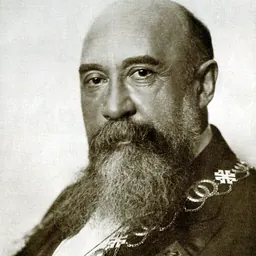

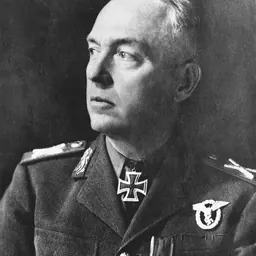




Related people
Same field, nearest in time
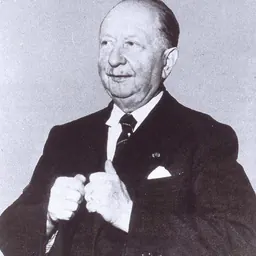

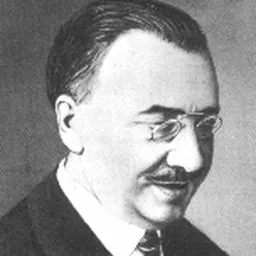
Contemporaries
People whose lives overlapped Dumitru Caracostea's


Frequently asked questions
Who was Dumitru Caracostea?
Romanian folklorist, literary historian and critic
When was Dumitru Caracostea born?
Dumitru Caracostea was born on 10 March 1879 in Slatina.
When did Dumitru Caracostea die?
Dumitru Caracostea died on 2 June 1964 in Bucharest.
What was Dumitru Caracostea's occupation?
Dumitru Caracostea was a historian, literary historian, literary critic and folklorist.
What nationality was Dumitru Caracostea?
Dumitru Caracostea was Romanian.
Sources & further reading
· Wikipedia: Dumitru Caracostea
Cite this page
APA: Biography.guide. (2026). Dumitru Caracostea. https://biography.guide/dumitru-caracostea/
MLA: "Dumitru Caracostea." Biography.guide, https://biography.guide/dumitru-caracostea/.
Chicago: "Dumitru Caracostea." Biography.guide. https://biography.guide/dumitru-caracostea/.
Data last updated: 2026-09-20 · Spot an error? Report a correction.
Page generated 2026-09-27 05:22 UTC