
About Duk Sung Son
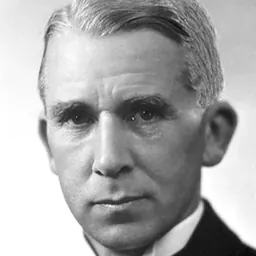
Lived 1922 – 2011 (aged 88). Duk Sung Son was a South Korean taekwondo athlete.
Son Duk-sung (; June 17, 1922 – March 29, 2011) was a martial artist, Grand Master and ninth-degree black belt, co-founder of the Korean martial art of taekwondo, successor of Lee Won-kuk and leader of the Chung Do Kwan school (1950–59). He was also the chief Instructor of the South Korean Army and the 8th U.S. Army, founder and president of the World Taekwondo Association and author of the books "Korean Karate, the Art of Tae Kwon Do” and “Black Belt Korean Karate."
Early life
Son Duk-sung was born in Seoul on June 17, 1922, when South Korea was under Japanese colonial rule. He started boxing at age 16, and after gruesome training, he rose quickly to becoming a national champion in his category. Back then, it was common for him to return home each night, with his face all bruised and cut up that kept him from eating. So his parents forbid him from practicing boxing. In 1942, he decided to start Tang Soo Do or Chung Do Kwan style training (School of the Blue Wave) under Lee Won-kuk, who was just returning from Japan, as Son would later remember.
"It was a different world. At the boxing gym, people would steal your shoes or towel, and the place was always dirty. But at the Chung Do Kwan school, everyone was kind; there was an atmosphere of camaraderie and friendship; we all worked out together. The style was no contact, so no one was beaten or hurt."
After arduous years of training, he obtained his first-degree black belt; becoming part of the first-generation class of Chung Do Kwan among Uhm Woon-kyu, Chung Yong-taek, Kang Suh-chong, Myun Hyun-jong and others.
Son sent his advanced students to teach at the most prestigious institutions of South Korea. Uhm was assigned to teach at the Korean Military Academy, SungKyunKwan University and Seoul National University. Nam Tae-hi taught the South Korean Army, and Son taught the Seoul police and the 8th U.S. Army.
Korean President Syngman Rhee named Son chief instructor of the Republic of Korea Army, where he met Choi Hong-hi, major general of the 29th Infantry Division. The two formed a strong friendship. In 1955, due to his closeness with President Rhee and thinking that he could use Choi's military authority to spread Chung Do Kwan, Son gave an honorary fourth-degree blackbelt in front of Choi's 3rd Army for his contribution to the martial arts.
Internal conflict Through the efforts of Son Duk-sung, Chung Do Kwan grew into the country's largest school at both the civil and military levels. The original members, however, looked for a more active participation that would see them open independently new schools under their own names in the country.
Choi Hong-hi, a high-ranking officer of the South Korean army, was ordered to start a military school in 1954. He recruited a group of 50 military staff, some of whom were high-ranking students from Chung Do Kwan like professional soldiers (Hyun Jong-myun, Nam Tae-hi, Han Cha-kyo, Woo Jong-rim, Ko Jae-chun, Kim Suk-kyu, and Kwak Kuen-suk. This school became known as Oh Do Kwan and sent instructors to Vietnam to train South Korean troops without permission from Sun. Kang Suh-chong created Kuk Mu Kwan, and other instructors lessened their recognition of Son as a school official. The influence and leadership of Choi started to grow.
On June 16, 1959, Son, worried about keeping the philosophical principles of Chung Do Kwan, published a letter in the South Korean newspaper Seoul Shinmun dismissing a group of advanced students including Choi, Nam and Uhm. This caused total separation and exclusion of Son from all sport organizations in Korea.
Acting rapidly, Choi Hong-hi gathered all other members of the top schools and took over the leadership of Chung Do Kwan:
"In late fall 1959, I invited all leaders of the four top gwans to my home. No Byung-jik represented Song Moo Gwan; Yoon, Kwe-byung represented Ji Do Kwan; Lee, Nam-suk represented Chang Moo Kwan; and Hwang Ki represented Moo Duk Kwan; while I represented Oh Do Gwan and Chung Do Kwan.”
As result from this meeting, the Korean Tae Kwon Do Association was born on September 3, 1959 with Choi named its first president. He named Uhm Woon-kyu in the same year as new chief of Chung Do Kwan. Choi was elected president due to his position as a general in the Republic of Korea Army when the country was under a military regime and for the promise he made to other school chiefs to promote taekwondo.
Son started teaching classes at West Point, the universities of Princeton, New York, Brown and Fordham, State University of New York Stony Brook, and the YMCA of New Jersey, among others. He also established the Tae Han Karate Association, which became the World TaeKwon-Do Association in 1966.
The organization grew fast and in 1965, a group of Korean instructors, some of them ex-students of Son in Korea, established themselves in the U.S. Their first black belts started to promote the martial art in the U.S. In 1969, Luke Grande arrived in Venezuela and founded the first taekwondo Chung Do Kwan school in that country and in 1987, Rod Preble did the same in Australia.
The first 11 black belts promoted by Son in North America were:
Martin Rosenberg Thomas(Tom) Carrillo Robert J. Clark Joe La Marca Ron Kelly James Yergan Neil Gingold Luke Grande Jeff Potter Donald Zammit Joe Lamar
As Luke Grande said:
"In the first years of his arrival to the USA, the training was very intense. We ran in Central Park and then kick a tree at least 100 times with each leg; in rain or snow, with the intense heat of the summer, the training never stopped. Then we would train at the gym at 6 p.m. We would do this routine six times a week."
Don’t just read it —
keep it.
Full-length biographies made to live with: read them, listen on the way to work, watch them tonight.
- E-book
- Audio
- Video
Instant download · yours to keep · every purchase keeps this site free
Important facts
People in Duk Sung Son's life
Named in this biography and alive at the same time





Related people
Same field, nearest in time


Contemporaries
People whose lives overlapped Duk Sung Son's


Frequently asked questions
Who was Duk Sung Son?
South Korean taekwondo practitioner (1922–2011)
When was Duk Sung Son born?
Duk Sung Son was born on 17 June 1922 in Seoul.
When did Duk Sung Son die?
Duk Sung Son died on 29 March 2011 in Newport.
What was Duk Sung Son's occupation?
Duk Sung Son was a taekwondo athlete.
What nationality was Duk Sung Son?
Duk Sung Son was South Korean.
Sources & further reading
Cite this page
APA: Biography.guide. (2026). Duk Sung Son. https://biography.guide/duk-sung-son/
MLA: "Duk Sung Son." Biography.guide, https://biography.guide/duk-sung-son/.
Chicago: "Duk Sung Son." Biography.guide. https://biography.guide/duk-sung-son/.
Data last updated: 2026-09-20 · Spot an error? Report a correction.
Page generated 2026-09-27 05:29 UTC