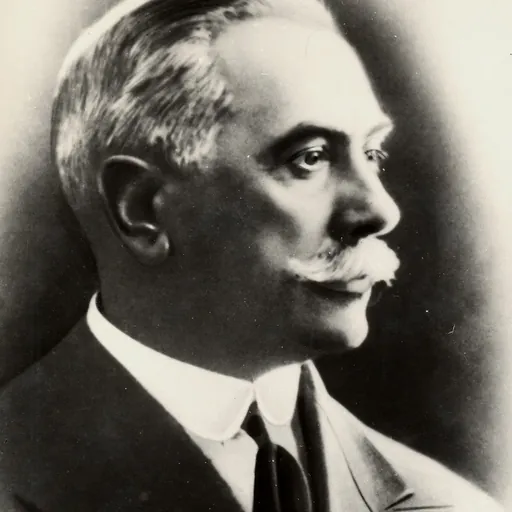
About Duiliu Zamfirescu
Lived 1858 – 1922 (aged 63). Duiliu Zamfirescu was a Romanian journalist, poet, diplomat, lawyer, judge and politician.
Duiliu Zamfirescu (; 30 October 1858 – 3 June 1922) was a Romanian novelist, poet, short story writer, lawyer, nationalist politician, journalist, diplomat and memoirist. In 1909, he was elected a member of the Romanian Academy, and, for a while in 1920, he was Foreign Minister of Romania. Zamfirescu is best remembered for his Comăneștenilor literary cycle, comprising his novels , , În război, Îndreptări, and Anna.
Biography Born in Plăinești, Râmnicu Sărat County (present-day Dumbrăveni, Vrancea County), he attended elementary school and then gymnasium in Focșani. He later studied at the Matei Basarab High School in Bucharest (1873–1876), before entering the University of Bucharest's Faculty of Law. He graduated in 1880. publishing a Romantic poem titled Levante și Kalavryta ("Levante and Kalavryta"). At the time, his work was under the influence of Macedonski's Parnassianism.
In 1880, he was appointed public prosecutor in the Northern Dobrujan town of Hârșova, while being employed, until 1884, as literary columnist for România Liberă. At the time, the editorial staff also included the writers Barbu Ștefănescu Delavrancea, Alexandru Vlahuță, and D. D. Racoviță-Sphinx. Zamfirescu contributed articles in which he declared his dislike for naturalism, as well as distancing himself from the Realism of his contemporaries Ion Luca Caragiale and Ioan Slavici (despite common perception, he claimed he had "nothing in common" with the latter two). At the time, he also contributed political articles under the pen name Don Padil. Later in the same year, he settled in Bucharest and joined România Liberă'''s editorial staff, publishing his first volume of prose and poems, Fără titlu ("Untitled"), in 1883. He also began associating with the Junimea circle and began writing for its magazine, Convorbiri Literare, bringing his writings to the attention of Titu Maiorescu, while becoming a regular in the literary circle formed around the restaurant Casa Capșa. He was part of a small group of literary figures who oscillated between Literatorul and Maiorescu's circle—others to do so were Vasile Alecsandri, Veronica Micle and Matilda Cugler-Poni. The first of his poems to be published with Maiorescu's approval was titled Iarna ("Winter")—printed in June 1884. He nonetheless maintained some distance to the society, and reportedly irritated Titu Maiorescu by collaborating with the newly established anti-Junimist magazines Literatură și Artă Română (edited by N. Petrașcu, on whom Zamfirescu was to be an influence, and Dimitrie C. Ollănescu-Ascanio).
Ultimately, in May 1885, Zamfirescu was dispatched to Italy, as legation secretary in Rome, a position which he filled until 1906, with a hiatus (1892–1894) during which he was assigned to Greece and later Belgium. He was a colleague of Dimitrie Ghyka, and remembered for welcoming the ethnic Romanian Transylvanian activist Badea Cârțan during the latter's celebrated trip to the Italian capital (1896). Zamfirescu married an Italian woman, Henrietta Allievi, who died in 1920. The same year, Dobrogeanu-Gherea published a study of Zamfirescu's works. The two opposed each other over economic ideas and Dobrogeanu-Gherea's application of Marxism to the Romanian society—examining the works of Achille Loria, Zamfirescu collected Marxist-inspired notions that, he believed, contradicted Dobrogeanu-Gherea from inside his own camp. When Maiorescu and the Romanian Marxists were engaged in a lengthy polemic, he added his own arguments in support of the former.
In 1899, Zamfirescu wrote a poem about Bukovina that was inspired by Mihai Eminescu's Doina. Between 1901 and 1902, his novel Îndreptări ("Betterments") was serialized by the magazine Literatură și Artă Română, which was a sign of cooling relations between Zamfirescu and his mentor Maiorescu (nevertheless, Convorbiri Literare continued to publish Zamfirescu's novel Anna in 1906). He apparently sought to include in his work both major tendencies of 19th century Romanian literature—"art for art's sake" as preached by Maiorescu and the "tendentious art" notably advocated by Dobrogeanu-Gherea. Around 1905, through the articles of Simion Mehedinți, his work came to be criticized by the traditionalist magazine Sămănătorul, who coupled a rejection of modernism with an appreciation of for folklore.
In 1909, Zamfirescu was accepted to the Academy, and delivered a much-discussed speech on the influence of Poporanism and traditionalism in literature, showing his disapproval for both currents. It stated: "I do not go as far as to state that the peasants' soul is not at all interesting to literature; that is because for me, all of nature is interesting. Despite this, the greatest critics and the greatest creators of human characters do not deal with simple souls, because they are as uneventful as nothingness itself."
Zamfirescu thus attacked the use of folklore for direct inspiration, which saw Maiorescu, among others, defending folk literature and its supporters. Maiorescu had by then ceased most contacts with his former protégé. There were also notable tensions between Zamfirescu and the Transylvanian poet Octavian Goga, whose work was hailed as an example by both Maiorescu and Sămănătorul. His Furfanțo volume of short stories and his novel Lydda were both printed in 1911. Reportedly, Maiorescu never gave Zamfirescu a chance to explain himself. led by General Alexandru Averescu, and edited the Iași-based voice of the movement, Îndreptarea. When Ghika's term expired, he was replaced by Zamfirescu with Dimitrie Pennescu, who was Romania's first Ambassador to the Vatican. He died at Agapia in 1922, and was buried in Focșani's southern cemetery. After parting with Parnassianism and Romanticism, Duiliu Zamfirescu adopted some of Gane's themes (including his compassionate perspective on the decay of low-ranking boyars as a social class) and, in part, his storytelling techniques. Most of his later works bear the imprint of Neoclassicism.
The impact of Junimea guidelines in his writings is a disputed subject. An opponent of both strict Realism and rural traditionalism, Zamfirescu ridiculed the works of Junimist novelist Ioan Slavici as "sentimental mawkishness". Such contradictions have literary historians such as Tudor Vianu to leave him out of their essays on Junimism. Although his similarities with Junimea were extended after he adopted Neoclassical guidelines, Zamfirescu strongly disagreed with Maiorescu and his disciples on the issue of peasant themes and folklore in novels, arguing that the new literature was supposed to draw inspiration from the urban environment and the rural upper class. In one instance, he is known to have referred to Junimea's theory on the peasant novel using the French expression c'est bourgeois et plat ("it is bourgeois and plain"). Researcher Zigu Ornea argued that the main disagreement between him and the literary society was over Maiorescu's view that the national values of Romania were mostly embodied by the peasants, with Zamfirescu arguing that these had also been preserved by the cultured groups of low-ranking boyars. As noted by Ornea, Zamfirescu's focus on the latter group and his nationalism came to contrast with his aesthetic guidelines, and, paradoxically, led to virtually all of his novels having a rural background and displaying a strong sympathy for the peasantry.
Thus, Zamfirescu's positive characters lash out at boyars of foreign origins, to whom they refer as "Phanariotes", and tolerate the unscrupulous Tănase Scatiu in their company only because he is from the countryside. In parallel, Scatiu is also disliked for being a Greek and a profiteering estate leaseholder—indicative of Zamfirescu's own social and national views. Zamfirescu believed in a strong and natural connection between the landowners and their property, as well as between the landowners and their community—this theme was found with many conservatives of his day, including the Junimists Petre P. Carp and Constantin Rădulescu-Motru, and announced a similar theory constructed by historian Nicolae Iorga. In his fictional world, peasants make brief appearances as secondary characters, noted for their deep respect for the traditional owners, as well as for their dislike of all change. In parallel, Zamfirescu introduced socialist agitators as negative characters, and, in Lume nouă și lume veche ("New World and Old World"), one of his less known novels, gave them the central stage as a means to satirize them.
Duiliu Zamfirescu remained a maverick throughout his life, and his publicized outbursts against various trends has probably contributed to the decline in interests among his public and critics. Ornea described him as "immeasurably arrogant, petulant and a snob", noting that these traits had led to "unjust" treatment of his work. During the interwar period, Zamfirescu's views were defended by the modernist critic Eugen Lovinescu, whose arguments were later rejected by his colleague George Călinescu—the latter argued that Lovinescu had failed to prove Zamfirescu's aesthetic value. However, according to Ornea, Zamfirescu's novels serve as a bridge between Junimea and 20th century traditionalism.
Critics have traditionally held a more favorable view of Zamfirescu's correspondence, which was only published after 1937. and Odobești and gymnasiums in Dumbrăveni and Focșani bear his name. Streets in Bucharest, Constanța, Deva, and Târgoviște are also named after him. The Cișmigiu Gardens in Bucharest feature a circular alley (the "Writers' Rotunda"), which has stone busts of twelve important Romanian writers, including one of Duiliu Zamfirescu.
Don’t just read it —
keep it.
Full-length biographies made to live with: read them, listen on the way to work, watch them tonight.
- E-book
- Audio
- Video
Instant download · yours to keep · every purchase keeps this site free
Important facts
People in Duiliu Zamfirescu's life
Named in this biography and alive at the same time



Related people
Same field, nearest in time
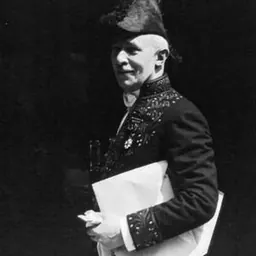
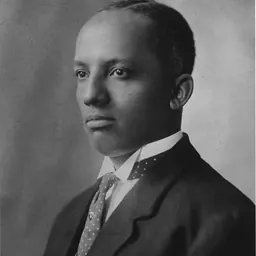
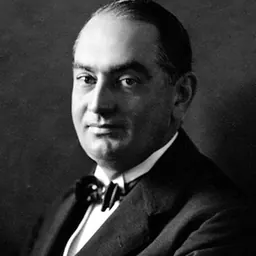
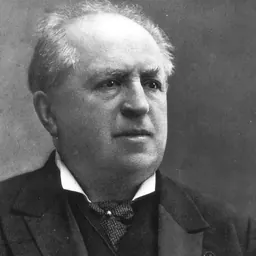
Contemporaries
People whose lives overlapped Duiliu Zamfirescu's



Frequently asked questions
Who was Duiliu Zamfirescu?
Romanian writer/politician (1858-1922)
When was Duiliu Zamfirescu born?
Duiliu Zamfirescu was born on 30 October 1858 in Plăinești, azi Dumbrăveni.
When did Duiliu Zamfirescu die?
Duiliu Zamfirescu died on 3 June 1922 in Agapia.
What was Duiliu Zamfirescu's occupation?
Duiliu Zamfirescu was a journalist, poet, diplomat, lawyer, judge and politician.
What nationality was Duiliu Zamfirescu?
Duiliu Zamfirescu was Romanian.
Sources & further reading
· Wikipedia: Duiliu Zamfirescu
Cite this page
APA: Biography.guide. (2026). Duiliu Zamfirescu. https://biography.guide/duiliu-zamfirescu/
MLA: "Duiliu Zamfirescu." Biography.guide, https://biography.guide/duiliu-zamfirescu/.
Chicago: "Duiliu Zamfirescu." Biography.guide. https://biography.guide/duiliu-zamfirescu/.
Data last updated: 2026-09-21 · Spot an error? Report a correction.
Portrait: Wikimedia Commons · author & licence
Page generated 2026-09-27 04:59 UTC