
About Dugald Drummond
Lived 1840 – 1912 (aged 72). Dugald Drummond was a British engineer.
Dugald Drummond (1 January 1840 – 8 November 1912) was a Scottish steam locomotive engineer. He had a career with the North British Railway, LB&SCR, Caledonian Railway and London and South Western Railway. He was the older brother of the engineer Peter Drummond, who often followed Dugald's ideas in his own work.
He was a major locomotive designer and builder and many of his London and South Western Railway engines continued in main line service with the Southern Railway to enter British Railways service in 1947. He was awarded a Telford medal by the Institution of Civil Engineers in 1896/7 for a presentation on 'high pressure in locomotives'. He said that the entire train had fallen vertically down when the High Girders collapsed, from the impact marks the wheels had made on the lines. All the axles of the train were bent in one direction. The evidence helped disprove Thomas Bouch's theory that the train had been blown off the rails by the storm that night.
Further career
In 1882 he moved to the Caledonian Railway. In April 1890 he tendered his resignation to enter business, establishing the Australasian Locomotive Engine Works at Sydney, Australia. The scheme failed rapidly and he returned to Scotland, founding the Glasgow Railway Engineering Company. Although the business was moderately successful, Drummond accepted the post as locomotive engineer of the London and South Western Railway in 1895, at a salary considerably less than that he had received on the Caledonian Railway. The title of his post was changed to Chief Mechanical Engineer in January 1905, although his duties hardly changed. He remained with the LSWR until his death. His locomotives for this railway were usually capable, as long as they had no more than 8 wheels. However, his 4-6-0 designs ranged from disastrous to mediocre. He also encumbered many of his LSWR engines with innovations which he had patented himself, such as firebox cross water tubes, and his smokebox steam drier, which only gave a very small degree of superheat. After his death, his successors improved the performance of many of his engines by fitting them with conventional smoke tube superheaters.
In addition to his post at LSWR, in 1895 Drummond was appointed as Locomotive Superintendent to the National Rifle Association, with responsibility for rolling stock on the Bisley Camp tramways. In 1897 he oversaw the design and construction of a new target truck for the Running deer range, using targets that had been designed for the ranges at Wimbledon by eminent animal painter Sir Edwin Landseer.
Drummond died on 8 November 1912 aged 72 at his home at Surbiton. A myth has developed that he died as a result of scalding received on the footplate. However C. Hamilton Ellis states that he had got cold and wet and demanded a hot mustard bath for his numb feet. He was scalded by the boiling water. He neglected the burns, gangrene set in and amputation became necessary. He refused an anaesthetic and died of the shock. He is buried at Brookwood Cemetery, which is adjacent to the LSWR mainline, in a family grave just a stone's throw from the former terminus of the London Necropolis Railway.
Family
Drummond's daughter, Christine Sarah Louise was born in Brighton in 1871, soon after the family's arrival there from Scotland. She married James Johnson, son of Samuel Waite Johnson CME of the Midland Railway 1873–1904. Her third child, born in 1905 was named Dugald Samuel Waite Johnson after both of his grandfathers.
Locomotive designs
Drummond designed the following classes of locomotives:
North British Railway NBR 165 class 0-6-0T, later LNER class J82 NBR 100 class 0-6-0, later LNER class J32 NBR 474 class 2-2-2 NBR 476 class 4-4-0, later LNER classes D27 and D28 NBR 494 class 4-4-0T, later LNER class D50 NBR 34 class 0-6-0, later LNER class J34
Caledonian Railway Caledonian Railway 294 Class 0-6-0, later LMS class 2F Caledonian Railway 66 Class 4-4-0, later LMS class 2P Caledonian Railway 123, 4-2-2, later LMS 14010, class 1P Caledonian Railway 80 Class 4-4-0, later LMS class 1P
London and South Western Railway LSWR 700 class 0-6-0 known latterly as "the Black Motors" LSWR M7 class 0-4-4 tank engines known as "Motor Tanks" LSWR T7 class 4-2-2-0 prototype "double single" LSWR C8 class 4-4-0 LSWR F9 class 4-2-4T known as "the Bug" LSWR T9 class 4-4-0 known as "Greyhounds" LSWR E10 class 4-2-2-0 "double single" LSWR K10 class 4-4-0 known as "Small Hoppers" LSWR K11 class railcar LSWR L11 class 4-4-0 known as "Large Hoppers" LSWR S11 class 4-4-0 LSWR L12 class 4-4-0 known as "Bulldogs" LSWR H12 class railcar LSWR F13 class 4-6-0 LSWR H13 class railcar LSWR C14 class 2-2-0 motor tank – later rebuilt as 0-4-0 LSWR K14 class 0-4-0 tank engines first designed by Adams as class B4 LSWR E14 class 4-6-0 known as "the Turkey" LSWR G14 class 4-6-0 LSWR P14 class 4-6-0 LSWR T14 class 4-6-0 known as "Paddleboxes" LSWR D15 class 4-4-0
Patents GB189727949, published 15 October 1898, Improvements in locomotive boilers GB189901077, published 2 December 1899, Improvements in apparatus for use in heating railway carriages
Don’t just read it —
keep it.
Full-length biographies made to live with: read them, listen on the way to work, watch them tonight.
- E-book
- Audio
- Video
Instant download · yours to keep · every purchase keeps this site free
Important facts
People in Dugald Drummond's life
Named in this biography and alive at the same time


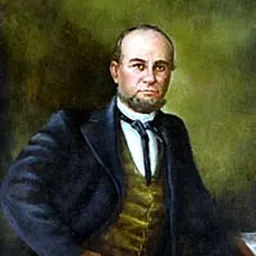
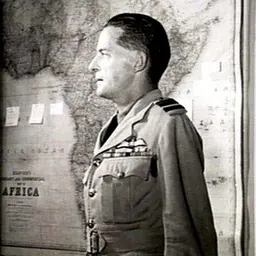
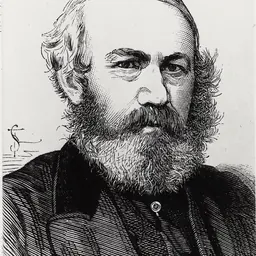
Related people
Same field, nearest in time

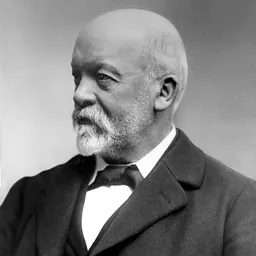
Contemporaries
People whose lives overlapped Dugald Drummond's


Frequently asked questions
Who was Dugald Drummond?
Scottish locomotive engineer (1840–1912)
When was Dugald Drummond born?
Dugald Drummond was born on 1 January 1840 in Ardrossan.
When did Dugald Drummond die?
Dugald Drummond died on 8 November 1912 in Surbiton.
What was Dugald Drummond's occupation?
Dugald Drummond was an engineer.
What nationality was Dugald Drummond?
Dugald Drummond was British.
Sources & further reading
Cite this page
APA: Biography.guide. (2026). Dugald Drummond. https://biography.guide/dugald-drummond/
MLA: "Dugald Drummond." Biography.guide, https://biography.guide/dugald-drummond/.
Chicago: "Dugald Drummond." Biography.guide. https://biography.guide/dugald-drummond/.
Data last updated: 2026-09-25 · Spot an error? Report a correction.
Page generated 2026-09-27 05:12 UTC