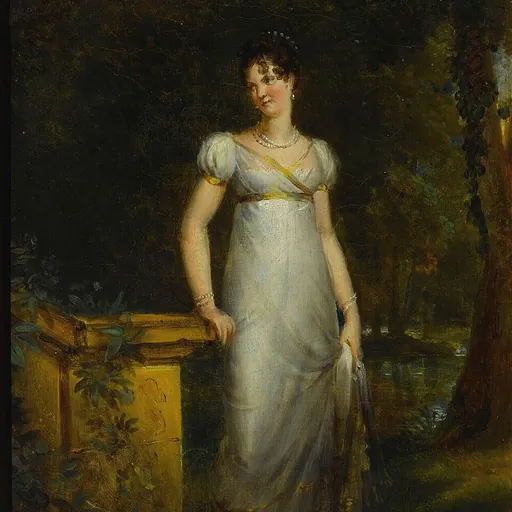
Duchess Therese of Mecklenburg-Strelitz
German princess
About Duchess Therese of Mecklenburg-Strelitz
Lived 1773 – 1839 (aged 65). Duchess Therese of Mecklenburg-Strelitz was a salonnière.
Duchess Therese Mathilde Amalie of Mecklenburg-Strelitz (; 5 April 1773 – 12 February 1839) was a member of the House of Mecklenburg-Strelitz and a Duchess of Mecklenburg. Through her marriage to Karl Alexander, 5th Prince of Thurn and Taxis, Therese was also a member of the House of Thurn and Taxis.
Family Therese Mathilde Amalie of Mecklenburg was born in Hanover the daughter of Duke Charles of Mecklenburg and his first wife Princess Friederike of Hesse-Darmstadt.
Therese married Karl Alexander, Hereditary Prince of Thurn and Taxis, son of Karl Anselm, 4th Prince of Thurn and Taxis and his wife Duchess Auguste of Württemberg, on 25 May 1789 in Neustrelitz, Mecklenburg-Strelitz. Therese's paternal aunt Queen Charlotte and her husband George III of the United Kingdom helped broker the marriage, in particular ensuring that Therese would be able to keep her Protestant faith. Children include: Georg Adolf, Graf von Stockau (Dresden, Saxony, 6 May 1806 – Napajedl castle, Maehren, 4 April 1865, bur. crypt, Napajedl castle chapel, Maehren), a Lutheran, married on 25 November 1830 to Franziska de Paula Maria Elisabeth, Gräfin von Fünfkirchen (Vienna, Austria, 24 July 1801 – Napajedl castle, Maehren, 14 May 1870, bur. crypt, Napajedl castle chapel, Maehren), a Roman Catholic, heiress of Napajedl castle and estate in Maehren, widow of Clemens Graf von Kesselstatt, and had issue, now seemingly extinct in male line Amalie von Sternfeld (Regensburg, 16 June 1808 – Tegernsee, 21 June 1888), married at Köfering, 31 August 1825 to Georg-Alexander, Freiherr von Krüdener (1786–1852), and had issue
In 1790 Anne-César, Chevalier de la Luzerne, the French ambassador to Great Britain, reported that Therese's husband was being considered for the new throne of the Austrian Netherlands and that Therese's aunt Queen Charlotte would support this; these turned out to be unfounded rumors, as Charlotte and her husband George III believed Karl Alexander of insufficient rank for kingship. After the mediatization of the Principality of Thurn and Taxis to the Kingdom of Bavaria in 1806 during the German Mediatisations, the end of the Holy Roman Empire and creation of the Confederation of the Rhine, and the subsequent end of the Imperial Reichspost, Therese's initiative and negotiating skills were influential in maintaining the Thurn and Taxis-run postal system as the private company, Thurn-und-Taxis-Post. Like her sister, Louise, Queen consort of Prussia, she failed in their negotiations with Napoleon I of France, but during the Congress of Vienna, she was successful in enforcing the interests of the Thurn and Taxis family.
Political activities Therese and Karl Alexander had their first residence (until 1797) in the Palais Thurn und Taxis in Frankfurt am Main. Early on in their marriage, Therese took over her young husband's representational tasks. After her father-in-law's resignation as Post Master General and Principal Commissioner of the Perpetual Imperial Diet at Regensburg, Therese's husband Karl Alexander became Principal Commissioner in 1797. Therese took an active role in the administration of the Princely House and lands as well as the postal administration and was also devoted to art and literature. She hosted in her salon poets and writers including Jean Paul, Friedrich Rückert, Johann Kaspar Lavater, and Friedrich Gottlieb Klopstock. The Hereditary Princess of Thurn and Taxis, oil on canvas by Carlo Restallino, Regensburg in 1800. Only with the predictable demise of the Imperial Reichspost, the German Mediatisations of 1803, the mediatization of the Princely House of Thurn and Taxis, and the loss of position of Post Master General in the time of Napoleon I of France, Therese became outwardly politically active, most especially after the death of her father-in-law in 1805. Since then, Therese reinforced the sovereignty of the Princely House of Thurn and Taxis and its traditional postal rights. In 1806, she and her husband negotiated with her brother-in-law Frederick William III of Prussia along with Karl Theodor Anton Maria von Dalberg, the former Archbishop-Elector of Mainz and Prince-Primate of Regensburg, and for the first time in 1807 with Napoleon. Likewise, they also negotiated with Maximilian I Joseph of Bavaria in Munich and proposed to him the nationalization of the Thurn and Taxis Lehnspost there. In 1808, Therese and her husband took the interests of the Princely House of Thurn and Taxis to the Congress of Erfurt. There, a secret meeting occurred between Charles Maurice de Talleyrand-Périgord and Alexander I of Russia in her salon.
After fruitless negotiations in Erfurt were lost, Therese traveled at the end of 1809 to Paris, where she met with Napoleon concerning the future status of the Princely House of Thurn and Taxis, the withdrawal of the media, and the re-acquisition of rights to the postal system. From this trip survives a correspondence with her husband Karl Alexander in which he laments the impoverishment of the House of Thurn and Taxis and asks Therese to limit her expenses. Through their negotiations with Napoleon, the Princely House of Thurn and Taxis was offered to relocate to Paris. The negotiations failed, however, perhaps because the correspondence with her sister Queen Louise of Prussia fell into the hands of the French authorities.
Duchess Therese died in Taxis, Regensburg, at the age of 65.
Ancestry Source:
Don’t just read it —
keep it.
Full-length biographies made to live with: read them, listen on the way to work, watch them tonight.
- E-book
- Audio
- Video
Instant download · yours to keep · every purchase keeps this site free
Important facts
Family & relationships
People in Duchess Therese of Mecklenburg-Strelitz's life
Named in this biography and alive at the same time


Related people
Same field, nearest in time


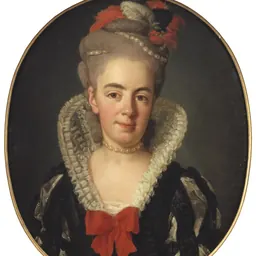
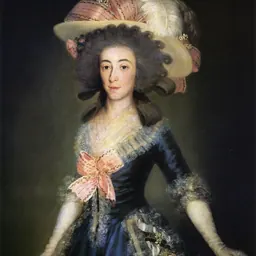
Contemporaries
People whose lives overlapped Duchess Therese of Mecklenburg-Strelitz's
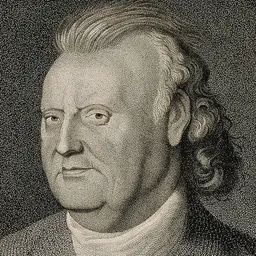
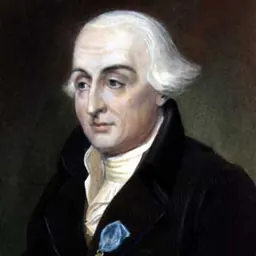

Frequently asked questions
Who was Duchess Therese of Mecklenburg-Strelitz?
German princess (1773-1839)
When was Duchess Therese of Mecklenburg-Strelitz born?
Duchess Therese of Mecklenburg-Strelitz was born on 5 April 1773 in Hanover.
When did Duchess Therese of Mecklenburg-Strelitz die?
Duchess Therese of Mecklenburg-Strelitz died on 12 February 1839 in Schloss Taxis.
What was Duchess Therese of Mecklenburg-Strelitz's occupation?
Duchess Therese of Mecklenburg-Strelitz was a salonnière.
What nationality was Duchess Therese of Mecklenburg-Strelitz?
Duchess Therese of Mecklenburg-Strelitz's recorded nationality: Grand Duchy of Mecklenburg-Strelitz.
Sources & further reading
· Wikipedia: Duchess Therese of Mecklenburg-Strelitz
· DBpedia: Duchess Therese of Mecklenburg-Strelitz
Cite this page
APA: Biography.guide. (2026). Duchess Therese of Mecklenburg-Strelitz. https://biography.guide/duchess-therese-of-mecklenburg-strelitz/
MLA: "Duchess Therese of Mecklenburg-Strelitz." Biography.guide, https://biography.guide/duchess-therese-of-mecklenburg-strelitz/.
Chicago: "Duchess Therese of Mecklenburg-Strelitz." Biography.guide. https://biography.guide/duchess-therese-of-mecklenburg-strelitz/.
Data last updated: 2026-09-30 · Spot an error? Report a correction.
Portrait: Wikimedia Commons · author & licence
Page generated 2026-10-05 02:53 UTC