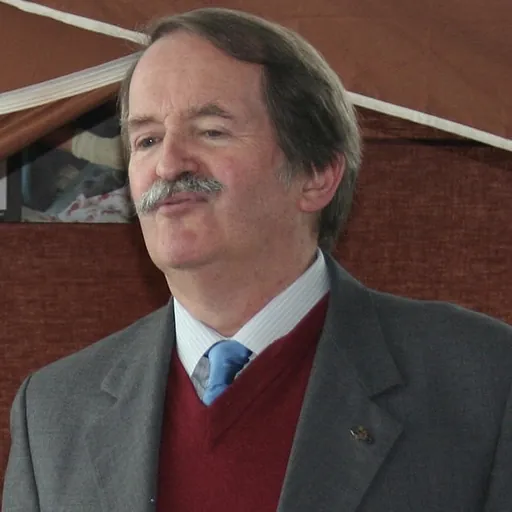
Duarte Pio of Braganza
Pretender to the throne of Portugal (born 1945)
About Duarte Pio of Braganza
Born 1945. Duarte Pio of Braganza is a Portuguese.
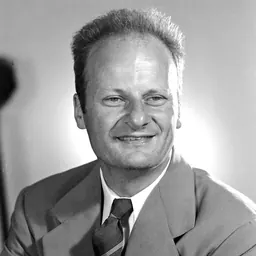
Dom Duarte Pio, Duke of Braganza (, born 15 May 1945), commonly known simply as Dom Duarte, is the current Duke of Braganza and a claimant to the defunct Portuguese throne, as the head of the House of Braganza. The Miguelist Braganzas, to whom Duarte Pio belongs as a great-grandson of King Miguel I, is a cadet branch of the House of Braganza. With the extinction of male-line dynasts descended from Queen Maria II in 1932, King Miguel's descendants became the only male-line Braganzas remaining and the closest male-line heirs to the defunct Portuguese throne.
Duarte Pio is a figure within the European network of royal houses, often being invited to various foreign royal events. Despite his support for a monarchical government and widespread recognition as pretender to the throne, there are no major movements or parties that support restoration of the monarchy.
In 1995, the Duke married Isabel Inês de Castro Curvelo de Herédia, a Portuguese businesswoman and descendant of Portuguese nobility. Their marriage was the first marriage of a Portuguese royal to happen in Portuguese territory since the marriage of King Carlos I and Princess Amélie of Orléans, in 1886. The Duke and Duchess have three children, thus continuing the line of the Braganzas, as neither of the Duke's brothers has married or had children.
The Duke of Braganza holds Portuguese citizenship, by birth, and East Timorese citizenship due to high service to the country.
Early life
Duarte Pio was born on 15 May 1945 in Bern, Switzerland, as the first of three sons of Duarte Nuno, Duke of Braganza, and Princess Maria Francisca of Orléans-Braganza. Duarte Pio uses a full name ending with Miguel Gabriel Rafael, a naming tradition of the House of Braganza that honors the three archangels in the Catholic Church. His name as registered at birth was simply Duarte Pio de Bragança. His father was the grandson of King Miguel I, while his mother was a great-granddaughter of King Pedro IV (Emperor Pedro I of Brazil), who was Miguel's elder brother. Through his father, he is a member of the Miguelist branch of the House of Braganza. Duarte Pio's godparents were Pope Pius XII and Queen Amélie of Portugal (the mother of King Manuel II, the last monarch of Portugal).
The Duke is regarded as a Portuguese national by descent, since his father was Portuguese (and so Duarte Pio's birth was legitimately included in the Portuguese Civil Registry). At the time of his birth, Duarte Pio and the rest of the Miguelist Braganzas were banned from entering Portugal, by the laws of exile of 19 December 1834.
On 27 May 1950, the Portuguese National Assembly revoked both the laws of exile from 19 December 1834, which banned the Miguelist Braganzas, and the laws of exile from 15 October 1910, which banned the Legitimist Braganzas. In 1951, Dom Duarte visited Portugal for the first time, accompanied by his aunt, Infanta Filipa. In 1952, he moved to Portugal permanently with his parents and brothers.
From 1957 to 1959, Duarte was enrolled in the Colégio Nun'Álvares in Santo Tirso. In 1960, he entered the Colégio Militar in Lisbon. He attended the Instituto Superior de Agronomia (now part of the Technical University of Lisbon) and later the Graduate Institute of Development Studies of the University of Geneva.
From 1968 to 1971, Dom Duarte fulfilled his military service as a helicopter pilot in the Portuguese Air Force in Portuguese Angola at the time of the Portuguese Colonial War. In 1972, he participated with a multi-ethnic Angolan group in the organization of an independent list of candidates to the National Assembly. This resulted in his expulsion from Angola by order of the Prime Minister Marcelo Caetano. but a small number of Portuguese monarchists do not recognise him as pretender to the throne or as Duke of Braganza. However, the Constitutional Charter of 1826 was reinstated in 1842; this constitution (which was in place until 1910 when the monarchy was overthrown) did not bar Miguel's descendants from ascending the throne. Finally, the Law of Banishment of 1834 was repealed in 1950.
In 1912 and 1922, Duarte Pio's grandfather, Miguel Januário, Duke of Braganza, reconciled with King Manuel II, but this reconciliation was not accepted by all of their adherents. There are several monarchist organizations in Portugal (like the People's Monarchist Party) which maintain that only the Cortes or the National Assembly could legally determine the rightful claimant if ever Portugal decided to restore the monarchy. One monarchist group in Portugal that did support Miguel Januário, Duke of Braganza, instead of the deposed King Manuel II was the Integralismo Lusitano. The results of the Dover Pact (1912) and Paris Pact (1922) meetings remain controversial: although there was an accord on challenging the republic, there remained no clear agreement on hereditary lines of succession.
Parliamentary statements In May 2006, the Portuguese Ministry of Foreign Affairs issued a statement where it referred to Duarte Pio as Duke of Braganza. On 5 July 2006, in response to this statement, Nuno da Câmara Pereira, then leader of the People's Monarchist Party, addressed the President of the Assembly of the Republic, asking for a clarification as to the official recognition of Duarte Pio as pretender to the throne and as Duke of Braganza. In its official response on 11 July 2006, the Ministry of Parliamentary Affairs restated the fact that the Portuguese constitution guarantees the republican regime, and that the reference to Duarte Pio as Duke of Braganza was merely a polite courtesy.
Roles and positions The Duke often interacts with both national and international political and cultural institutions, by which he represents the Portuguese people and their culture. Though not a head of state or official representative of the Portuguese state, Duarte Pio has been received with such honours by various foreign heads of state, government, and organizations.
Politics
Dom Duarte was a major campaigner for the independence of Timor-Leste, a former Portuguese colony which was forcibly annexed by Indonesia in 1975. Before the issue's global popularity from the 1990s onward, the Duke contributed with several national and international campaigns for the political self-determination of the territory, including Timor 87 Vamos Ajudar and Lusitânia Expresso. In February 2012, with final approval and support of Timor-Leste parliament, President Ramos-Horta conferred Timorese citizenship upon Duarte Pio, along with the Order of Merit. President Ramos-Horta stated that these honours were given because of Duarte Pio's "dedication of a large part of his life to defending justice and liberty for the Timorese people."
In September 2011, President Bashar al-Assad of Syria invited the Duke on a state visit to Damascus. The Duke stated he was invited by President al-Assad with the intention that Duarte Pio relay the Syrian head of state's plans and intents for Syria and its people. Duarte Pio told several Portuguese news outlets that it was the Syrian President's intention to "collaborate on the creation of a future constitution for Syria, close to that of Morocco, which guarantees political, religious, and press freedom." Alongside communicating the political and reformist intentions of the Syrian President, Duarte Pio stated that President al-Assad was a "good and well-intentioned man" and that "since he has assumed power, he has tried to democratize and humanize politics and [that] he has already achieved great advancements."
In his capacity as the President of the King Manuel II Foundation, Duarte Pio is often involved with the Community of Portuguese Language Countries, intergovernmental organization for economic, political, and cultural friendship between Portugal and many of its former colonies. In 2009, the Duke petitioned for the King Manuel II Foundation to become a consultative observer within the CPLP, but with no success. In 2012, Duarte Pio petitioned, with Maria Hermínia Cabral, Director of the Calouste Gulbenkian Foundation, for their respective organizations to become CPLP consultative observers, to which both succeeded in their endeavor. In November 2012, for a meeting of the consultative observers of the CPLP the Duke visited Mindelo, Cabo Verde. While there, the Duke visited various locations within Cabo Verde, and was received by President Jorge Carlos de Almeida Fonseca. During the visit, Duarte Pio decorated President Almeida Fonseca with the Order of the Immaculate Conception of Vila Viçosa. Duarte Pio often visits various municipalities around the country, in an official charge, for economic and political events. On 14 November 2007, the Duke visited the Santiago do Cacém Municipality and was received with honours by the President of the Municipality, in the Palace of the Concelho. On 11 October 2011, Duarte Pio visited the freguesia of São Pedro de Oliveira, in Braga, and was received with honours by the President of the Freguesia Augusto de Carvalho. On 28 March 2012, the Duke and his son, Afonso, Prince of Beira, were guests of honour at the XII Exposition of Folar and Products of the Earth, an exposition staged for the purpose of economic promotion of products from the Valpaços Municipality.
In 2014, the Court of Lisbon forbade Duarte Pio of Braganza from using the insignia of the Order of Saint Michael of the Wing and demanded that he compensate 300,000 euros to the legal owner of the rights, Nuno da Câmara Pereira, who allegedly registered the name "Order of Saint Michael of the Wing" in 1981, whereas Duarte Pio is said to have registered it in 2004. The condemnation was repeated on 5 October 2015, but on 3 November 2015, the rights of Nuno da Câmara Pereira to the symbols was lost, and on 7 December, Duarte Pio of Braganza won the case and regained the legal rights.
Culture
Duarte Pio often travels and visits various places, in an official charge, for matters concerning cultural affairs, both in Portugal and overseas. From 24 until 25 May 2009, the Duke visited Terceira Island, in the Azores Autonomous Region, as a guest of honour of the Santa Casa da Misericórdia, for the presentation of Mendo Castro Henriques's book, Dom Duarte e a Democracia – Uma Biografia Portuguesa. While in Terceira, Duarte Pio was received with honours by the President of the Municipality of Praia da Vitória and attended and visited various cultural and religious institutions and events, including a dinner at the Santa Casa da Misericórdia and assisting in a Portuguese bullfight.
On 12 September 2011, the Duke, as President of the Henry the Navigator Award, a partner award of the Duke of Edinburgh's Award, visited Funchal, in the Madeira Autonomous Region, for an official visit. While there, the Duke was received with honours by Miguel Albuquerque, President of the Municipality of Funchal, visited the Municipal Gardens of Funchal and held a ceremony for the presentation of the Henry the Navigator Award. On 30 September 2011, Duarte Pio visited Vila Franca de Xira, as a guest of honour for the Royal Tourada, and visited various cultural institutions of the municipality, including the Museum of Neo-Realism and the Celeiro da Patriarcal. On 8 January 2012, the Duke visited the Vila Verde Municipality, as a special guest of the Association for Regional Development of Minho, where he attended an exhibition on regional culture and products and was presented a traditional Lenço de Namorados, made in 1912.
Every year, on 1 December, Restoration Day, the Duke gives his annual speech in honour of the Portuguese Restoration at the dinner of the Forty Conspirators. It was on 1 December 1640 that João II, Duke of Braganza, an ancestor of Duarte Pio, deposed the Portuguese House of Habsburg, installed the House of Braganza as the reigning house of Portugal, and restored sovereign rule to Portugal. In his speeches, the Duke reflects on the historical significance of the date, events of the previous year, and the road ahead for both Portugal in general and the monarchist cause. In 2012, Restoration Day ceased to be an official holiday of the Portuguese state, prompting Duarte Pio to speak out against the action, stating that extinction of the official holiday "devalues the day which should unite the Portuguese".
Marriage and issue On 13 May 1995, Dom Duarte Pio married Isabel Inês de Castro Curvelo de Herédia, a Portuguese businesswoman and descendant of nobility. the couple married on 7 October 2023 at the Basilica of the Palace of Mafra.
In June 2026, the engagement of Dinis to Countess Anna Schaffgotsch von und zu Kynast und Greiffenstein, Baroness of Trachenberg, daughter of Austrian Counts Maximilian and Marie Schaffgotsch, was announced.
Line of succession The list below includes line of succession of the Miguelist branch.
Prince Miguel, Duke of Braganza (1853–1927) Duarte Nuno, Duke of Braganza (1907–1976) Duarte Pio, Duke of Braganza (born 1945) (1) Afonso, Prince of Beira (b. 1996) (2) Dinis, Duke of Porto (b. 1999) (3) Maria Francisca, Duchess of Coimbra (b. 1997) (4) Miguel, Duke of Viseu (b. 1946)
Honours Foreign
Dynastic
Other Heritage Award for Peacemaker from the Sino-Phil Asia International Peace Awards Foundation
Ancestry
Don’t just read it —
keep it.
Full-length biographies made to live with: read them, listen on the way to work, watch them tonight.
- E-book
- Audio
- Video
Instant download · yours to keep · every purchase keeps this site free
Important facts
Family & relationships
People in Duarte Pio of Braganza's life
Named in this biography and alive at the same time





Contemporaries
People whose lives overlapped Duarte Pio of Braganza's


Frequently asked questions
Who is Duarte Pio of Braganza?
Pretender to the throne of Portugal (born 1945)
When was Duarte Pio of Braganza born?
Duarte Pio of Braganza was born on 15 May 1945 in Bern.
What nationality is Duarte Pio of Braganza?
Duarte Pio of Braganza is Portuguese.
Sources & further reading
· Wikipedia: Duarte Pio of Braganza
· DBpedia: Duarte Pio, Duke of Braganza
Cite this page
APA: Biography.guide. (2026). Duarte Pio of Braganza. https://biography.guide/duarte-pio-of-braganza/
MLA: "Duarte Pio of Braganza." Biography.guide, https://biography.guide/duarte-pio-of-braganza/.
Chicago: "Duarte Pio of Braganza." Biography.guide. https://biography.guide/duarte-pio-of-braganza/.
Data last updated: 2026-09-22 · Spot an error? Report a correction.
Portrait: Wikimedia Commons · author & licence
Page generated 2026-09-27 05:02 UTC