
About Du Cong
Lived 794 – 873 (aged 78–79). Du Cong was a Chinese politician.
Du Cong (, c. 794?–873? ), courtesy name Yongyu , formally the Duke of Bin was an official of the Tang dynasty of China, serving two terms as chancellor during the reigns of Emperor Wuzong and Emperor Wuzong's cousin Emperor Yizong. He was traditionally considered a skilled politician who maintained his high position throughout his lengthy career, but not a capable chancellor.
Background and early career Du Cong came from a prominent aristocratic family, with his grandfather Du You having served as a chancellor during the reigns of Emperor Dezong, Emperor Dezong's son Emperor Shunzong, and Emperor Shunzong's son Emperor Xianzong. Du Cong's father Du Shifang was Du You's second son, and served several terms as minister or regional governor. The famed poet Du Mu was his cousin (son of Du Shifang's brother Du Congyu .
Because Du Cong's heritage, he entered civil service early, and as his third assignment he served as a staff member of the Crown Prince. When the imperial scholar Dugu Yu offered to resign because his father-in-law Quan Deyu had just been made chancellor, Emperor Xianzong, who was impressed with Dugu's talent, stated, "How is it that Quan Deyu gets a son-in-law like Dugu Yu and I do not?" Therefore, for his own daughters, he turned away from the tradition of selecting their husbands from the households of the nobles and the accomplished generals, instead requesting the officials in charge to select their husbands from scholarly officials whose sons had literary talents. Most of the candidates declined, but Du Cong did not. In 814, Emperor Xianzong therefore had him marry Emperor Xianzong's daughter Princess Qiyang, the oldest daughter of Emperor Xianzong's wife Consort Guo. It was said that Princess Qiyang was humble, unlike many princesses of the day, and, to avoid a situation where her servants would look down on the Du household, she declined to take them with her. Little was known about Du's career the rest of Emperor Xianzong's reign, or the reigns of his son Emperor Muzong and Emperor Muzong's son Emperor Jingzong, other than that he eventually became minister of agriculture (司農卿, Sinong Qing). a leader of the faction later known as the Niu Faction (named after Li Zongmin's ally Niu Sengru) in the Niu-Li Factional Struggles. He tried to broker a peace between Li Zongmin and Li Deyu, a leader of the rival Li Faction (after whom the Li Faction was named), by suggesting that Li Zongmin offer to recommend Li Deyu to oversee the imperial examinations. Li Zongmin rejected the idea, but agreed to Du's alternate proposal of recommending Li Deyu as chief imperial censor; Li Deyu was pleased, but when Li Zongmin subsequently reneged, the possibility of peace between Li Zongmin and Li Deyu was broken.
Around the new year 838, Du was recalled to Chang'an to serve as the minister of public works (工部尚書, Gongbu Shangshu) and acting director of finances. At that time, Princess Qiyang died; as a result of observing a mourning period for her—as it was customary for princesses' husbands to observe a three-year mourning period for them, although that was not required of ordinary widowers—he did not meet Emperor Wenzong to thank him for the commission, which surprised Emperor Wenzong. The chancellor Li Jue explained the reason why Du was not meeting him and commented, "This is half of the reason why prominent clans' members do not want to engage in marriages with the imperial household." Emperor Wenzong commented that he did not know of this custom, and subsequently issued an edict abolishing it. In 838, Du was made minister of census (戶部尚書, Hubu Shanshu) and continued to act as the director of finances.
As of 844, Du was serving as the military governor of Huainan Circuit (淮南, headquartered in modern Yangzhou, Jiangsu), when Emperor Wuzong issued an order to the eunuch monitor of Huainan Circuit that he should select 17 prostitutes who were capable in drinking games and send them to the palace. The eunuch monitor asked Du to be involved in the selection process, and further contemplated training regular women to learn the drinking games and then submitting them. Du refused to be involved. In anger, the eunuch monitor submitted an accusation against Du. When Emperor Wuzong received the report, however, he reconsidered and came to believe that his original order was inappropriate, and cancelled it. Later in the year, he recalled Du to serve as chancellor with the designation Tong Zhongshu Menxia Pingzhangshi , and also to serve as the director of finances and the director of the salt and iron monopolies. When Du met with him to thank him, he praised Du and compared Du to the early Tang chancellor Wei Zheng. Later in the year, after the imperial campaign against the warlord Liu Zhen resulted in Liu's officer Guo Yi killing Liu and surrendering Liu's Zhaoyi Circuit (昭義, headquartered in modern Changzhi, Shanxi) to the imperial government, Li Deyu argued that Guo was treacherous and should be put to death as well. Emperor Wuzong agreed with Li Deyu. Du, pointing out that at that time the imperial treasury was exhausted, argued for Guo to be tolerated, thus drawing Emperor Wuzong's displeasure. In 845, he was thus removed from his chancellor post. He was soon sent out of the capital to serve as the military governor of Dongchuan Circuit (東川, headquartered in modern Mianyang, Sichuan), and later was transferred to Xichuan Circuit (西川, headquartered in modern Chengdu, Sichuan). A year or so later, he was made the defender of Luoyang. Sometime after, he was returned to Xichuan to serve as its military governor. While serving as chancellor, he was also given the honorific title of Taifu and created the Duke of Bin. This was not a response that Du expected, and, in shock, he suffered an illness and died. He was given posthumous honors.
The traditional accounts of Du's career indicated that he was not talented—that while he served as general and chancellor, he only cared about protecting himself and did not advance the careers of talented people.
Notes and references
Old Book of Tang, vol. 147. New Book of Tang, vol. 166. Zizhi Tongjian, vols. 239, 244, 245, 246, 247, 248, 249, 250, 252.
Don’t just read it —
keep it.
Full-length biographies made to live with: read them, listen on the way to work, watch them tonight.
- E-book
- Audio
- Video
Instant download · yours to keep · every purchase keeps this site free
Important facts
People in Du Cong's life
Named in this biography and alive at the same time



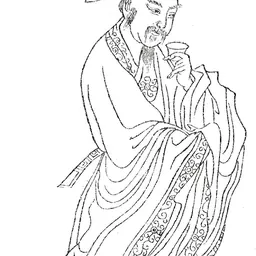

Related people
Same field, nearest in time


Contemporaries
People whose lives overlapped Du Cong's


Frequently asked questions
Who was Du Cong?
Chinese chancellor
When was Du Cong born?
Du Cong was born in 794.
When did Du Cong die?
Du Cong died in 873.
What was Du Cong's occupation?
Du Cong was a politician.
What nationality was Du Cong?
Du Cong was Chinese.
Sources & further reading
Cite this page
APA: Biography.guide. (2026). Du Cong. https://biography.guide/du-cong/
MLA: "Du Cong." Biography.guide, https://biography.guide/du-cong/.
Chicago: "Du Cong." Biography.guide. https://biography.guide/du-cong/.
Data last updated: 2026-09-20 · Spot an error? Report a correction.
Page generated 2026-09-27 05:13 UTC