
About Li Deyu
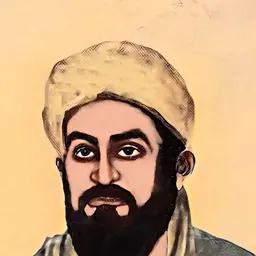
Lived 787 – 850 (aged 62–63). Li Deyu was a Chinese poet, calligrapher and politician.
Li Deyu (; 787 – January 26, 850 ), courtesy name Wenrao , formally the Duke of Wei , was a Chinese poet, politician, and writer during the Tang dynasty, serving as a chancellor during the reigns of brothers Emperor Wenzong and Emperor Wuzong and (briefly) their uncle Emperor Xuānzong. He was the leader of the so-called Li Faction in the decades-long Niu-Li Factional Struggles, and was particularly powerful during Emperor Wuzong's reign, dominating the court scene and guiding policies during the campaigns against the crumbling Uyghur Khanate and against the warlord Liu Zhen. After Emperor Wuzong's death, Emperor Xuānzong, who had long despised him for his hold on power, had him demoted and banished, where he died in exile.
Background Li Deyu was born in 787, during the reign of Emperor Dezong. His grandfather Li Qiyun served as the chief imperial censor, and his father Li Jifu would eventually serve as a chancellor during the reign of Emperor Dezong's grandson Emperor Xianzong. It was said that Li Deyu was ambitious in his youth and was studious, particularly concentrating on the Book of Han and the Zuo Zhuan. However, he did not want to submit to imperial examinations. During Emperor Dezong's Zhenyuan era (785–805), when Li Jifu was in exile, Li Deyu accompanied his father and did not seek an official career. Emperor Muzong made Li Deyu, in addition to his imperial censor position, an imperial scholar (翰林學士, Hanlin Xueshi) as well. It was said that because Emperor Muzong had long heard about Li Jifu while he was crown prince, he had respect for Li Deyu. Soon thereafter, Li Deyu was made Tuntian Yuanwailang , a low-level official at the ministry of public works (工部, Gongbu), and continued to be imperial scholar. It was said that because Li Deyu saw that at the time, the imperial relatives were becoming influential and making improper requests, he submitted a petition that requested that imperial relatives be required to meet the chancellors at the Office of the Chancellors, rather than at private homes. Li Deyu was then promoted to be Kaogong Langzhong , a supervisory official at the ministry of civil service affairs (吏部, Libu), and put in charge of drafting edicts.
At the time that Li Deyu was made the governor of Zhexi, Zhexi had just suffered through a plot by the officer Wang Guoqing to overthrow Li Deyu's predecessor Dou Yizhi, and it was said that after the plot was over, Dou exhausted the circuit treasury trying to placate the soldiers. It was said that Li Deyu lived frugally, and gave the remainder of his own expense budget to the soldiers, such that while he did not give them all that much, they were satisfied, and that two years after his commission, the treasury was full again. It was also said that he sought to change the ways of the circuit's people, to eliminate customs that were harmful to them. For example, the people of the circuit were superstitious and fearful of evil spirits, such that if close family members were ill, they would abandon their family members. Li Deyu taught the knowledgeable among the people that this was undue superstition, and further punished those who abandoned family members, such that within a few years, this custom was gone. He also catalogued the various temples in the circuit—such that only those that worshipped good historical figures were allowed to remain, while he destroyed 1,010 other temples. He further destroyed 1,460 houses in the mountains so that they could not be used by bandits as operation bases.
Later in 830, Li Deyu was moved from Yicheng to Xichuan Circuit (西川, headquartered in modern Chengdu, Sichuan), which had recently suffered from a Nanzhao incursion in 829 and was said to be weak in its defenses. Upon Li Deyu's arrival in Xichuan, he consulted with many old soldiers and officers of Xichuan to quickly familiarize himself with the fronts with Nanzhao and Tufan. He also sought reinforcements, pointing out that Xichuan's forces had been severely weakened. After his requests were granted, Li Deyu also trained the soldiers, built up the defenses of the border forts, and stored emergency food supplies, and it was said that the people of Xichuan, who were previously fearful of another Nanzhao invasion, were pacified.
After chancellorship However, Zheng Zhu continued to attack Li Deyu. In 835, Zheng's associates Wang Fan and Li Han accused Li Deyu of associating with Du Zhongyang the wet nurse of Emperor Wenzong's brother Li Cou, formerly the Prince of Zhang (who had, by this point been demoted to be the Duke of Chao County), in order to support Li Cou against Emperor Wenzong. Emperor Wenzong, in anger, summoned a meeting with the chancellors, Zheng, Wang, and Li Han. Li Deyu's colleague as chancellor, Lu Sui, spoke in his defense, so initially, the only consequence that Li Deyu suffered was that he was made Taizi Binke , a member of Li Yong's staff—but sent to have his office at the eastern capital Luoyang, making the title entirely honorary. Subsequently, Lu was himself stripped of his chancellor title and made the military governor of Zhenghai on account of his defending Li Deyu. After Lu's demotion, Li Deyu was further demoted to be the secretary general of Yuan Prefecture (袁州, in modern Yichun, Jiangxi), on charges that he did not visit Emperor Wenzong when Emperor Wenzong was ill and that his tax collection at Xichuan caused the people trouble. When, subsequently, Li Zongmin also incurred Emperor Wenzong's wrath and was exiled as well, Zheng and Li Zhongyan (whose name had been changed to Li Xun at this point) were able to use the opportunity to accuse any imperial official they disliked of being an associate of Li Zongmin or Li Deyu, and those accused were often exiled or demoted.
During Emperor Wuzong's reign
Before the Uyghur campaign In 840, Emperor Wenzong died and was succeeded by his younger brother, Emperor Wuzong—who was not the choice of Emperor Wenzong (who wanted their nephew Li Chengmei to succeed him) or the chancellors Yang Sifu (whom Emperor Wuzong later believed had supported another brother of his, Li Rong the Prince of An) and Li Jue (whom Emperor Wuzong later believed had supported Li Chengmei), —but was chosen by the powerful eunuchs Qiu Shiliang and Yu Hongzhi . The official Liu Gongquan was friendly with Li Deyu, but when Cui Gong recommended Liu to be an imperial scholar to be in charge of Jixian Institute , Li Deyu was displeased because this recommendation was not made by him. He therefore found an excuse to have Liu made Taizi Zhanshi —an entirely honorary post with no authorities.
With the Uyghur campaign over, Li Deyu sought to revisit the Xidamou incident, which had occurred 12 years earlier—submitting a petition that painted Niu as jealous of him and causing a great injustice, and also arguing that Wei Prefecture would have served as a forward attack point against Tufan. At Li Deyu's urging, Emperor Wuzong posthumously honored Xidamou as a general.
The Zhaoyi campaign
Events of 843 In summer 843, Liu Congjian was growing ill, and he wanted his adoptive son and biological nephew Liu Zhen to succeed him as the military governor of Zhaoyi. Liu Congjian soon died, but Liu Zhen did not announce his death and had petitions written in Liu Congjian's name requesting that Liu Zhen be made military governor. The chancellors largely believed that a campaign against Zhaoyi would be difficult to wage and therefore suggested that the request be granted. Li Deyu, however, argued that Zhaoyi, unlike Lulong and two other circuits north of the Yellow River—Weibo (魏博, headquartered in modern Handan, Hebei) and Chengde (成德, headquartered in modern Shijiazhuang, Hebei)—did not have a tradition of defying the imperial government, and therefore suggested that Liu Congjian's petition be denied, pointing out that allowing the Liu family to continue to hold Zhaoyi would cause other military governors to want to follow suit. He further suggested that, in order to make sure that Weibo's military governor He Hongjing and Chengde's military governor Wang Yuankui would not assist Liu Zhen, explicit promises be made to He Hongjing and Wang that their circuits would not be interfered with, and that they would be responsible for capturing three of Zhaoyi's five prefectures east of the Taihang Mountains, thus making sure that imperial forces would not operate close to Weibo or Chengde. Emperor Wuzong agreed, and imperial messengers were dispatched to Weibo and Chengde; He Hongjing and Wang agreed to follow imperial orders. (Meanwhile, Li Deyu used the opportunity to strike at Li Zongmin—by accusing Li Zongmin of being an associate of Liu Congjian's—and had Li Zongmin sent out of Luoyang to be the prefect of Hu Prefecture (湖州, in modern Huzhou, Zhejiang).
By this point, the Zhaoyi soldiers at Xing, Ming, and Ci Prefectures had been tired out by the war and enraged with Liu Zhen's trusted officer Liu Xi , who was collecting taxes even from the soldiers' family members, against the pleas by Liu Congjian's brother-in-law Pei Wen , whom Liu Zhen had put in charge of the three prefectures. Pei, also angered by Liu Xi and believing the situation to be hopeless, surrendered along with Wang Zhao to Wang Yuankui and He Hongjing. At Li Deyu's urging, Emperor Wuzong quickly sent the imperially-commissioned military governor Lu Jun to take over the three prefectures, before Wang Yuankui and He Hongjing could consider asking that the three prefectures be annexed to their circuits.
After the Zhaoyi campaign, Li Deyu was becoming even more powerful in Emperor Wuzong's government, but he was also drawing resentment for his harshness. For example, after the end of the campaign, he had Emperor Wuzong issue an edict announcing that the family members of Li Xun, Wang Ya, and Jia Su, who had previously been sheltered by Liu Congjian and Liu Zhen after fleeing to Zhaoyi but whom Guo then executed, had been executed, referring to them as the family members of traitors. He further had the Zhaoyi officers who had previously surrendered list Liu Zhen's collaborators and were slaughtering them in large numbers, even though Lu Jun was arguing that too many people were being innocently killed. He further carried out reprisals against Li Zongmin and Niu Sengru, accusing them of having been in communications with Liu Congjian and Liu Zhen despite the lack of evidence—going as far as having Liu Congjian's secretary Zheng Qing claim that whenever Liu Congjian received letters from Li Zongmin or Niu, he would read them and burn them. Emperor Wuzong, believing Li Deyu's accusations, had Li Zongmin and Niu demoted and exiled several times, eventually with Niu being made the secretary general of Xun Prefecture (循州, in modern Huizhou, Guangdong), and Li Zongmin stripped of all offices and exiled to Feng Prefecture (封州, in modern Zhaoqing, Guangdong).
Later in 845, at Li Deyu's suggestion, Emperor Wuzong established a special treasury for the purpose of border defense, setting aside funds for that purpose. Also, when Emperor Wuzong wanted to create his favorite concubine Consort Wang empress, Li Deyu opposed on the grounds that Consort Wang was of low birth and was sonless, so Emperor Wuzong did not do so. It was said that by this point, as Du Cong and Cui Xuan were no longer chancellors, Li Deyu wielded all the chancellor powers, such that even the eunuchs and Emperor Wuzong were becoming displeased with him. When the imperial attendant Wei Hongzhi suggested that Li Deyu, as chancellor, should not further be in control of the imperial treasury, Li Deyu submitted a defense of himself and had Wei demoted, further angering other officials.
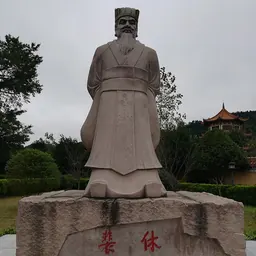
Posthumous perception Statues of five exiled officials, including Li Deyu, in the Temple of the Five Lords. The lead editor of the Old Book of Tang, the Later Jin chancellor Liu Xu, had this to say about Li Deyu:
On the island of Hainan, Li Deyu has been commemorated in the Temple of Five Lords since the time of the Ming dynasty.
In fiction Played by Lau Dan, a fictionalized version of Li Deyu was portrayed in 2009 Hong Kong's TVB television series, Beyond the Realm of Conscience.
Notes and references
Old Book of Tang, vol. 174. New Book of Tang, vol. 180. Zizhi Tongjian, vols. 241, 243, 244, 245, 246, 247, 248.
Don’t just read it —
keep it.
Full-length biographies made to live with: read them, listen on the way to work, watch them tonight.
- E-book
- Audio
- Video
Instant download · yours to keep · every purchase keeps this site free
Important facts
People in Li Deyu's life
Named in this biography and alive at the same time



Related people
Same field, nearest in time


Contemporaries
People whose lives overlapped Li Deyu's


Frequently asked questions
Who was Li Deyu?
Chinese writer and chancellor (787-850)
When was Li Deyu born?
Li Deyu was born in 787.
When did Li Deyu die?
Li Deyu died on 26 January 850 in Haikou.
What was Li Deyu's occupation?
Li Deyu was a poet, calligrapher and politician.
What nationality was Li Deyu?
Li Deyu was Chinese.
Sources & further reading
Cite this page
APA: Biography.guide. (2026). Li Deyu. https://biography.guide/li-deyu/
MLA: "Li Deyu." Biography.guide, https://biography.guide/li-deyu/.
Chicago: "Li Deyu." Biography.guide. https://biography.guide/li-deyu/.
Data last updated: 2026-09-20 · Spot an error? Report a correction.
Page generated 2026-09-27 04:58 UTC