
About Niu Sengru
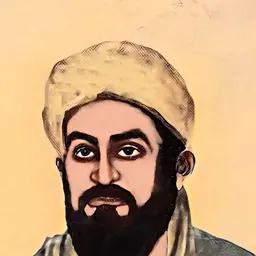
Lived 780 – 849 (aged 68–69). Niu Sengru was a Chinese poet, beamter and writer.
Niu Sengru (; 780 – January 27, 849 ), courtesy name Si'an , posthumous name Duke Wenzhen of Qizhang , was a prominent statesman, scholar, chuanqi writer, and poet of China's Tang dynasty. Niu served multiple terms as a chancellor under Emperor Muzong and the latter's sons Emperor Jingzong and Emperor Wenzong. Alternately in and out of imperial favor and high office amid turbulence in the imperial court, Niu also served as the minister of war and a provincial military governor. Traditional historians often considered him a leader of the eponymous "Niu faction" in the Niu-Li factional struggles of the eighth-century Tang court, though contemporary scholars have questioned the degree to which Niu actively engaged in factional politics. Niu was regarded by contemporaries, including his political adversary Li Deyu, as an official of high integrity, and he was posthumously awarded prestigious honors after his death in the reign of Emperor Xuanzong.
Niu's literary output spanned multiple genres, including poetry and chuanqi, a form of fantastical short story popular in the later Tang. Niu's chuanqi anthology Accounts of Mysteries and Monsters (玄怪錄) is considered a step in the evolution of Tang fiction. While prior chuanqi writers had presented their writings as reflections of actual events, Niu clearly portrayed his subject matter as fictional and included detailed characterization in his work.
Background Assuming that Niu Sengru died in the Wuchen year of the Dazhong era (847-859) of Emperor Xuānzong as asserted in the commemorative text written by Li Jue, in 780, during the reign of Emperor Dezong. He was a descendant of the prominent Sui dynasty official Niu Hong . His grandfather Niu Shao served as a consultant at the ministry of worship, while his father Niu Youwen served as a county magistrate. His father died when he was young, and he tended a farm at Xiadu (下杜, near the capital Chang'an) that his family had previously been bestowed to make a living. He was capable in writing, and eventually passed the imperial examinations
During Emperor Xianzong's reign Niu Sengru eventually did serve as the magistrate of Yijue County (伊闕, in modern Luoyang, Henan). In 808, when Emperor Dezong's grandson Emperor Xianzong held a special imperial examination for the examinees to give honest criticism of government, the officials in charge of the examination, Wei Guanzhi and Yang Yuling , selected three examinees who gave blunt criticism — Niu, Huangfu Shi , and Li Zongmin — for top marks. However, the chancellor Li Jifu were stung by the criticism that they gave and viewed these as personal attacks against him. Li Jifu tearfully complained to Emperor Xianzong that the reviewers of the scores that Wei and Yang gave — the imperial scholars Pei Ji and Wang Ya — had conflicts of interest, as Huangfu was Wang's nephew. As a result of Li Jifu's accusations, Pei, Wang, Yang, and Wei were all demoted, with Wei initially demoted to be the prefect of Guo Prefecture (果州, in modern Nanchong, Sichuan), and then further moved to be the prefect of Ba Prefecture (巴州, in modern Bazhong, Sichuan). Niu, Huangfu, and Li Zongmin were not exiled, but they were said in the Zizhi Tongjian to be effectively stalled in their careers, forcing them to find governmental positions themselves under regional governors. However, the other traditional accounts of Niu's own career did not indicate that he served under a regional governor at all; rather, he continued to serve as the magistrate of Yijue, and then the magistrate of Henan County (河南, one of the two counties making up the eastern capital Luoyang). He later served as an imperial censor with the title Jiancha Yushi , then Kaogong Yuanwailang , a low-level official at the ministry of civil service affairs (吏部, Libu), as well as an imperial scholar at Jixian Hall .
Emperor Muzong agreed with Niu and accepted his suggestion. After Han Hong had offered to stay at the capital Chang'an in 819, he, at Han Gongwu's suggestion, offered many bribes to other officials in Chang'an such that his deeds at Xuanwu would not be further looked into. It was said that, with Niu and Li Zongmin in power, they spent much effort in expelling Li Deyu's partisans out of the central government. and, when Niu met Emperor Wenzong, he spoke about the proper ways of father-son relationships, causing Emperor Wenzong to weep. Subsequently, Niu claimed a foot illness and did not meet Emperor Wenzong at the palace again, and Emperor Wenzong excused Niu from his presence. In 839, Emperor Wenzong made Niu the military governor of Shannan East Circuit and the prefect of its capital prefecture Xiang Prefecture , and having him keep the Tong Zhongshu Menxia Pingzhangshi and Sikong titles as honorary titles. He also awarded Niu many rare ancient vessels and informed Niu that he did not need to rush to report to Shannan East Circuit. Niu, pointing out that Shannan East had just suffered major natural disasters and needed to be tended to immediately, left for Shannan East immediately despite Emperor Wenzong's words. Emperor Wuzong conferred the honorary title of acting Situ (司徒, also one of the Three Excellencies) on Niu Sengru. In 842, Niu was again made the defender of Luoyang. (This was commonly viewed as part of a plan for Li Deyu to take vengeance against Niu and Li Zongmin, abandoned only after Li Deyu found a more powerful way to attack them directly).
Later in 843, Liu Congjian the military governor of Zhaoyi Circuit (昭義, headquartered in modern Changzhi, Shanxi). Emperor Wuzong, under Li Deyu's advice, refused to allow Liu Congjian's designated heir, Liu Congjian's nephew Liu Zhen (whom Liu Congjian had adopted as a son), to inherit the circuit and further ordered a general campaign against Liu Zhen.
During Emperor Xuānzong's reign In 846, Emperor Wuzong died and was succeeded by his uncle Emperor Xuānzong. Emperor Xuāanzong, who had disliked Li Deyu's hold on power, deposed Li Deyu from his post as chancellor, and shortly after began moving the five former chancellors that Emperor Wuzong had exiled — Niu Sengru, Li Zongmin, Cui Gong, Yang Sifu, and Li Jue — closer to the capital, and Niu was moved to be the military advisor to the prefect of Heng Prefecture (Hengyang, Hunan). He was later moved to Ru Prefecture (汝州, in modern Pingdingshan, Henan), before being recalled to Chang'an to again be advisor to the Crown Prince. He died in 849 and was given posthumous honors.
Notes and references
Old Book of Tang, vol. 172. New Book of Tang, vol. 174. Zizhi Tongjian, vols. 237, 242, 243, 244, 246, 248.
Don’t just read it —
keep it.
Full-length biographies made to live with: read them, listen on the way to work, watch them tonight.
- E-book
- Audio
- Video
Instant download · yours to keep · every purchase keeps this site free
Important facts
People in Niu Sengru's life
Named in this biography and alive at the same time



Related people
Same field, nearest in time


Contemporaries
People whose lives overlapped Niu Sengru's



Frequently asked questions
Who was Niu Sengru?
chancellor of Tang Dynasty
When was Niu Sengru born?
Niu Sengru was born in 780 in Shaanxi.
When did Niu Sengru die?
Niu Sengru died on 27 January 849 in Chang'an.
What was Niu Sengru's occupation?
Niu Sengru was a poet, beamter and writer.
What nationality was Niu Sengru?
Niu Sengru was Chinese.
Sources & further reading
Cite this page
APA: Biography.guide. (2026). Niu Sengru. https://biography.guide/niu-sengru/
MLA: "Niu Sengru." Biography.guide, https://biography.guide/niu-sengru/.
Chicago: "Niu Sengru." Biography.guide. https://biography.guide/niu-sengru/.
Data last updated: 2026-09-20 · Spot an error? Report a correction.
Page generated 2026-09-27 05:33 UTC