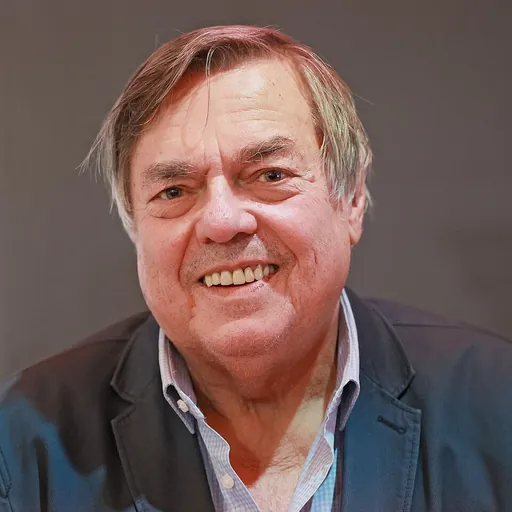
About Drago Jančar
Born 1948. Drago Jančar is a Slovenian and Yugoslav writer, screenwriter, playwright, essayist, dramaturge and poet.
Drago Jančar (; born 13 April 1948) is a Slovenian writer, playwright and essayist. Jančar is one of the best-known contemporary Slovene writers. In Slovenia, he is also known for his political commentaries and civic engagement. Jančar's novels, essays, and short stories have been translated into 21 languages and published in Europe, Asia, and the United States. The most numerous translations are into German, followed by Czech and Croatian. he soon came into conflict with the communist establishment because he published some articles critical of the ruling regime. He had to leave the journal. He soon found a job as an assistant at the Maribor daily newspaper Večer. for "spreading hostile propaganda" but was released after three months. Immediately after his release, he was called up for military service in southern Serbia, where he was subjected to systematic harassment by his superiors due to his "criminal record".
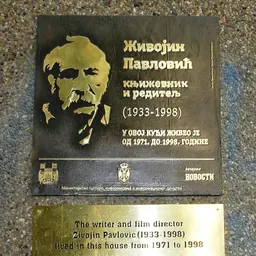
After completing military service, Jančar briefly returned to Večer, but he was allowed to perform only administrative work. He decided to move to Ljubljana, where he came into contact with several influential artists and intellectuals who were also critical of the cultural policies of the communist establishment, among them Edvard Kocbek, Ivan Urbančič, Alenka Puhar, Marjan Rožanc, and Rudi Šeligo. Between 1978 and 1980, he worked as a screenwriter in the film studio Viba Film, but he quit because his adaptation of Vitomil Zupan's script for Živojin Pavlović's movie See You in the Next War was censored. In 1981, he worked as a secretary for the Slovenska matica publishing house, where he is now an editor. In 1982, he was among the co-founders of the journal Nova revija, which soon emerged as the major alternative and opposition voice in communist Slovenia. He also befriended Boris Pahor, a Slovene writer from Trieste who wrote about his experience in the Nazi concentration camps. Jančar has frequently pointed out Pahor's profound influence on him, especially in the essay "The Man Who Said No" (1990), one of the first comprehensive assessments of Pahor's literary and moral role in the post-war era in Slovenia.
Early in his career, Jančar was not allowed to publish his works; however, when Kardelj's and Tito's deaths in the late 1970s led to gradual liberalisation, he was able to work as a screenwriter and playwright. In the mid-1980s, he gained initial success with his novels and short stories, and his plays earned recognition throughout Yugoslavia. Starting in the late 1980s, his fame began to grow outside the country, especially in Central Europe.
Since the early 1990s, he has worked as an editor at the Slovenska matica publishing house in Ljubljana.
Work Jančar started writing as a teenager. His first short novels were published by the magazine Mladina.
Jančar's prose is influenced by modernist models. One of the central themes of his works is the conflict between individuals and repressive institutions, such as prisons, galleys, psychiatric hospitals, and military barracks. He is known for his laconic and highly ironic style, which often makes use of tragicomic twists. Most of his novels explore concrete events and circumstances in Central European history, which he sees as an exemplification of the human condition.
He also writes essays and columns on the current political and cultural situation. During the war in Bosnia, he voiced his support for the Bosnian cause and personally visited the besieged Sarajevo to take supplies collected by the Slovene Writers' Association to the civilian population. In his essay "Short Report from a City Long Besieged" (Kratko poročilo iz dolgo obleganega mesta), he reflected on the war in Yugoslavia and the more general question of the ambiguous role of intellectuals in ethnic, national, and political conflicts.
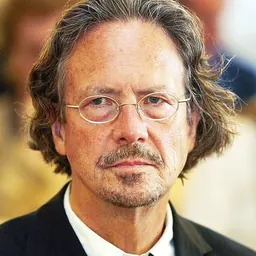
Throughout the 1990s, he engaged in polemics with the Austrian writer Peter Handke regarding the dissolution of Yugoslavia.
The public intellectual
Between 1987 and 1991, Jančar served as the president of the Slovene PEN Center and through this role also actively supported the emergence of Slovenian democracy.
Selected bibliography
Novels Petintrideset stopinj (1974). Thirty-Five Degrees Galjot (1978). The Galley Slave, trans. Michael Biggins (2011). Severni sij (1984). Northern Lights, trans. Michael Biggins (2001). Pogled angela (1992). Angel's Gaze Posmehljivo poželenje (1993). Mocking Desire, trans. Michael Biggins (1998). Zvenenje v glavi (1998). Ringing in the Head Katarina, pav in jezuit (2000). Katarina, the Peacock and the Jesuit Graditelj (2006). The Builder Drevo brez imena (2008). The Tree with No Name, trans. Michael Biggins (2014). To noč sem jo videl (2010). I Saw Her That Night, trans. Michael Biggins (2016). In ljubezen tudi (2017). And Love Itself Ob nastanku sveta (2022). At the Creation of the World Short story collections
Romanje gospoda Houžvičke (1971). The Pilgrimage of Houžvičke O bledem hudodelcu (1978). About a Pale Criminal Smrt pri Mariji Snežni (1985). Death at Mary of the Snows Pogled angela (1992). The Look of an Angel Augsburg in druge resnične pripovedi (1994). Augsburg and Other True Stories Ultima kreatura (1995) Prikazen iz Rovenske (1998). The Specter from Rovenska Človek, ki je pogledal v tolmun (2004). The Man Who Looked into a Tarn Joyce's Pupil (2006). Trans. Alasdair MacKinnon, Lili Potpara and Andrew Baruch Wachtel. Selections from Smrt pri Mariji Snežni, Pogled angela, Augsburg, Ultima kreatura, and others. The Prophecy and Other Stories (2009). Trans. Andrew Baruch Wachtel. Selections from Smrt pri Mariji Snežni, Prikazen iz Rovenske, and Človek, ki je pogledal v tolmun.
Plays Disident Arnož in njegovi (1982). Dissident Arnož and His Band Veliki briljantni valček (1985). The Great Brilliant Waltz Vsi tirani mameluki so hud konec vzeli ... (1986). All Mameluk Tyrants Had a Bad End... Daedalus (1988) Klementov padec (1988). Klement's Fall Zalezujoč Godota (1988). Stakeout at Godot's, trans. Anne Čeh (1997). Halštat (1994) Severni sij (2005). Northern Lights Niha ura tiha (2007). The Silently Oscillating Clock
Essays Razbiti vrč (1992). The Broken Jug Egiptovski lonci mesa (1994). The Fleshpots of Egypt Brioni (2002) Duša Evrope (2006). Europe's Soul
Don’t just read it —
keep it.
Full-length biographies made to live with: read them, listen on the way to work, watch them tonight.
- E-book
- Audio
- Video
Instant download · yours to keep · every purchase keeps this site free
Important facts
People in Drago Jančar's life
Named in this biography and alive at the same time





Related people
Same field, nearest in time

Contemporaries
People whose lives overlapped Drago Jančar's

Frequently asked questions
Who is Drago Jančar?
Slovenian writer
When was Drago Jančar born?
Drago Jančar was born on 13 April 1948 in Maribor.
What is Drago Jančar's occupation?
Drago Jančar is a writer, screenwriter, playwright, essayist, dramaturge and poet.
What nationality is Drago Jančar?
Drago Jančar is Slovenian and Yugoslav.
Sources & further reading
Cite this page
APA: Biography.guide. (2026). Drago Jančar. https://biography.guide/drago-jancar/
MLA: "Drago Jančar." Biography.guide, https://biography.guide/drago-jancar/.
Chicago: "Drago Jančar." Biography.guide. https://biography.guide/drago-jancar/.
Data last updated: 2026-09-23 · Spot an error? Report a correction.
Portrait: Wikimedia Commons · author & licence
Page generated 2026-09-27 05:05 UTC