
About Douglas William Jerrold
Lived 1803 – 1857 (aged 54). Douglas William Jerrold was a British writer.
Douglas William Jerrold (3 January 1803 – 8 June 1857) was an English dramatist, journalist, and writer, best known for his satirical wit, his socially critical essays, and his association with the early years of Punch magazine. A prominent figure in Victorian literary and theatrical life, he achieved popular success with plays such as Black-Eyed Susan and was noted for his advocacy of social reform through journalism and drama.
Early life Jerrold's father, Samuel Jerrold, was an actor and lessee of the little theatre of Wilsby near Cranbrook, Kent. In 1807 the family moved to Sheerness, where Jerrold spent his childhood. He occasionally took a child part on the stage, but his father's profession held little attraction for him. In December 1813 he joined the guard ship , where he had Jane Austen's brother Charles Austen as captain, and served as a midshipman until the Treaty of Paris in 1815. He saw nothing of the Napoleonic Wars save a number of wounded soldiers from Waterloo, but he retained an affection for the sea.
The peace of 1815 ruined Jerrold's father; on 1 January 1816 he took his family to London, where Douglas began work as a printer's apprentice, and in 1819 he became a compositor in the printing office of the Sunday Monitor. Several short papers and copies of verses by him had already appeared in the sixpenny magazines, and a criticism of the opera Der Freischütz was admired by the editor, who requested further contributions. He continued to write sparkling comedies until 1854, the date of his last piece, The Heart of Gold.
He founded and edited for some time, with indifferent success, the Illuminated Magazine, Jerrold's Shilling Magazine, and Douglas Jerrold's Weekly Newspaper; and under his editorship from 1852, Lloyd's Weekly Newspaper rose from almost nonentity to a circulation of 182,000. The history of his later years is little more than a catalogue of his literary productions, interrupted now and again by brief visits to the Continent or to the country. The first article of the first issue of the Atlantic Monthly (November 1857) is a lengthy obituary for Jerrold.
Jerrold's figure was small and spare, and in later years he was bowed almost to deformity. His features were strongly marked and expressive, from the thin humorous lips to the keen blue eyes, gleaming from beneath the shaggy eyebrows. He was brisk and active, with the careless bluffness of a sailor. Open and sincere, he concealed neither his anger nor his pleasure; to his sailor's frankness all polite duplicity was distasteful. The cynical side of his nature he kept for his writings; in private life his hand was always open. In politics Jerrold was a Liberal, and he gave eager sympathy to Lajos Kossuth, Giuseppe Mazzini and Louis Blanc. In social politics especially he took an eager part; he never tired of declaiming against the horrors of war, the luxury of bishops, or the iniquity of capital punishment.
Jerrold is now perhaps better known from his reputation as a brilliant wit in conversation than from his writings. As a dramatist he was very popular, though his plays have not kept the stage. He dealt with rather humbler forms of social world than had commonly been represented on the boards. He was one of the first and certainly one of the most successful of the men who in defence of the native English drama endeavoured to stem the tide of translation from the French, which threatened early in the 19th century to drown original native talent. His skill in construction and his mastery of epigram and brilliant dialogue are well exemplified in his comedy, Time Works Wonders (Haymarket, 26 April 1845). The tales and sketches which form the bulk of Jerrold's collected works vary much in skill and interest; but, although there are evident traces of their having been composed from week to week, they are always marked by keen satirical observation and pungent wit.
In 1859 his eldest son William Blanchard Jerrold wrote Life and Remains of Douglas Jerrold (1859). His son also edited The Wit and Opinions of Douglas Jerrold (1858), and The Works of Douglas Jerrold, with a memoir by his son, W. B. Jerrold, in 1863–64, which was never completed. Among the numerous selections from his tales and witticisms are two edited by his grandson, Walter Jerrold, Bons Mots of Charles Lamb and Douglas Jerrold (1904), and The Essays of Douglas Jerrold (1903), illustrated by H. M. Brock.
Jerrold was the great-grandfather of Audrey Mayhew Allen (b. 1870), author of children's stories published in various periodicals and of Gladys in Grammarland, an imitation of Lewis Carroll's Alice in Wonderland books.
Works
The best known of his numerous works include:
Black-Eyed Susan (1829) play/melodrama The Mutiny At The Nore (1830) play/melodrama The Rent Day (1832) play/melodrama Men of Character (1838), including "Job Pippin: The man who couldn't help it", and other sketches of the same kind Cakes and Ale (2 vols., 1842), a collection of short papers and whimsical stories The Story of a Feather (1844) novel The Chronicles of Clovernook (1846) novel A Man made of Money (1849) novel The Catspaw (1850) play St Giles and St James (1851) novel Various series of papers reprinted from Punch's Letters to his Son (1843) Punch's Complete Letter-writer (1845) Mrs Caudle's Curtain Lectures (1846) A collected edition of his writings appeared between 1851 and 1854.
Notes and references
Don’t just read it —
keep it.
Full-length biographies made to live with: read them, listen on the way to work, watch them tonight.
- E-book
- Audio
- Video
Instant download · yours to keep · every purchase keeps this site free
Important facts
People in Douglas William Jerrold's life
Named in this biography and alive at the same time
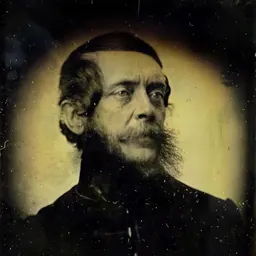
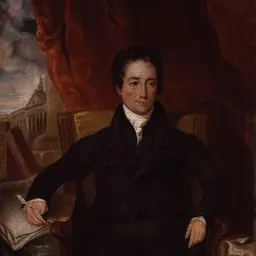

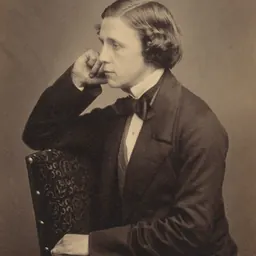
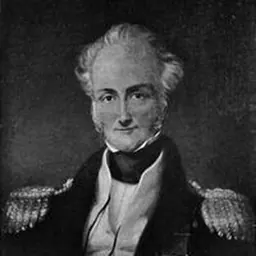


Related people
Same field, nearest in time



Contemporaries
People whose lives overlapped Douglas William Jerrold's





Frequently asked questions
Who was Douglas William Jerrold?
English dramatist and writer (1803-1857)
When was Douglas William Jerrold born?
Douglas William Jerrold was born on 3 January 1803 in London.
When did Douglas William Jerrold die?
Douglas William Jerrold died on 8 June 1857 in London.
What was Douglas William Jerrold's occupation?
Douglas William Jerrold was a writer.
What nationality was Douglas William Jerrold?
Douglas William Jerrold was British.
Sources & further reading
· Wikipedia: Douglas William Jerrold
· DBpedia: Douglas William Jerrold
Cite this page
APA: Biography.guide. (2026). Douglas William Jerrold. https://biography.guide/douglas-william-jerrold/
MLA: "Douglas William Jerrold." Biography.guide, https://biography.guide/douglas-william-jerrold/.
Chicago: "Douglas William Jerrold." Biography.guide. https://biography.guide/douglas-william-jerrold/.
Data last updated: 2026-09-20 · Spot an error? Report a correction.
Page generated 2026-09-27 05:34 UTC