
About Douglas Snelling
Lived 1916 – 1985 (aged 68–69). Douglas Snelling was an Australian architect.
Douglas Burrage Snelling (1916–1985) was an Australian architect and designer.
Early life He was born on 24 February 1916, the only child of a bootmaker, Albert Edward Snelling, and his wife Ethel May, née Burrage, in Gravesend, Kent, England. He arrived in Wellington, New Zealand, with his parents in 1926. In 1937, he travelled to Hollywood, where he freelanced making sketches, and began to emulate Errol Flynn's style.
He returned to New Zealand, in 1938, and became a writer, broadcaster and publicist of new movies and stars, until 1940.
He moved to Sydney in 1940 and worked as a publicist and in a munitions factory during the beginning of World War II.
Product designer (1945—1948) In 1945, he married New Zealand heiress Nancy Bear née Springhall. With her money, he opened a business designing shop windows and furniture. His chairs featured parachute webbing and functional modernist designs, and according to the Powerhouse Museum, were "Australia's first popular, mass produced range of furniture sold widely through the major department stores from the late 1940s to the mid 1950s." The now iconic chairs, branded with other designs as the "Snelling Line", went on sale, in 1946, from the department store Anthony Hordens. Snelling became a partner in a company, Functional Products Pty. Ltd, that made furniture in a factory at St Peters, from 1947 to 1955. For Australia at the time, the chair designs were revolutionary. In reality, they were near copies, made from Australian hardwood, that were adapted from the '600 series' wartime-production designs that Danish-American designer, Jens Risom (1916–2016) had made for his business partner, Hans Knoll, in 1941. Snelling also did work for a consumer electronics manufacturer, Kriesler, including on the design of the bakelite case of their iconic 'Sealed Midget' (Model 11-4) radio, also known as the 'Beehive', made from 1946 to 1948.
Both the furniture range and radio were radical departures from staid and conventional pre-war designs; both sold in large numbers in Australia, during the consumption boom after the end of wartime austerity measures. Examples of his furniture are included in the collections of the National Gallery of Victoria and the Museum of Applied Arts and Sciences. There remains a thriving market for his webbing chairs, and the radio remains of interest to collectors of bakelite radios. While in America, he was inspired by Frank Lloyd Wright's work. Snelling would also be influenced by other California-based American architects who were associated with Wright's design tradition, notably, Gordon Drake, Harwell Hamilton Harris, and Richard Neutra.
When they returned to Australia in 1948, Snelling met architect, Harry Seidler, and began designing houses. However, his very first competed building was the factory building in which his furniture was made, at St Peters. Otherwise, he seems to have begun his practice, Douglass B. Snelling & Associates, in 1948, drawing upon his previous experience and redesigning shop interiors and displays, including the Children's Department of the Sydney Snow department store and two other city shops. His first significant house design, in 1949, was the modernist house that Snelling designed as his own home but sold before moving in, Perpetua, in Northbridge; many years later and after becoming run down, the house was redesigned by Alexander Tzannes, and it won that architect the Wilkinson Award and Robin Boyd Award for 1997.
Snelling emerged as an architect for the wealthy and socially-prominent in Sydney. One of his designs, the Kelly house at Bellevue Hill, won the House of the Year Award, from the Melbourne-based Architecture and Arts magazine, for houses constructed during 1955. This was in marked contrast to the functional, European-influenced small house designs being produced around the same time, by Harry Seidler.
From the mid-1950s to the mid-1970s, other Australian architects and designers often favored Scandinavian modernism, British "new brutalism", or the Australian regional modernism of the Sydney School, also known as the 'nuts and berries style'. The style of Snelling's earlier house designs was probably closest to, or a forerunner of, the Sydney School in approach.
Later, he preferred California-Polynesian tropical paradise themed designs; these were also known as 'tiki style' and can be considered a part of the wider post-war societal fascination with Polynesian-inspired 'tiki culture' themes. This style was used in two of his designs that were built in Sydney, at Clareville in 1965 and Vaucluse in 1967. The house at Vaucluse—the second 'Kelly house', called Tahiti—had an 'infinity pool', the first such swimming pool in Australia and probably only the second in the world. He wrote on the subject of Kymer sculpture
It seemed as if his and Patricia's was a glamorous, near ideal lifestyle, but that was not the reality. Snelling's stepdaughter recalled that, from around the time of their first son's birth, in 1963, Patricia had become progressively more unhappy and ill, that the pair generally started drinking, at 5 p.m. each day, and that, due to Snelling's controlling behaviour, her mother seemed to have no life of her own. She recalled that Snelling sought to control who was in Patricia's circle of friends and prevailed upon her to be on the socially-prominent Black and White Committee, to maintain their social standing In 2021, ten of his buildings were included in the Australian Institute of Architects' list of significant buildings in New South Wales.
Snelling and looted antiquities In a June 2022 episode of the ABC Radio National current affairs series Background Briefing, it was reported that, during his time in Asia, Snelling had acquired many pieces of rare Khmer art for his private collection via the black market, knowing them to have been looted.
Snelling exhibited his collection of Kymer artifacts at the Australian Museum, in 1974. At the time, the collection was said to be worth $A280,000. The exhibition was opened by Chhut Chhoeur, the Ambassador of the Khmer Republic, which fell to the Kymer Rouge in 1975. He had obtained about twenty artifacts in 1965. Apart from a few small pieces he said were given to him by members of the Cambodian Royal Family, he stated, in an excerpt from a personal letter he wrote during this time, that the rest were purchased "outside the borders of Cambodia", presumably in Thailand.
In the same personal letter, Snelling bragged about how cheaply he had acquired the Khmer antiquities; he revealed that he knew those antiquities were from Angkor Wat; he derided the people he purchased the items from as "ignorant peasants"; and he described in detail how he had shipped various items home to Sydney but had kept others with him so that he could successfully smuggle them out of Thailand. The ABC report also cited evidence, discovered in a 1970s episode of the ABC-TV current affairs series Four Corners, when Snelling was interviewed about design at his Sydney home, in which many key Khmer items in his collection are clearly visible. Most but not all of the collection was sold off before Snelling left Australia, and Background Briefing was able to trace several of these looted pieces, which are now held by major US institutions, including the Norton Simon Museum and the Los Angeles County Museum of Art.
Snelling acquired his collection during the days of the Kymer Republic;
Don’t just read it —
keep it.
Full-length biographies made to live with: read them, listen on the way to work, watch them tonight.
- E-book
- Audio
- Video
Instant download · yours to keep · every purchase keeps this site free
Important facts
People in Douglas Snelling's life
Named in this biography and alive at the same time
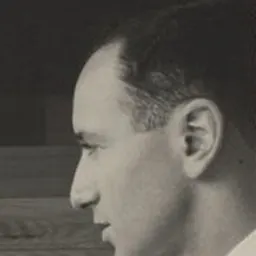



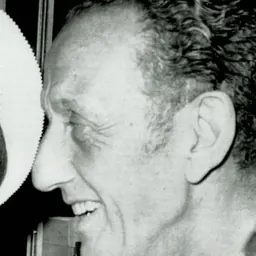

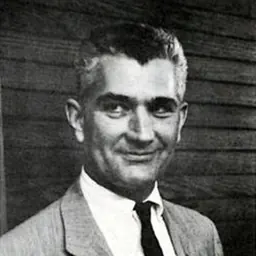
Related people
Same field, nearest in time
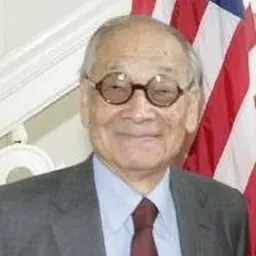

Contemporaries
People whose lives overlapped Douglas Snelling's




Frequently asked questions
Who was Douglas Snelling?
Architect, multi-disciplinary designer (1916-1985)
When was Douglas Snelling born?
Douglas Snelling was born on 24 February 1916 in Gravesend.
When did Douglas Snelling die?
Douglas Snelling died in 1985.
What was Douglas Snelling's occupation?
Douglas Snelling was an architect.
What nationality was Douglas Snelling?
Douglas Snelling was Australian.
Sources & further reading
Cite this page
APA: Biography.guide. (2026). Douglas Snelling. https://biography.guide/douglas-snelling/
MLA: "Douglas Snelling." Biography.guide, https://biography.guide/douglas-snelling/.
Chicago: "Douglas Snelling." Biography.guide. https://biography.guide/douglas-snelling/.
Data last updated: 2026-09-20 · Spot an error? Report a correction.
Page generated 2026-09-27 05:24 UTC