
About Douglas Slocombe
Lived 1913 – 2016 (aged 103). Douglas Slocombe was a British cinematographer, camera operator and cinematography.
Ralph Douglas Vladimir Slocombe, (10 February 1913 – 22 February 2016) was an English cinematographer. He was particularly known for his work at Ealing Studios in the 1940s and 1950s, and the first three Indiana Jones films. He won three BAFTA Awards for Best Cinematography – The Servant, The Great Gatsby (1974), and Julia (1977) – and was nominated for the equivalent Academy Award on three occasions.
Slocombe received Lifetime Achievement Awards from both the British and American Society of Cinematographers. In 2008, he was ascended an Officer of the Order of the British Empire (OBE) at the 2008 New Year Honours for his contributions to motion pictures.
Early life Slocombe was born in Putney, London, His father was the Paris correspondent for the Daily Herald, and so Slocombe spent part of his upbringing in France, returning to the United Kingdom around 1933. He graduated with a degree in Mathematics from the Sorbonne.
Slocombe initially intended to become a photojournalist, and as a young photographer, he witnessed the early events leading up to the outbreak of World War II. Visiting Danzig in 1939, he photographed the growing anti-Jewish sentiment. In consequence, he was commissioned by American film-maker Herbert Kline to film events for a documentary called Lights Out, covering a Goebbels rally and the burning of a synagogue, for which he was briefly arrested. Slocombe was in Warsaw with a movie camera on 1 September 1939 when Germany invaded. Accompanied by Kline, he escaped, but his train was machine-gunned by a German aeroplane. In 2014, he said of the experience that: I had no understanding of the concept of blitzkrieg. I had been expecting trouble but I thought it would be in trenches, like WW1. The Germans were coming over the border at a great pace ... We were trundling through the countryside at night. We kept stopping for no apparent reason, but we came to a screeching halt because a German plane was bombing us. After its first pass we climbed out the window and crawled under the carriage. The plane came back and started machine-gunning. A young girl died in front of us.
Work
Ealing Studios After returning to England, Slocombe became a cinematographer for the British Ministry of Information, shooting footage of Atlantic convoys with the Fleet Air Arm. He also developed a relationship with Ealing Studios, where filmmaker Alberto Cavalcanti, who helped him obtain his position, worked. Slocombe later described his early work on Champagne Charlie (1944) as amateurish, in one case resulting in a sequence having to be reshot.
Slocombe would later speak approvingly of Ealing's culture of script development. However, he also noted that its restrictive studio system headed by Michael Balcon, in which outside work was not normally permitted, made it impractical for him to attempt to begin a career as a director, something which he had considered.
His early films as a cinematographer included such classic Ealing comedies, notably Kind Hearts and Coronets (1949), The Man in the White Suit (1951), The Lavender Hill Mob (1951), and The Titfield Thunderbolt (1953). He was particularly praised for his flexible, high-contrast cinematography for the horror film Dead of Night (1945), and for his bright, colourful West Country summer landscapes on The Titfield Thunderbolt. For Saraband for Dead Lovers (1948), shot in Technicolor, the production team settled on a muted, gloomy style unusual for the time, which Slocombe in 2015 considered as among his best work of the period.
A special effect shot he created was a scene in Kind Hearts and Coronets, in which Alec Guinness, playing eight different characters, appeared as six of them simultaneously in the same frame.
He found widescreen equipment sometimes restrictive, finding the Technirama camera system used on Davy (1958) "a block of flats" and difficult to compose shots with.
After Ealing Financial problems forced Ealing Studios to wind down from 1955 onwards, and close later in the decade. In 2015, Slocombe said of the period that "we had to get on with our careers – there was little time for sentiment."
He won the British Society of Cinematographers Award five times, and was awarded its Lifetime Achievement Award in 1996. He also won a special BAFTA award in 1993. Not all reviews of his later colour work were favourable: while his cinematography on Never Say Never Again (1983) has been described by one author as "subtle, subdued...[it] creates a mellow mood", it has also been assessed as "muddled and brown". Notable among his later films is Rollerball (1975). He was quoted in 1989 as saying of it "there's an excitement in doing action films. I probably enjoy them on a sort of Boy Scout level." Janusz Kamiński, cinematographer on Indiana Jones and the Kingdom of the Crystal Skull, said that he deliberately shot the film to emulate Slocombe's visuals, in order to create an appearance of continuity with the previous pictures.
Personal life Slocombe experienced problems with his vision from the 1980s onwards, including a detached retina in one eye and complications from unsuccessful laser eye surgery in the other, and was nearly blind at the end of his life. Despite his blindness, Slocombe continued to give interviews into his last years, and was interviewed by David A. Ellis in a book entitled Conversations with Cinematographers, in 2011 by French television in French, by the BBC on the invasion of Poland in 2014, and on the history of British films in 2015.
Death Slocombe died on the morning of 22 February 2016, aged 103, in a London hospital from complications following a fall.
Filmography Documentary film Year Title Director Notes 1940 Lights Out in Europe Herbert Kline Uncredited 1943 Greek Testament Charles Hasse San Demetrio London Charles Frend Uncredited
Feature film
Television Year Title Director Notes 1957 Play of the Week Peter Brook Episode "Heaven and Earth" 1975 Love Among the Ruins George Cukor TV movie
Awards and nominations Academy Awards Year Category Title Result Ref. 1972Best Cinematography Travels with My Aunt 1977 Julia 1981 Raiders of the Lost Ark
BAFTA Awards Year Category Title Result Ref. 1964Best Cinematography The Servant 1965 Guns at Batasi 1967 The Blue Max 1969 The Lion in Winter 1974 Travels with My Aunt Jesus Christ Superstar 1975 The Great Gatsby 1976 Rollerball 1979 Julia 1982 Raiders of the Lost Ark 1985 Indiana Jones and the Temple of Doom
American Society of Cinematographers Year Category Result 2002 International Award
British Society of Cinematographers
Los Angeles Film Critics Association Year Category Title Result 1977 Best Cinematography Julia
Don’t just read it —
keep it.
Full-length biographies made to live with: read them, listen on the way to work, watch them tonight.
- E-book
- Audio
- Video
Instant download · yours to keep · every purchase keeps this site free
Important facts
People in Douglas Slocombe's life
Named in this biography and alive at the same time



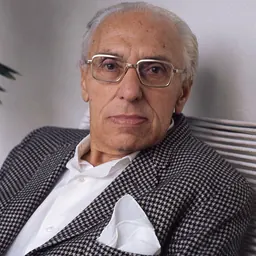

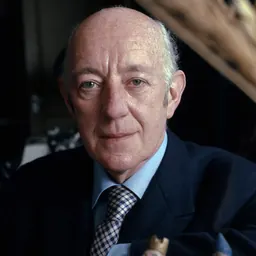
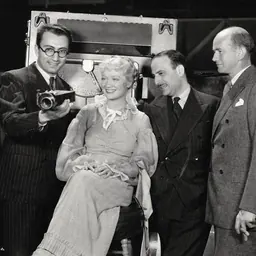

Related people
Same field, nearest in time




Contemporaries
People whose lives overlapped Douglas Slocombe's


Frequently asked questions
Who was Douglas Slocombe?
British cinematographer (1913-2016)
When was Douglas Slocombe born?
Douglas Slocombe was born on 10 February 1913 in Putney.
When did Douglas Slocombe die?
Douglas Slocombe died on 22 February 2016 in London.
What was Douglas Slocombe's occupation?
Douglas Slocombe was a cinematographer, camera operator and cinematography.
What nationality was Douglas Slocombe?
Douglas Slocombe was British.
Sources & further reading
Cite this page
APA: Biography.guide. (2026). Douglas Slocombe. https://biography.guide/douglas-slocombe/
MLA: "Douglas Slocombe." Biography.guide, https://biography.guide/douglas-slocombe/.
Chicago: "Douglas Slocombe." Biography.guide. https://biography.guide/douglas-slocombe/.
Data last updated: 2026-09-22 · Spot an error? Report a correction.
Page generated 2026-09-27 05:12 UTC