
About Douglas Savage
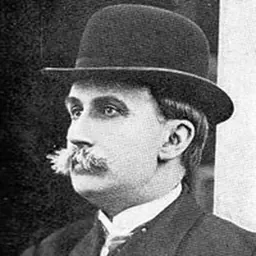
Lived 1892 – 1967 (aged 74–75). Douglas Savage was a British flying ace and military officer.
Douglas Alfred Savage, (1892–1967) was a British flying ace of the First World War, credited with seven aerial victories.
First World War Savage was born in Oxford, where his father Alfred Savage, was a stationer, bookseller and publisher. and first served in a Reserve Battalion of the Royal Warwickshire Regiment, before being transferred to a Service Battalion of his regiment for active service in France. He was transferred to the General List on 23 April 1916 to serve in a trench mortar battalion, where he was briefly appointed an acting-captain between 28 July and 15 August 1916, and then served as acting-lieutenant, until leaving the trench mortar battalion on 4 September 1916. He returned to the Royal Warwickshires, and was promoted to lieutenant on 1 July 1917.
Savage transferred to the Royal Flying Corps, and after completing flight training, was appointed a flying officer on 19 September 1917. He spent two months based at Turnberry serving in No. 82 Squadron, before being posted to No. 62 Squadron to fly the Bristol F.2 two-seater fighter. taking part in patrols, bomber escort, and ground attack missions during the enemy offensive around St. Quentin in the second half of March, being credited with an enemy aircraft driven down out of control on the 26th. However his squadron suffered heavy casualties, losing 24 aircrew killed, wounded or taken prisoner by the end of the month. Savage was credited with two enemy aircraft driven down on 12 April, and two more destroyed in quick succession on the 21st, but was injured when shot down by anti-aircraft fire near Armentières the same day. He gained his sixth victory on 19 May, but his aircraft was badly damaged by enemy fire and he was forced to land. His seventh and final victory came on 2 June.
His award of the Military Cross was gazetted on 23 July 1918. His citation read:
Savage was appointed a flight commander with the acting rank of captain on 2 October 1918. He was transferred to the RAF's unemployed list on 15 June 1919.
List of aerial victories +Combat record He was transferred to the General Duties Branch on 14 October 1940. Savage's probationary period ended on 14 October 1941, and he was promoted to flying officer (war substantive) the same day. He was promoted again, to flight lieutenant, during 1942, as he was appointed an acting squadron leader from that rank on 14 October. Savage was awarded the Air Force Cross in the 1945 New Year Honours.
Don’t just read it —
keep it.
Full-length biographies made to live with: read them, listen on the way to work, watch them tonight.
- E-book
- Audio
- Video
Instant download · yours to keep · every purchase keeps this site free
Important facts
People in Douglas Savage's life
Named in this biography and alive at the same time

Related people
Same field, nearest in time

Contemporaries
People whose lives overlapped Douglas Savage's


Frequently asked questions
Who was Douglas Savage?
British flying ace (1892–1967)
When was Douglas Savage born?
Douglas Savage was born in 1892 in Oxford.
When did Douglas Savage die?
Douglas Savage died in 1967 in Oxford.
What was Douglas Savage's occupation?
Douglas Savage was a flying ace and military officer.
What nationality was Douglas Savage?
Douglas Savage was British.
Sources & further reading
Cite this page
APA: Biography.guide. (2026). Douglas Savage. https://biography.guide/douglas-savage/
MLA: "Douglas Savage." Biography.guide, https://biography.guide/douglas-savage/.
Chicago: "Douglas Savage." Biography.guide. https://biography.guide/douglas-savage/.
Data last updated: 2026-09-20 · Spot an error? Report a correction.
Page generated 2026-09-27 05:14 UTC