
About Dougal Dixon
Born 1947. Dougal Dixon is a British paleontologist, science fiction writer, children's writer, geologist and non-fiction writer, known for After Man, Geology and Palaeontology.
Dougal Dixon (born 1 March 1947) is a Scottish geologist, palaeontologist, educator and author. Dixon has written well over a hundred books on geology and palaeontology, many of them for children, which have been credited with attracting many to the study of the prehistoric animals. Because of his work as a prolific science writer, he has also served as a consultant on dinosaur programmes.
Dixon is most famous for his 1980/90s trilogy of speculative evolution books: After Man (1981), The New Dinosaurs (1988) and Man After Man (1990). These books use imagined future and alternate animals to explain various natural processes, including evolution, natural selection, zoogeography and climate change.
Early life and education Dixon was born in Dumfries on 1 March 1947 to parents Thomas Bell Dixon and Margaret Ann Hurst. He had an older brother, John Edward, who died in 1942 at the age of six. Dixon spent most of his younger years in the Scottish borderlands. He credits the beginning of his writing career as being spawned from his love of creating stories, usually in the form of comic strips, as a child. His comic strips were typically science fiction-themed or otherwise futuristic, and frequently incorporated strange creatures.
In 1970, Dixon graduated from the University of St Andrews with a Bachelor of Science, also with a degree in geology and teaching aids, and in 1972, he graduated with a Master of Science, Dixon's research thesis focused on palaeogeography, tracing the different landscapes of the British Isles throughout their geological history. The majority of Dixon's books are encyclopaedias or children's books concerning palaeontology or geology. reviewers have credited Dixon with attracting many to the study of dinosaurs and many of his books have been praised by critics. Dougal Dixon's Dinosaurs features Dixon's own artwork, an early example of a palaeontology book written and illustrated by the same person.
Dixon himself considers his palaeontology and geology books, due to inspiring others to take an active interest in these fields, to be his greatest contribution to science. He has also hosted a Japanese programme on evolution, during which he travelled across the world, visiting, among other locations, the Galápagos Islands and the Serengeti. In addition to writing his own books, Dixon has also contributed to several collaborative encyclopaedias and dictionaries. and have in some cases spawned adaptations and exhibitions.
Dixon has also been involved in further projects since the After trilogy. In 1998, Dixon was one of the scientists featured on the programme Natural History of an Alien, where several hypothesised alien ecosystems were explored. Dixon's imagined world, "Greenworld", was later utilised in his fourth personal speculative evolution book, Greenworld (2010).
Dixon uses his speculative evolution books to explain various natural processes through fictitious examples: After Man explores evolution and natural selection through a fictional future ecosystem, Dixon's hobbies also include painting and sculpting.
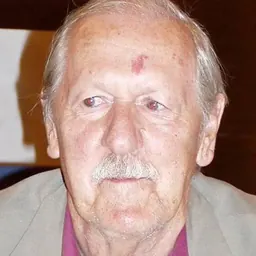
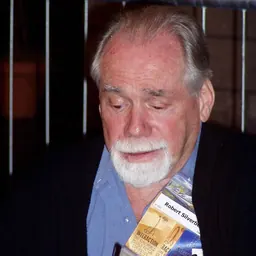
Dixon is a science fiction enthusiast and has attended several conventions, often speaking about the veracity, in terms of evolution and ecology, of alien creatures in science fiction. Dixon has stated that he mostly reads science fiction stories from the "golden age", by writers such as Brian Aldiss, Arthur C. Clarke, Robert Silverberg and Clifford D. Simak.
Dixon has stated that he does not believe in a god "as far as evolution is concerned".
Awards
1993 – Helen Roney Sattler Award, for Dougal Dixon's Dinosaurs. 1993 – Distinguished Achievement Award for Excellence in Educational Journalism, for Dougal Dixon's Dinosaurs. Granted by the Educational Press Association of America. 1994 – Outstanding Science Trade Book Award, for Dougal Dixon's Dinosaurs. Granted by the Children's Book Council. 1996 – Times Educational Supplement Primary Schoolbook Award, for Discovery Dinosaurs. 2019 – Children's Choice Award, for When the Whales Walked. Granted by the School Library Association.
Nominations
1982 – Hugo Award for Best Related Work nomination, for After Man. 1991 – Rhone Poulenc Science Book Prize nomination, for The Big Book of Prehistoric Life.
Don’t just read it —
keep it.
Full-length biographies made to live with: read them, listen on the way to work, watch them tonight.
- E-book
- Audio
- Video
Instant download · yours to keep · every purchase keeps this site free
Important facts
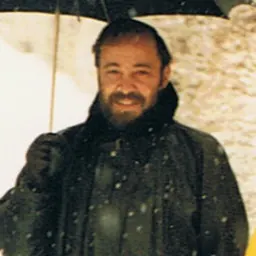
People in Dougal Dixon's life
Named in this biography and alive at the same time





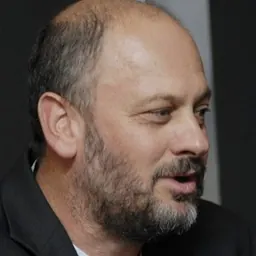
Related people
Same field, nearest in time


Contemporaries
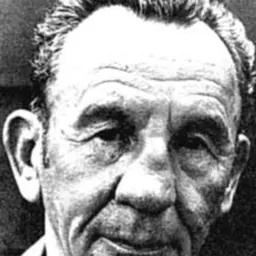
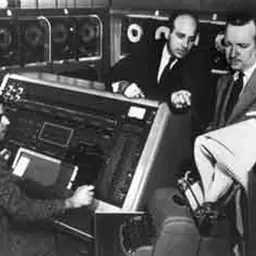
People whose lives overlapped Dougal Dixon's


Frequently asked questions
Who is Dougal Dixon?
British author
When was Dougal Dixon born?
Dougal Dixon was born on 1 March 1947 in Dumfries.
What is Dougal Dixon's occupation?
Dougal Dixon is a paleontologist, science fiction writer, children's writer, geologist and non-fiction writer.
What is Dougal Dixon known for?
Dougal Dixon is known for After Man, Geology, Palaeontology and Speculative evolution.
What nationality is Dougal Dixon?
Dougal Dixon is British.
Sources & further reading
Cite this page
APA: Biography.guide. (2026). Dougal Dixon. https://biography.guide/dougal-dixon/
MLA: "Dougal Dixon." Biography.guide, https://biography.guide/dougal-dixon/.
Chicago: "Dougal Dixon." Biography.guide. https://biography.guide/dougal-dixon/.
Data last updated: 2026-09-20 · Spot an error? Report a correction.
Page generated 2026-09-27 05:24 UTC