
Gregory Retallack
American paleontologist, paleopedology
About Gregory Retallack
Born 1951. Gregory Retallack is an American paleontologist, university teacher, geologist, botanist and academic, known for Paleopedology.
Gregory John Retallack (born 8 November 1951) is an Australian paleontologist, geologist, and author who specializes in paleopedology, the study of fossil soils. He is a professor emeritus at University of Oregon and his research is primarily concerned with the fossil record of soils though Earth history. His research has included investigations into climate change, the extinction of dinosaurs, and the origins of upright walking humans. Retallack has controversially claimed that Ediacaran-era fossils represent terrestrial lichens as opposed to the consensus view that they present marine organisms including animals. He has written two Books on paleopedology, and has appeared in numerous media showFs.
Biography Retallack was born 8 November 1951 in Hobart, Australia.
A fossil collector since a young age, Retallack was outspoken concerning federal seizure in 1993 of Sue (dinosaur) the skeleton of Tyrannosaurus rex excavated by Pete Larson.
Work Evolution of life on land
Retallack's research focuses on the study of paleosols (fossilized soils) to reconstruct ancient environments. In 1973, he proposed that paleosols preserved beneath fossil plant horizons could provide data on ancient plant communities that plant fossils alone could not reveal. He has applied this approach to various stages of evolutionary history, offering hypotheses that sometimes challenge established scientific understanding.
Research findings Retallack has used paleosols to investigate several major extinction and evolutionary events. Regarding climate change, he argued that the coevolution of grasslands and grazers over the past 50 million years drove global cooling via carbon biosequestration. In the field of human evolution, Retallack's fieldwork in Kenya concerning Proconsulidae (primates ancestral to humans) led him to suggest that the evolutionary transition to an upright stance occurred in woodland environments rather than in open savannas. Regulation of global temperature by the balance of plants and animals has been called the Proserpina Principle.
He has also applied this methodology to mass extinction events. Studying the Cretaceous-Paleogene boundary in Montana, he hypothesized that acid rain resulting from an extraterrestrial impact contributed to the extinction of dinosaurs. Similarly, his work in Antarctica on the Permian-Triassic boundary led to the hypothesis that the mass extinction was driven by a greenhouse gas crisis caused by methane released from coal intrusions during massive volcanic events (flood basalts). Furthermore, he has proposed a "woodland hypothesis" regarding the Devonian transition of vertebrates from fish to amphibians.
In 2013, Retallack identified supposed fossils in Paleoproterozoic paleosols from South Africa, which he named Diskagma. He identified the species as a fungus comparable to the living Geosiphon. Dated to 2.2 billion years old, these fossils would push back the record of life on land significantly from the previously accepted record of 1.2 billion years has been challenged. His proposal that Ediacaran fossils were preserved in subaerial paleosols, and thus not marine fossils, but not other paleontologists. Nature called it a "controversial claim" in a news report, in which paleontologist Guy Narbonne said "t quickly became clear that there are simpler explanations for the features Retallack had validly noted, and most of us moved on to more promising explanations." Despite a majority of Ediacaran researchers who reject his claims based on a body of research, Retallack continues to test his position.
In 2020, Retallack and other researchers claimed to have found Dickinsonia fossils from Bhimbetka rock shelters, India. However, in 2023 other researchers found that the material was actually the decayed remnants of a beehive.
Media appearances Retallack's work has been featured in several documentaries and science programs. His research on the Late Permian extinction appeared in the BBC's The Day the Earth Nearly Died and the Science Channel's Miracle Planet. Additionally, an episode of Prehistoric Predators on the National Geographic Channel covered his work on the Miocene of Panama. His findings regarding early life on land were also discussed on radio programs broadcast by National Public Radio, the Canadian Broadcast Corporation, and Oregon Public Broadcasting.
Paleosols (massive red bands) at horizons for Ediacaran fossils in Brachina Gorge, South Australia.
Boards Retallack has served as an associate or technical editor for such scientific journals as Geology, PALAIOS, and Journal of Sedimentary Research. His fellowships include the Geological Society of America, and the American Association for the Advancement of Science.
He served as the president and vice president of the Cordilleran Section of the Paleontological Society, of the Oregon Academy of Sciences, and of the University of Oregon Chapter of the Society of Sigma Xi.
Awards and honors Retallack has been honored for his research, including the Stillwell Award of the Geological Society of Australia, for best paper in the society journal in 1977, Ingerson Award of the Geochemical Society in 2015, and the Antarctica Service Medal of the U.S. National Science Foundation in 1999. He has been an invited lecturer throughout the U.S., and also to Germany, England, China, Thailand and India.
Don’t just read it —
keep it.
Full-length biographies made to live with: read them, listen on the way to work, watch them tonight.
- E-book
- Audio
- Video
Instant download · yours to keep · every purchase keeps this site free
Important facts
Family & relationships
People in Gregory Retallack's life
Named in this biography and alive at the same time



Related people
Same field, nearest in time

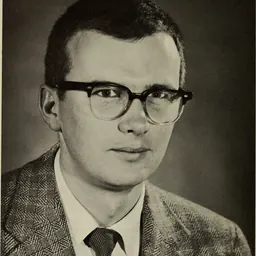
Contemporaries
People whose lives overlapped Gregory Retallack's

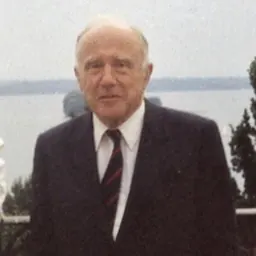
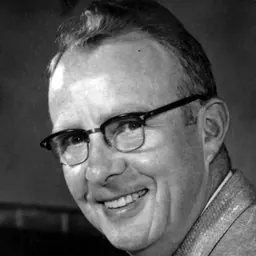

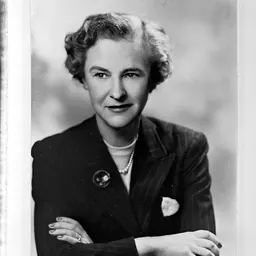
Frequently asked questions
Who is Gregory Retallack?
American paleontologist, paleopedology
When was Gregory Retallack born?
Gregory Retallack was born on 8 November 1951 in Hobart.
What is Gregory Retallack's occupation?
Gregory Retallack is a paleontologist, university teacher, geologist, botanist and academic.
What is Gregory Retallack known for?
Gregory Retallack is known for Paleopedology.
What nationality is Gregory Retallack?
Gregory Retallack is American.
Sources & further reading
· Wikipedia: Gregory Retallack
Cite this page
APA: Biography.guide. (2026). Gregory Retallack. https://biography.guide/gregory-retallack/
MLA: "Gregory Retallack." Biography.guide, https://biography.guide/gregory-retallack/.
Chicago: "Gregory Retallack." Biography.guide. https://biography.guide/gregory-retallack/.
Data last updated: 2026-09-20 · Spot an error? Report a correction.
Page generated 2026-09-27 05:19 UTC