
About Dorugu
Lived 1840 – 1912 (aged 71–72). Dorugu was a slave, writer and interpreter.
Dorugu, Dyrregu or James Henry Dorugu, (c.1840 - 29 November 1912) was a Hausa man who travelled in Africa and Europe, and was one of the authors of the first Hausa book published in Europe.
Dorugu became a slave after being captured during a slave raid by the sultanate of Damagaram, and as a young boy was taken into the service of the European explorers Adolf Overweg and Heinrich Barth. He accompanied Barth during his exploration of West Africa and the Sahel.
Dorugu, along with another African companion, Abbega, returned with Barth to Europe in 1855. During his stay in Europe, Dorugu converted to Christianity. He worked alongside James Frederick Schön, who was carrying out research on Hausa language and culture, and contributed to the writing of , which includes Dorugu's autobiography. is the first printed text in the Hausa language and is an important linguistic and sociological source.
Dorugu returned to Africa in 1864 and became an interpreter in Kano and then in Nassarawa, in present-day northern Nigeria. He worked as an intermediary between Europeans and African leaders until his death in 1912.
Biography
Childhood in Slavery Dorugu was born around 1839 or 1840 in the village of Dambanas in the region of Kantché in present-day Niger to a poor, farming family. He had one brother and one sister. His father grew wheat and cotton and played the drums. his mother was captured and enslaved while bringing a meal to her husband who was farming in the fields. Torn away from his family, Dorugu was then taken to the city of Zinder, the capital of the sultanate of Damaragam, where he was locked up and enslaved. Dorugu's master gave him the name of Barka Gan. This contrasts with a stereotype of African people widely held by Europeans at this time, which imagined them to practice cannibalism. Dorugu's freedom from slavery must be relativised: as a young boy without any family connections, having lost contact with his father, he would have scarcely have had any other choice than to stay in Barth's service, and accept him as his master.
As a young African man in Europe, Dorugu witnessed and learnt European customs as he fulfilled various roles for his hosts.
In November 1855, Barth moved to London and brought Abbega and Dorugu with him. The same year, Abbega returned to Africa with a group of missionaries, and subsequently became the chief of the village of Lokoja, in present-day Nigeria. Dorugu's life is known to us primarily through his autobiography, in which he describes his life in slavery, Newman emphasised the sociological and historical importance of Dorugu's life story, in addition to its linguistic significance. describing him as very thin and always wearing glasses on his forehead, rather than on his nose, giving the impression that he didn't really need them. The scholar Julia Wincker considers this practice a way of portraying himself as erudite. Uncertainty surrounding the religion of Dorugu's widow complicated matters in the Native Court regarding the management of his estate, which was "quite a fortune in the eyes of his compatriots." If, like her deceased husband, she was Christian, the entire estate would be transferred to her; otherwise she would only receive a small portion of it. Once the alkali (Islamic judge) was satisfied that she understood this, she was asked to state her religion. According to Vischer:The alkali therefore explained the matter to her. In the face of such strong temptation, would it not have been easy for the poor woman to have answered without too strict a regard for the truth so as to inherit all of Dorugu's wealth? She did not even hesitate. Not only did she declare that she was a Moslem, but she even distributed as alms the little that she did inherit. She will continue her humble existence in obscurity. As other African people did at this time, Dorugu used the linguistic, cultural and institutional knowledge he gained during his young life in the Sahel to gain in status under British colonial rule of the region. Throughout his life, he demonstrated a remarkable adaptability to a variety of contexts, in which he was often not treated as an equal by his European contemporaries, and played an important mediating role between the two worlds he inhabited, African and European.
Don’t just read it —
keep it.
Full-length biographies made to live with: read them, listen on the way to work, watch them tonight.
- E-book
- Audio
- Video
Instant download · yours to keep · every purchase keeps this site free
Important facts
People in Dorugu's life
Named in this biography and alive at the same time



Related people
Same field, nearest in time
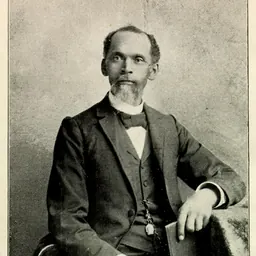
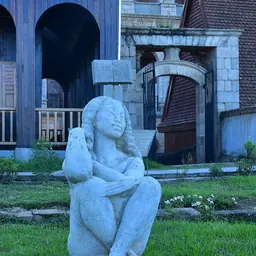
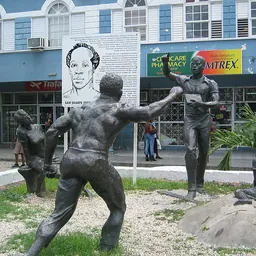

Contemporaries
People whose lives overlapped Dorugu's
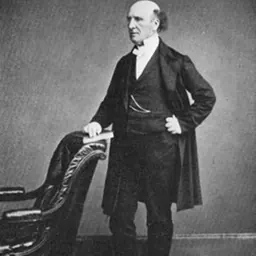
Frequently asked questions
Who was Dorugu?
African traveller and writer
When was Dorugu born?
Dorugu was born in 1840.
When did Dorugu die?
Dorugu died on 29 November 1912 in Nasarawa State.
What was Dorugu's occupation?
Dorugu was a slave, writer and interpreter.
Sources & further reading
Cite this page
APA: Biography.guide. (2026). Dorugu. https://biography.guide/dorugu/
MLA: "Dorugu." Biography.guide, https://biography.guide/dorugu/.
Chicago: "Dorugu." Biography.guide. https://biography.guide/dorugu/.
Data last updated: 2026-09-20 · Spot an error? Report a correction.
Page generated 2026-09-27 05:22 UTC