About Dorothie Feilding
Lived 1889 – 1935 (aged 46). Dorothie Feilding was a British nurse.
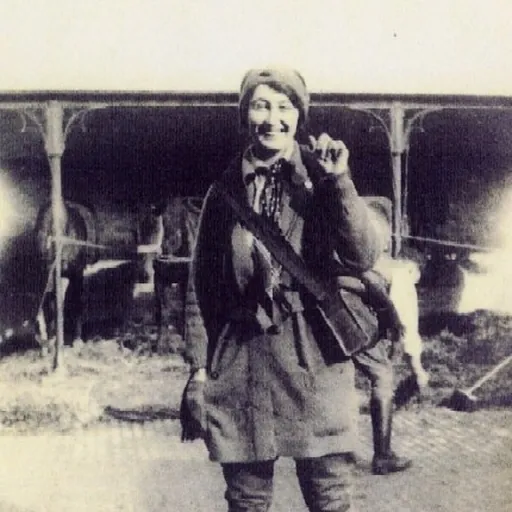
Lady Dorothie Mary Evelyn Feilding-Moore, MM (6 October 1889 – 24 October 1935) was a British heiress who became a highly decorated volunteer nurse and ambulance driver on the Western Front during World War I. She was the first woman to be awarded the Military Medal for bravery in the field. She also received the 1914 Star, the Croix de Guerre from the French and the Order of Leopold II from the Belgians for services to their wounded.
Early life
Born on 6 October 1889 to Rudolph Feilding, 9th Earl of Denbigh and the Countess of Denbigh, Cecilia Mary Feilding (née Clifford), Dorothie was one of ten children, three boys and seven girls, and a distant relative of Henry Fielding, author of Tom Jones.
As a child she was educated at home at Newnham Paddox, Monks Kirby, Warwickshire, and at the Convent of the Assumption in Paris, where she became fluent in French. She made her debut in May 1908 at the age of 18, being presented to the King and Queen of the United Kingdom by her mother.
World War I Like many of her siblings, Feilding felt the need to do her part when war broke out. Three of her sisters, Lady Clare, Lady Elizabeth ("Bettie"), and Lady Victoria, would serve, as well as three brothers: Major Rudolph, Viscount Feilding, Coldstream Guards, who survived the war; Lieutenant-Commander the Hon. Hugh Feilding, Royal Navy, killed in action on 31 May 1916 at the Battle of Jutland; and Captain the Hon. Henry Feilding, also Coldstream Guards, who would die on 9 October 1917 from wounds received in action in Flanders just three months after his sister had left.
In September 1914, after a short training course at Rugby Hospital, Feilding travelled to the Western Front in Belgium where she began driving ambulances for the Munro Ambulance Corps (founded by Dr Hector Munro), an all-volunteer unit which included Elsie Knocker and Mairi Chisholm. This corps, comprising a convoy of motor ambulances donated by the British Red Cross, consisted of transporting wounded men from front line positions between Nieuwpoort and Diksmuide to the hospitals at Veurne.
Although from a privileged background, Feilding had an easy demeanour that transcended social boundaries, one that endeared her to all that she came into contact with, whether royalty or the ordinary fighting man. It was reported that her "five o'clock teas" among the ruins of Furnes gained great fame among the Belgian officers and enlisted men stationed there.
Her heroism was such that her ambulance work at Diksmuide was recognised in a 'special order of the day' issued on 31 December 1914 by French Rear-Admiral Pierre Ronarc'h, commanding the Fusiliers Marins for which she subsequently received the French Croix de Guerre (bronze star). wrote the following letter of recommendation to Prince Alexander of Teck, head of the British Military Mission in Belgium:I venture to submit that Lady Dorothie Feilding should in like manner be rewarded. The circumstances are peculiar in that, this being an isolated Unit, no Medical organization existed for clearing casualties other than this voluntary one and owing to indifferent means of communication etc, it was necessary for the Ambulance to be in close touch with the guns when in action. (She) was thus frequently exposed to risks which probably no other woman has undergone. She has always displayed a devotion to duty and contempt of danger which has been a source of admiration to all. I speak only of her work with the Naval Siege Guns, but your Serene Highness is also aware of her devoted services to the Belgian Army and to the French – notably to the Brigade des Marins.
This citation ultimately resulted in Feilding becoming the first woman awarded the Military Medal for bravery on 1 September 1916 as notified in the London Gazette.
Five days later she was decorated with the medal by King George V himself at Windsor Castle. She was also decorated by King Albert I of Belgium with the Order of Leopold II, Knights Cross (with palm) which she wrote home to Newnham Paddox almost daily, Feilding would reflect on the tragedy and horror of war and also the problems of being a woman at the front contending with gossip, shells, funding, lice (which forced many of the nurses to cut their hair short), vehicle maintenance and inconvenient marriage proposals. After two years at the front she began to look pale and tired.
She served with the corps in Flanders until June 1917 when she returned home to get married. On 5 July 1917, Feilding wed Captain Charles Joseph Henry O'Hara Moore, MC, of Mooresfort, County Tipperary. She moved to Warley, Middlesex where her husband was stationed in the 2nd battalion, Irish Guards. After a brief honeymoon period, Feilding was back behind the wheel of an ambulance, ferrying the wounded around London.
Post-War years After the war, the couple lived most of the year at his ancestral home, Mooresfort House in South Tipperary. They had four daughters (Ruth, Celia, Edith and June) and one son (Arthur). Feilding became an active member of the British Legion as well as being President of the Tipperary Jubilee Nursing Association and the local Agricultural show Society. She had always been a keen huntswoman and this continued in Ireland where she was a regular feature at hunt meets, especially the Scarteen Hunt. In 1935, the Irish Times stated she had been "prominently associated with the Scarteen Hunt to the success of which her great organizing powers in no small degree contributed."
Don’t just read it —
keep it.
Full-length biographies made to live with: read them, listen on the way to work, watch them tonight.
- E-book
- Audio
- Video
Instant download · yours to keep · every purchase keeps this site free
Important facts
People in Dorothie Feilding's life
Named in this biography and alive at the same time




Related people
Same field, nearest in time

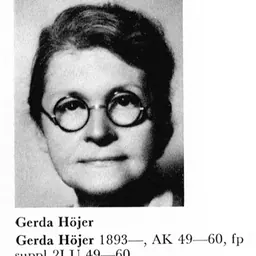


Contemporaries
People whose lives overlapped Dorothie Feilding's
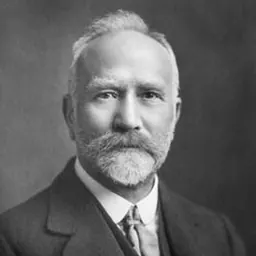

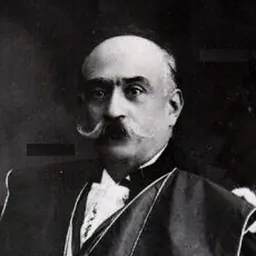

Frequently asked questions
Who was Dorothie Feilding?
British nurse and ambulance driver (1889–1935)
When was Dorothie Feilding born?
Dorothie Feilding was born on 6 October 1889 in Warwickshire.
When did Dorothie Feilding die?
Dorothie Feilding died on 24 October 1935 in Tipperary.
What was Dorothie Feilding's occupation?
Dorothie Feilding was a nurse.
What nationality was Dorothie Feilding?
Dorothie Feilding was British.
Sources & further reading
· Wikipedia: Dorothie Feilding
· DBpedia: Lady Dorothie Feilding
Cite this page
APA: Biography.guide. (2026). Dorothie Feilding. https://biography.guide/dorothie-feilding/
MLA: "Dorothie Feilding." Biography.guide, https://biography.guide/dorothie-feilding/.
Chicago: "Dorothie Feilding." Biography.guide. https://biography.guide/dorothie-feilding/.
Data last updated: 2026-09-23 · Spot an error? Report a correction.
Portrait: Wikimedia Commons · author & licence
Page generated 2026-09-27 05:05 UTC