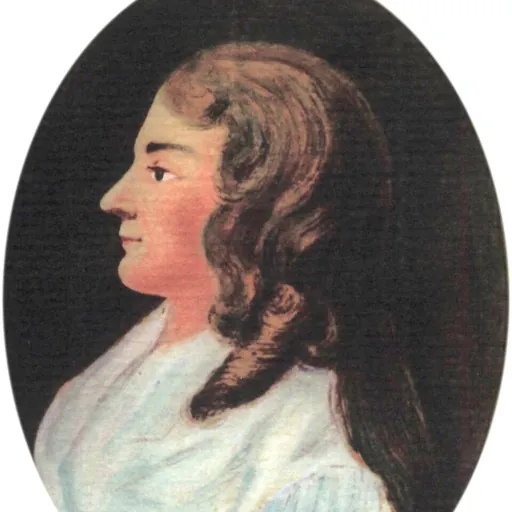
About Dorothea Christiane Erxleben
Lived 1715 – 1762 (aged 46). Dorothea Christiane Erxleben was a German physician.
Dorothea Christiane Erxleben (13 November 1715 – 13 June 1762) was a German medical doctor who became the first woman doctor of medicine in Germany.
Educated by her progressive physician father and rector of her school, she desired to attend medical school and study medicine like her brother. She eventually petitioned Frederick the Great of Prussia to allow her entry into the University of Halle. Despite a Royal permission to attend, Erxleben never entered University. When her cousin died, leaving five children, she decided in 1741, at the age of 26, to look after them, married widower Johann Christian Erxleben and went on to have four children with him.
In 1747, due to economic constraints, the mother of nine children began to practice medicine in Quedlinburg without a degree, and became highly respected by the towns people. However, local physicians who felt their monopoly on medical services was threatened filed a lawsuit, charging her with medical quackery. In January 1754, the king ruled that Erxleben would have to pass an examination and submit a dissertation at the University of Halle. Her inaugural dissertation was titled Concerning the Swift and Pleasant but for that Reason less than Full Cure of Illnesses, in which she argued against the prophylactic use of strong laxative, purgatives and perspiratory agents as it was practiced at that time. She pointed out that doctors were too quick to prescribe unnecessary cures like opiates for illnesses that did not require them and made suggestions regarding their correct usage and dosage, as well as best interventions to promote menstruation and urination. She spent another 8 years practicing medicine in her hometown of Quedlinburg until she died of breast cancer.
Early life Dorothea Erxleben was born Dorothea Christiane Polycarp Leporin on 13 November 1715, in the small town of Quedlinburg, Germany to the town's progressive doctor, physician Christian Polycarp Leporin Sr. and his wife Anna Sophia, née Meinecke Dorothea was very sickly as a child and thus was home schooled rather than in a classroom most of her childhood. Dorothea often spent her days as a child reading her father’s medical notes as a way to pass the time, and by four years old she was reading these papers with ease. When her brother began going to physical schooling in Quedlinburg, Dorothea was unable to follow him.
Both siblings were introduced into medicine by their father. Her brother Christian planned to study medicine at the University of Halle, and his sister wanted to follow him. During her studies in university, Dorothea found the ideas of Pietism and philosophies of the medical kind through the studies of Georg Ernst Stahl, which eventually led to her works over medicine and women's education. Although Erxleben never publicly remarked on the controversy behind women's education, she began to write down her arguments and opinions on the topic, which were published in 1742 as a book titled A Thorough Inquiry into the Causes Preventing the Female Sex from Studying. Her protofeminist book argued for Germany to take advantage of the talents of half of its population, while her father wrote a foreword that described the need for reform in Germany's universities and how the admittance of women would spur this long-needed change. In this particular piece, she also admonishes the women who turn away from learning as it helps reinforce the perspective of men. It was common in her writing for her to support the idea of women taking their education into their own hands and break away from the preset traditions men had placed. Erxleben was uncomfortable with the prospect of attending Halle alone. At the same time, she also had to take charge of her father's practice, as he was away due to the war. In 1742, at the age of 26, she married auxiliary priest Johann Christian Erxleben, the husband of her recently deceased cousin, who already had five children. Their marriage was a generally happy one, and she went on to have four children with Johann over the next few years. Despite being busy at home for years managing her nine children, she was able to continue her medical studies at a slower pace. In response to the doctors' complaints of malpractice, a new ordinance was enacted that only allowed medical treatment from licensed doctors. As Erxleben did not have a degree and was not licensed to practice medicine, this new ordinance prevented her from practicing medicine.
After receiving the charges brought against her, Erxleben fought back against the claims, arguing that she was qualified to perform medical treatment, which came from the training given to her by her father. The case rose through the courts and was brought before Frederick the Great in January 1754. The king allowed Erxleben to take the final exams and submit a dissertation at the University of Halle, and with the support of the university's rector Johann Junker, she did just that in 1754. Her medical inaugural dissertation was titled Concerning the Swift and Pleasant but for that Reason less than Full Cure of Illnesses, in which she argued that doctors were too quick to prescribe unnecessary cures. She stated that doctors intervened too quickly to prescribe medicines like opiates for illnesses that did not require them and made several suggestions regarding the proper use of purgatives, best interventions to promote menstruation and urination, as well as the correct usage and dosage of opiates. Erxleben's dissertation quickly spread throughout Germany, particularly among women with health problems, and Erxleben even translated the dissertation from Latin into German to make it more accessible to the poor. On 12 June 1754, Dorothea Erxleben received her M.D. degree, becoming the first woman in Germany to do so.
She spent the next 8 years practicing medicine in her hometown of Quedlinburg and died of breast cancer
She is often considered a pioneer in this field for women and for her ideas about opiates and the proper use of medicines.
At the University of Halle Medical School a learning centre is named in her honor. Clinics and foundations have been named after her.
On 13 November 2015, Google celebrated her 300th birthday with a Google Doodle.
Don’t just read it —
keep it.
Full-length biographies made to live with: read them, listen on the way to work, watch them tonight.
- E-book
- Audio
- Video
Instant download · yours to keep · every purchase keeps this site free
Important facts
People in Dorothea Christiane Erxleben's life
Named in this biography and alive at the same time

Related people
Same field, nearest in time


Contemporaries
People whose lives overlapped Dorothea Christiane Erxleben's





Frequently asked questions
Who was Dorothea Christiane Erxleben?
physician (1715–1762)
When was Dorothea Christiane Erxleben born?
Dorothea Christiane Erxleben was born on 13 November 1715 in Quedlinburg.
When did Dorothea Christiane Erxleben die?
Dorothea Christiane Erxleben died on 13 June 1762 in Quedlinburg.
What was Dorothea Christiane Erxleben's occupation?
Dorothea Christiane Erxleben was a physician.
What nationality was Dorothea Christiane Erxleben?
Dorothea Christiane Erxleben was German.
Sources & further reading
· Wikipedia: Dorothea Christiane Erxleben
Cite this page
APA: Biography.guide. (2026). Dorothea Christiane Erxleben. https://biography.guide/dorothea-christiane-erxleben/
MLA: "Dorothea Christiane Erxleben." Biography.guide, https://biography.guide/dorothea-christiane-erxleben/.
Chicago: "Dorothea Christiane Erxleben." Biography.guide. https://biography.guide/dorothea-christiane-erxleben/.
Data last updated: 2026-09-22 · Spot an error? Report a correction.
Portrait: Wikimedia Commons · author & licence
Page generated 2026-09-27 05:04 UTC