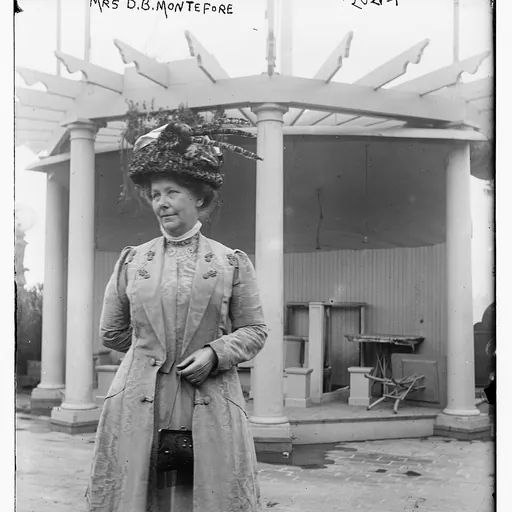
Dora Montefiore
Suffragette, socialist, writer
About Dora Montefiore
Lived 1851 – 1933 (aged 82). Dora Montefiore was a British women's rights activist, suffragette, journalist, pamphleteer and politician.
Dorothy Frances Montefiore (; 20 December 1851 – 21 December 1933), known as Dora Montefiore, was an English-Australian women's suffragist, socialist, tax resister, poet, translator and autobiographer active in Britain.
Early life Born Dorothy Frances Fuller at Kenley Manor near Coulsdon, Surrey, daughter of Francis Fuller and Mary Ann Fuller (née Drew). Montefiore's father was involved with railway engineering and was a driving force behind the Great Exhibition in 1851. Her mother was a daughter of George Drew, a property speculator who developed Caterham. Dora was educated by governesses and tutors and at Mrs Creswell's school at Brighton. In 1874, Dora went to Sydney to assist her brother's wife. Dora returned briefly to England, and on her return to Sydney married Jewish merchant George Barrow Montefiore, son of Joseph Barrow Montefiore. They had two children. The first meeting of the Womanhood Suffrage League of New South Wales was held at Montefiore's home on 29 March 1891. In 1892 Montefiore left Australia and after spending several years in Paris, settled in England.
Suffragette An influence on her socialist views was from time with Julia Dawson, on the Clarion Van in the West Midlands and she continued to see the need for women to be given the right to vote, as a class issue. In 1898, Montefiore produced a book of verse Singings Through the Dark. She also continued to be active in the suffrage movement, serving on the executive of Millicent Fawcett's National Union of Women's Suffrage Societies (NUWSS) and she joined the Women's Social and Political Union (WSPU) that had been formed by Emmeline and Christabel Pankhurst. In 1897, Montefiore proposed the formation of the Women's Tax Resistance League (WTRL). In 1906, to protest lack of political representation, Montefiore refused to pay her taxes and remained barricaded in her home for six weeks. The League used this occasion as an opportunity for demonstrations and publicity: Her house had a banner displayed saying: “Women should vote for the laws they obey and the taxes they pay.” Montefiore said "I was doing this because the mass of non-qualified women could not demonstrate in the same way, and I was to that extent their spokeswoman. It was the crude fact of women's political disability that had to be forced on an ignorant and indifferent public." In October of the same year, Adela Pankhurst, Montefiore and others were arrested for demanding votes for women in the lobby of the House of Commons. Montefiore later described the experience and the interior of Holloway Prison. Montefiore also joined several socialist organisations around this time, including the Women's Freedom League (WFL), the Social Democratic Federation and the British Socialist Party. Montefiore was also a linguist and responsible for the first English translation of the work of Maxim Gorky. and Minnie Baldock. Montefiore was one of the speaker's at Baldock's Canning Town WSPU group and wrote to support Baldock's 'noble stand' in visiting the Liberal leader in December 1906. Montefiore left the WSPU and joined the Adult Suffrage Society, for which she was elected as honorary secretary in 1909, to support the case for full suffrage not based on financial status but for all men and women over the age of majority (21), rather than the limited option, some argued as a first step of women with property being enfranchised. Montefiore's socialist views were shared by Sylvia Pankhurst whom she kept in contact with after the split with WSPU. then returned to Australia in 1910 to visit her son Gilbert. While in Australia, Montefiore edited International Socialist Review of Australasia when its owner Henry Holland fell ill in 1911. Montefiore also met Premier William Arthur Holman. In 1912 Montefiore went to South Africa and wrote about the effect of capitalism. Those involved were arrested and charged with kidnapping. The charges were later dropped.
During World War I, Montefiore volunteered in France but also joined the British Socialist Party, and contributed articles to The Call. In 1920, she was elected to the provisional council of its successor, the Communist Party of Great Britain. When Montefiore's son died in 1921 from the effects of mustard gas poisoning acquired during his service in the War, the Australian government would not allow her to visit Australia until Holman spoke on her behalf and assured them that she promised not to engage in communist propaganda.
Don’t just read it —
keep it.
Full-length biographies made to live with: read them, listen on the way to work, watch them tonight.
- E-book
- Audio
- Video
Instant download · yours to keep · every purchase keeps this site free
Important facts
People in Dora Montefiore's life
Named in this biography and alive at the same time
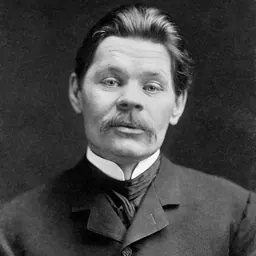
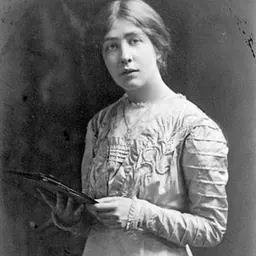
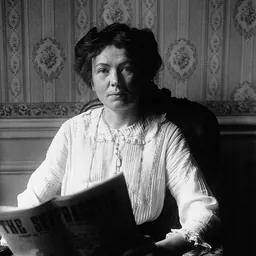

Related people
Same field, nearest in time



Contemporaries
People whose lives overlapped Dora Montefiore's



Frequently asked questions
Who was Dora Montefiore?
suffragette, socialist, writer (1851–1933)
When was Dora Montefiore born?
Dora Montefiore was born on 20 December 1851 in Coulsdon, Kenley.
When did Dora Montefiore die?
Dora Montefiore died on 21 December 1933 in Hastings.
What was Dora Montefiore's occupation?
Dora Montefiore was a women's rights activist, suffragette, journalist, pamphleteer and politician.
What nationality was Dora Montefiore?
Dora Montefiore was British.
Sources & further reading
Cite this page
APA: Biography.guide. (2026). Dora Montefiore. https://biography.guide/dora-montefiore/
MLA: "Dora Montefiore." Biography.guide, https://biography.guide/dora-montefiore/.
Chicago: "Dora Montefiore." Biography.guide. https://biography.guide/dora-montefiore/.
Data last updated: 2026-09-22 · Spot an error? Report a correction.
Portrait: Wikimedia Commons · author & licence
Page generated 2026-09-27 05:03 UTC