
About Donyale Luna
Lived 1945 – 1979 (aged 33). Donyale Luna was an American actor, model, film actor and fashion model.
Peggy Ann Freeman (August 31, 1945 – May 17, 1979), known professionally as Donyale Luna, and occasionally billed simply as Luna, was an American model and actress. Known for her statuesque appearance and avant-garde persona, Luna was one of the most recognizable faces in the international fashion industry during the 1960s and is widely regarded as the first Black supermodel.
Born in Detroit, Luna began her modeling career in New York in 1964. She became the first Black model to appear on the cover of Harper's Bazaar, depicted in an illustration. Luna rose to prominence in Europe, where she became the first Black model to appear on the cover of British Vogue in 1966. She worked with the leading photographers of the time, including Richard Avedon, David Bailey, William Klein, and Helmut Newton, and appeared in major fashion publications such as Harper's Bazaar, Vogue, Cosmopolitan, and Elle. Her success challenged racial barriers in the fashion industry at a time when Black models remained largely excluded from mainstream editorial work.
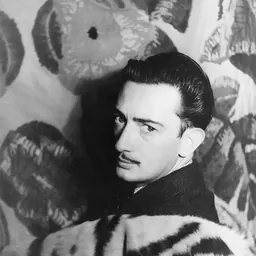
Luna also pursued an acting career, appearing in several experimental films by Pop artist Andy Warhol—such as Camp (1965) and Donyale Luna (1967)—and becoming a fixture of his Factory scene as one of Warhol's superstars. She was also a muse to surrealist painter Salvador Dalí, collaborating with him on several happenings in 1966. She later appeared in European arthouse and avant-garde films, including Skidoo (1968), directed by Otto Preminger, Fellini Satyricon (1969), directed by Federico Fellini, and Salomè (1972), directed by Carmelo Bene. Luna died from a heroin overdose in 1979 at the age of 33. She has been recognized posthumously as a pioneering figure whose success helped pave the way for later generations of Black models.
Early life and education Peggy Ann Freeman was born in Detroit, Michigan, on August 31, 1945, to Nathaniel Freeman and Peggy Freeman (née Hertzog). One of three daughters, she grew up in a financially stable household on Scotten Avenue. Outside school, she participated in community theater and the experimental Concept East Theater, developing an early interest in acting. By the age of eighteen, she had adopted the name "Donyale Luna" and began cultivating the distinctive persona that would later define her public image, including an invented accent and elaborate stories about her background. According to her sister, she was "a very weird child, even from birth, living in a wonderland, a dream."
As a teenager, Luna immersed herself in Detroit's theatre community, performing in productions of Paint Your Wagon, The Tempest, Anything Goes, and Stage Door. Known for her eccentricity, she often went barefoot and frequented coffehouses around Wayne State University dressed in black.
Modeling career
Move to New York and first assignment In 1963, Luna was spotted near the Fisher Building in downtown Detroit by English photographer David McCabe, who was in the city on assignment for Ford Motor Company. Struck by her appearance, McCabe later recalled that she was "so striking" that he felt compelled to stop her and offer his assistance should she decide to pursue modeling in New York. Initially, her mother opposed the move, fearing McCabe was trying to make a "bad girl" out of her. After Luna persisted, her mother arranged for her to live temporarily with an aunt in New Jersey. In October 1964, Luna relocated to New York and contacted McCabe, who introduced her to Harper's Bazaar editor-in-chief Nancy White and fashion editor China Machado. White and Machado were immediately impressed by her appearance, and Luna accepted an exclusive one-year contract with Harper's Bazaar.
Although the January 1965 issue was already in production, White approved a last-minute feature showcasing Luna in a series of illustrations by artist Katharina Denzinger. Denzinger later recalled drawing "a total of 40 brush-and-ink studies for that session, in a one-room studio apartment on Lexington Avenue. . . . I remember that the Bazaar editors came to the apartment with the clothes, and that uniformed cops watched while Donyale modeled and I drew her." Luna appeared in seven full-color drawings, including the cover image for the fashion editorial "Chic Proportions '65," making Luna the first Black model to appear on the magazine's cover. Whether the decision to depict her in illustrations rather than photographs reflected artistic considerations or resistance to featuring Black models prominently in fashion magazines has remained a subject of discussion among historians.
In November 1964, Luna moved out of her aunt's apartment and into an apartment on Broadway in New York City, sharing the space with a roommate. In January 1965, her father was described by a relative as a "brutal man," was fatally shot by her mother during a domestic dispute that was later ruled self-defense. In the April 1965 edition of Harper's Bazaar she was photographed by Avedon in a 6-page spread wearing dresses by James Galanos and Bill Blass for Maurice Rentner. The piece included a description of her as showing "The tall strength and pride of movement of a Masai Warrior." Although Luna quickly gained attention through editorial work for Harper's Bazaar, she encountered significant racial barriers within the American fashion industry. Designers Mainbocher and Norman Norell reportedly refused to dress her, and McCabe later argued that "the magazine world really wasn't ready for photographing beautiful Black women." She would later remember of the move to Europe, "I wouldn't have to be bothered with political situations when I woke up in the morning—I could live and be treated as I felt, without having to worry about the police coming along." Luna became the first African American model to appear on the cover of any Vogue edition when she appeared on the cover of the March 1966 issue of British Vogue, photographed by Bailey.
Luna subsequently appeared in British, French, Italian, and American editions of Vogue, as well as Elle, Queen, Cosmopolitan, Twen, and Paris Match. She worked extensively for designers including Paco Rabanne, Pierre Cardin, Yves Saint Laurent, Christian Dior, Emanuel Ungaro, Guy Laroche, and Ted Lapidus, and appeared in campaigns and editorials throughout Europe, Australia, and the United States.
Luna also made several television appearances in 1966. She appeared on British television's Late Show London on March 14 and The Eamonn Andrews Show on May 1, and on December 12, she appeared on The Tonight Show Starring Johnny Carson.
In December 1966, mannequin designer Adel Rootstein introduced life-size mannequins modeled on Luna at the Wallis boutique on King's Road in London. Luna traveled to London for several sittings during which photographs were taken for reference, and sculptor John Taylor used them to create the figures. At Rackhams department store in Birmingham, a Luna mannequin was the store's best-selling display figure, outselling models based on figures such as Elizabeth Taylor, Jean Shrimpton, and Twiggy. That year, she modeled "swift, slipsy dresses" from the New York boutique Paraphernalia as the featured attraction of the "Donyale Luna Spectacular" at Roselands shopping mall in Sydney.
In November 1968, Luna was involved in a highly publicized incident at London's Cavendish Hotel with actress Mia Farrow, actor Iain Quarrier, filmmaker Donald Cammell, and journalist Steve Brandt. The group was refused service at the hotel's restaurant and asked to leave. Hotel management maintained they had been disruptive and that the men were not wearing ties, while Luna and Farrow alleged the group had been targeted because Luna was Black. The incident attracted widespread international media attention, with numerous newspaper reports also describing Luna's ensemble for her court appearance, which included a Mongolian lamb coat and thigh-high suede boots.
During the late 1960s, she continued to model internationally, while earning some of the highest fees in the industry. In 1969, it was reported that she was paid "$1,000 a week." Luna appeared in American Vogue in August 1969 and in 1970 in an advertisement for a colored contacts company which she often wore, it was reported she "changes her eyes to match her moods as she flits through Rome's posh parties while picture making for Carlo Ponti."
By the early 1970s, Luna had settled primarily in Rome, where she continued to work in European publications and advertising campaigns. In January 1970, she appeared in the Italian adult magazine Playmen in a number of fishnet-style outfits. She worked for Danish photographer Gunnar Larsen, modeling for the couturier Ted Lapidus alongside Veruschka and Jean Shrimpton on the streets of Paris, earning "$1000 ... for the day."
Later career Luna returned periodically to the United States for runway and editorial work, but her career gradually shifted toward film and other artistic pursuits. In 1972, she began collaborating on creative projects with her future husband, photographer Luigi Cazzaniga. In a 1975 New York Times interview, Johnson remarked, "As for Donyale Luna, she doesn't wear shoes, winter or summer. Ask her where she's from—Mars? She went up and down the runways on her hands and knees and didn't show up for bookings. She didn't have a hard time, she made it hard for herself." During the show, she unzipped the dress to the waist and spent several minutes moving in a dramatic, snake-like manner on the floor, a performance that reportedly surprised both the audience and Halston's staff. Later that year, she appeared alongside actor Hiram Keller on the cover of the October 1974 edition of Interview magazine.
In April 1975, Luna appeared in the Pacific Design Center fashion show, where ten Los Angeles designers presented their vision of California fashion to an audience of retailers and journalists. During the event, she drew attention for a provocative runway appearance that reportedly "bared her bottom." In one of her last modeling projects, she was photographed by Peter Beard in Montauk, New York in 1977.
Timeline of magazine covers
Acting career Luna originally aspired to become an actress and performed in amateur and repertory theater productions in Detroit during her youth. In 1966, she remarked, "I never planned to be a model when I was in Detroit. I wanted to be a starving actress in New York." She also appeared in Warhol's Camp (1965), a satire of his social milieu, dancing to the Ramsey Lewis Trio's "The 'In' Crowd" while wearing a backless dress and fur stole. The film was later broadcast on French television in 1970 under the title Autoportrait mou de Salvador Dalí (Salvador Dalí: A Soft Self-Portrait). She also appeared in staged surrealist compositions, including standing on a half-submerged piano, posing while Dalí drew on her clothing, and emerging from a human-sized egg filled with paint.
In 1967, Luna starred in Warhol's 33-minute color film Donyale Luna, playing a camp interpretation of Snow White and wearing bright blue contact lenses. That year, Luna met director Otto Preminger at a New York party held for Twiggy and invited him to a screening of a Warhol film. Luna continued her acting career in Europe, appearing in Marco Ferreri's Dillinger Is Dead (1969), and portraying the witch Oenothea in Federico Fellini's Fellini Satyricon (1969). Her final film role was the title character in Carmelo Bene's Salomé (1972).
Luna was also associated with European pop music scene, having been featured in the Italian music video for Patty Pravo's song Michelle (1969). In the early 1970s, she became associated with experimental theater circles such as the Living Theatre while in Italy.
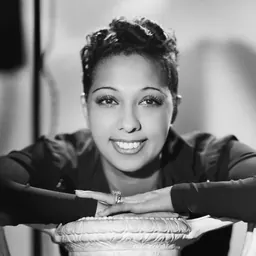
In 1973, Luna presented a film project based on her life to producers attending the Cannes Film Festival. Although the proposal was not developed, she later claimed that it inspired Berry Gordy's 1975 film Mahogany. Luna cultivated an eccentric and highly theatrical public persona that drew on Surrealism and camp. Inspired by Nefertiti and Josephine Baker, she developed the alter ego "Donyale Luna" through what some writers compare to performance art.
Scholars have interpreted Luna's self-fashioning as a form of "Black glamour" that both appropriated and disrupted Western visual codes. Building on the legacy of Josephine Baker's "primitive glamour," Luna used the persona of "Donyale" to articulate a new model of Black beauty and subjectivity within predominantly white fashion and cultural spaces.
Her visual work and modeling were often read in relation to mid-century modernism, particularly the Surrealist art of Salvador Dali and the photography of Man Ray. In advertising and editorial work, she used exaggerated poses and angular bodily expression to challenge conventional representations of Black femininity in fashion imagery. Beyond her stature, Luna became known for her theatrical runway presence. Although she could perform a standard catwalk walk, she often employed unconventional, performance-driven movements that influenced later models such as Pat Cleveland. Her distinctive style reflected an early interest in acting and experimental theater in Detroit. Fashion photographer and journalist Bill Cunningham described her movements as resembling those of "a panther" and "an exotic bird," noting that audiences applauded her performance as much as the clothing she modeled. Dazed editor Phillipa Burton argued that these claims as well as her penchant for wearing colored contacts was formed part of a broader process of self-invention that began in her youth.
Luna began her modeling career during a period when non-white models faced significant barriers within the American fashion industry. "I think I'm ugly," she told a London interviewer.
Luna was involved with Australian artist Martin Sharp and Canadian actor Iain Quarrier in 1968.
In September 1969, Luna met Italian photographer Luigi Cazzaniga at a fashion show in Rome. The couple later reunited after a period apart and married in California in 1976. Their daughter, Dream Cazzaniga, was born in 1977 and was named after Martin Luther King Jr.'s "I Have a Dream" speech.
Mental health and drug addiction Luna had a nervous breakdown and spent time recovering in the hospital at the end of 1965. Two years later, she told The New York Times that she fled New York for Europe at the end of 1965, when she found "they said beautiful things on one side and turned around and stabbed you in the back."
Luna's roommate in 1967, Geraldine Smith, told Warhol that "she thought they were all going to get kicked out soon because Donyale was making about five hundred dollars' worth of calls to Europe every month and Roberta's husband was getting mad about the phone bill."
In 2007, Luna's last husband Luigi Cazzaniga reflected on Luna's drug use, writing that although she "did drugs" and "probably died of heroin overdose," she "wasn't addicted to opiates for all the time I knew her, or even before, as far as I know."
Religion and spirituality Luna converted to Catholicism as an adolescent, from her family's Presbyterian roots.
Luna expressed apocalyptic and metaphysical beliefs about a coming "great division" because "don't know how to live. Although Keenan argued that Luna's highly distinctive appearance did not provide a style that other women could readily emulate, she maintained that Luna's success demonstrated that Black models could pursue careers in mainstream fashion and helped expand opportunities for those who followed. Some scholars have argued that the composition, which partially obscured Luna's facial features, reflected contemporary Eurocentric beauty standards and may have minimized visual markers of her race. Members of Luna's family, however, later stated that the image was chosen for its striking graphic quality, emphasizing "a single heavily lined eye ... visible through her fingers, which form a V for Vogue." Her career has been characterized as a "meteoric ascent to fame and freefall into anonymity." Writing for Dazed in 2009, Phillipa Burton observed that Luna had "for the most part, been forgotten," contrasting her with later models whose careers more visibly embodied the "Black is Beautiful" movement. Model Pat Cleveland cited Luna as an inspiration who helped open doors for later generations of models of color.
Interest in Luna's legacy has grown in the 21st century with renewed interest in her modeling career on social media, fashion bloggers, and among Black business owners. She appeared in Vogue 's 2008 "all-Black" issue, was recognized by Naomi Campbell during her 2019 CFDA Fashion Awards acceptance speech, and has been cited as an inspiration by figures including Pat McGrath and Nan Goldin. Her imagery was recreated by Afro-Brazilian TV personality Thelma Assis for Harper's Bazaar Brazil and actress Zendaya of Essence in 2020. In 2023, the HBO Max documentary Donyale Luna: Supermodel, co-produced by her daughter Dream Cazzaniga, introduced Luna's story to a wider audience.
Filmography Year Title Role Notes 1965 Screen Test #3 Herself Uncredited 1965 Screen Test #4 Herself Uncredited 1965 Camp 1966 Who Are You, Polly Maggoo? Mannequin/Model Alternative title: Qui êtes vous, Polly Maggoo? 1967 Donyale Luna Snow White 1968 Skidoo God's Mistress Credited as Luna 1969 Fellini Satyricon Enotea Alternative title: Satyricon 1969 Dillinger is Dead Background role Uncredited 1970 Soft Self-Portrait of Salvador Dali HerselfFilmed in 1966 1972 Salomé Salomè 1976 Il Festival del proletariato giovanile al Parco Lambro Herself 1996 The Rolling Stones Rock and Roll Circus Herself Released posthumously (filmed in 1968)
Don’t just read it —
keep it.
Full-length biographies made to live with: read them, listen on the way to work, watch them tonight.
- E-book
- Audio
- Video
Instant download · yours to keep · every purchase keeps this site free
Important facts
People in Donyale Luna's life
Named in this biography and alive at the same time





Related people
Same field, nearest in time


Contemporaries
People whose lives overlapped Donyale Luna's

Frequently asked questions
Who was Donyale Luna?
American model and actress (1945-1979)
When was Donyale Luna born?
Donyale Luna was born on 31 August 1945 in Detroit.
When did Donyale Luna die?
Donyale Luna died on 17 May 1979 in Rome.
What was Donyale Luna's occupation?
Donyale Luna was an actor, model, film actor and fashion model.
What nationality was Donyale Luna?
Donyale Luna was American.
Sources & further reading
Cite this page
APA: Biography.guide. (2026). Donyale Luna. https://biography.guide/donyale-luna/
MLA: "Donyale Luna." Biography.guide, https://biography.guide/donyale-luna/.
Chicago: "Donyale Luna." Biography.guide. https://biography.guide/donyale-luna/.
Data last updated: 2026-09-20 · Spot an error? Report a correction.
Page generated 2026-09-27 05:22 UTC