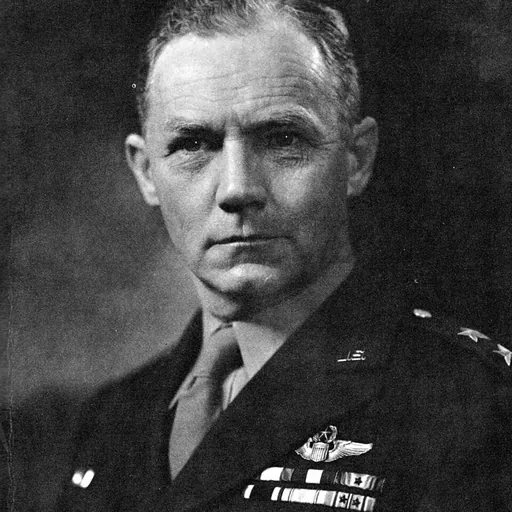
About Donald Wilson
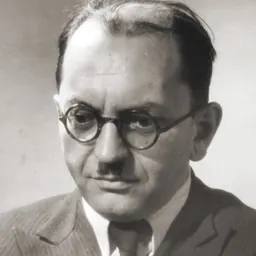
Lived 1892 – 1978 (aged 85). Donald Wilson was an American military officer.
World War I In February 1916, Wilson enlisted as a private in the Maryland National Guard and was posted to Company H, 5th Maryland Infantry. This unit was called to active duty at Laurel, Maryland in June 1916 for service on the Mexican border. It was based at Eagle Pass, Texas, and, like most National Guard units, supported but did not directly participate in the Pancho Villa Expedition, although it did occasionally cross the border into Mexico. Wilson was soon promoted to corporal, and later sergeant. The 5th Maryland Regiment returned to Maryland in February 1917.
The 5th Maryland Infantry was again called up in April 1917 following the declaration of war by the United States on the German Empire. Wilson was promoted to second lieutenant, effective 9 April 1917. where the 5th Maryland Infantry was absorbed into the 115th Infantry of the 29th Division on 1 October 1917. While at Camp McClellan, Wilson applied for training as an aerial observer but his request was not accepted. He was promoted to first lieutenant on 23 April 1918. It travelled across France, entering the front line trenches in the Traubach-le-Bas sector. In France, Wilson once again applied for training as an aerial observer, in response to an appeal from American Expeditionary Forces (AEF) headquarters. This time, he was successful and in September 1918 he reported to the Air Service Concentration Barracks at Saint-Maixent. After training there, at Camp de Souge, and at Tours in November 1918, he was posted to the 2nd Corps Aeronautical School at Châtillon-sur-Seine. He was assigned to the 186th Aero Squadron at Weißenthurm (Weissenthurm) in May 1919, returned to the United States in July, and was discharged from the Army on 15 August 1919. They espoused the doctrine in testimony to the Howell Commission on Federal Aviation in 1934, where it was used as an argument supporting the creation of an independent air force.
Once adopted as doctrine, industrial web theory had a host of effects. To obtain the required accuracy to hit pinpoint targets, bombing had to be done by daylight. An improved bombsight was required: the Norden bombsight Mark XV, appearing in 1931. Since a pursuit plane did not have the range to accompany the bombers, they had to be able to defend themselves, and new tactics called for formation flying to maximize the defense against hostile pursuit aircraft. The requirement for a better bomber led to the development of the Boeing B-17 Flying Fortress. Wilson accepted the argument, most forcibly advanced by fellow instructor Kenneth Walker, that fighter aircraft did not have the range or speed to accompany bombers and probably could not shoot them down.
Wilson attended the Command and General Staff School at Fort Leavenworth, Kansas, graduating in June 1934. He considered the course to be a waste of time, "devoted in large part to the minutiae of ground officers' duties" and "devoid of serious recognition of the airplane as an instrument of war." After graduation he returned to the Air Corps Tactical School as Director of the Department of Air Tactics and Strategy, and was promoted to lieutenant colonel on 16 June 1936. Wilson was briefly chief of staff of Major General Walter H. Frank's Third Air Force in Tampa, Florida but after only two months he was recalled to Washington to again serve on the War Department General Staff, this time in the G-1 (Personnel) Division, which was headed by Major General John H. Hilldring, a Command and General Staff School classmate. Wilson was promoted to brigadier general on 22 June 1942. In July 1942, Hilldring left to take over command of the 84th Infantry Division and Wilson became Assistant Chief of Staff, G-1. Wilson had known Kenney for many years and was on a first name basis with him; but while serving as his chief of staff, Wilson always addressed Kenney respectfully as "general". The loss of Brigadier General Kenneth N. Walker over Rabaul in January 1943 and then his successor, Brigadier General Howard K. Ramey on a reconnaissance mission in March did not dampen Wilson's desire to accompany a mission, and he tagged along as a passenger on a B-24 on a bombing raid on Rabaul. For his service in the Southwest Pacific, Wilson was awarded the Distinguished Service Medal.
In March 1944, Arnold asked for Kenney to return Wilson to work on his own staff. Wilson took the long way back, visiting the other war theatres in India, China, the Middle East, Italy and England. Wilson found the Army Air Forces Chief of Staff, Lieutenant General Barney Giles anxious for Wilson's return so Giles could pay a visit to the war theatres. Wilson therefore found himself acting chief of staff. On Giles' return, Wilson became Assistant Chief of Staff, Organization, Commitments and Requirements. In February 1945, Wilson was present at the Battle of Iwo Jima as an official Army Air Forces observer. He was promoted to major general on 17 March 1945.
Post war From left, General Carl A. Spaatz, Commanding General, Army Air Forces; Major General Muir S. Fairchild, Air University commander; and Major General Donald M. Wilson, Commanding General, Air Proving Ground Command, talk following the Air University dedication ceremony at Maxwell Field on 3 September 1946. Wilson served as a member of the Gerow Board, under his former chief, Lieutenant General Leonard T. Gerow, which examined the military educational system. The board met in Washington, DC, between 3 and 12 January 1946. Its final report to the Chief of Staff of the United States Army, General of the Army Dwight D. Eisenhower, recommended a system of five joint colleges, which would collectively form a National Security University under the direction of the Joint Chiefs of Staff. In addition to the existing Industrial College and National War College, the board recommended the establishment of a joint administrative college, a joint intelligence college, and a Department of State college. Wilson went further and argued for the establishment of an air university, under the control of the Army Air Forces. the last two being creations of the Gerow Board. The first classes began at these two new institutions in September 1946 and January 1947 respectively.
In October 1946, Wilson was diagnosed with neurasthenia. Discharged on the grounds of disability with the rank of major general, he retired to Carmel, California, where he wrote and published his memoirs, entitled Wooing Peponi, in 1973. He died on 21 June 1978.
Don’t just read it —
keep it.
Full-length biographies made to live with: read them, listen on the way to work, watch them tonight.
- E-book
- Audio
- Video
Instant download · yours to keep · every purchase keeps this site free
Important facts
People in Donald Wilson's life
Named in this biography and alive at the same time



Related people
Same field, nearest in time


Contemporaries
People whose lives overlapped Donald Wilson's






Frequently asked questions
Who was Donald Wilson?
United States Army Air Force general (1892-1978)
When was Donald Wilson born?
Donald Wilson was born on 25 September 1892 in Pendleton County.
When did Donald Wilson die?
Donald Wilson died on 21 June 1978.
What was Donald Wilson's occupation?
Donald Wilson was a military officer.
What nationality was Donald Wilson?
Donald Wilson was American.
Sources & further reading
· DBpedia: Donald Wilson (general)
Cite this page
APA: Biography.guide. (2026). Donald Wilson. https://biography.guide/donald-wilson-military-officer/
MLA: "Donald Wilson." Biography.guide, https://biography.guide/donald-wilson-military-officer/.
Chicago: "Donald Wilson." Biography.guide. https://biography.guide/donald-wilson-military-officer/.
Data last updated: 2026-09-24 · Spot an error? Report a correction.
Portrait: Wikimedia Commons · author & licence
Page generated 2026-09-27 05:09 UTC