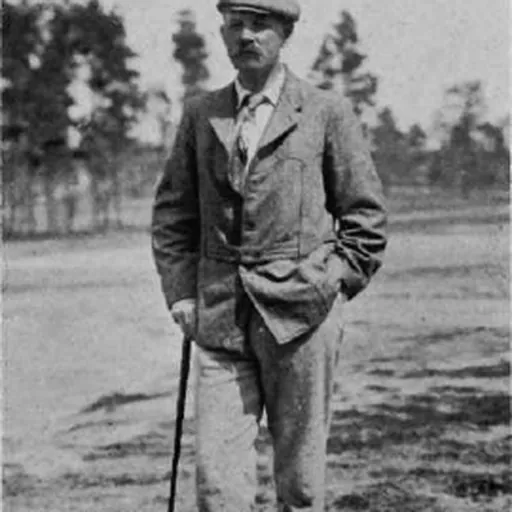
About Donald Ross
Lived 1872 – 1948 (aged 75). Donald Ross was a British golfer and landscape architect.
Donald James Ross (November 23, 1872 – April 26, 1948) Ross started his career by being an apprentice to Old Tom Morris at St Andrews in Scotland around 1899.
Ross, along with his younger brother Alec were founding members of The Tin Whistles in 1904.
Professional career With the help of an American agronomy student and fellow Scotsman Robert White from St. Andrews, Ross decided to move to America. Ross invested all his life savings to move to the United States and walked off the boat with only $2. After his year long apprenticeship he went back to the Royal Dornoch Golf Club where he honed his playing abilities while also taking care of the greens and making clubs. Completing this contract he returned to Holyoke in 1914 where he was put up in a house built for him by Wyckoff, who as an executive committee member of the Massachusetts Golf Association, saw himself as a patron of Ross, and offered him financial backing to move from being both an architect and golf pro, to focusing his career mainly in golf course architecture. It is unknown what duration or regularity Ross lived in Holyoke, as he travelled often, even spending time designing a course in Cuba during his tenure in Manchester that previous year, though a Boston Herald article still placed him in Holyoke in 1919. completing a full redesign of the Mt. Tom course by 1922, and later serving as a pallbearer for Wyckoff following his death in 1931. Ross's work in Holyoke would remain largely untouched until the construction of I-91 in 1965 left only 5 fairways of his design today.
Although Ross was a competitive golfer, he is primarily known for his work as a course designer. In his time as a designer he is credited with roughly 400 course designs or redesigns between 1900 and 1948. Some of his early work was in Virginia and includes Jefferson Lakeside Country Club and Sewell's Point Golf Course. He also designed the Municipal Golf Course at Asheville, North Carolina in 1927. Ross also designed Whippoorwill Country Club, in Armonk, New York; however, Charles Banks was hired by Whippoorwill to redesign the course in 1928. He also designed a 9-hole course in northern New York, known as the Schroon Lake Municipal Golf Club in 1918. He designed the Hope Valley Country Club in Durham, North Carolina in 1927.
In the 1930s, he revolutionized greenskeeping practices in the southern United States when he oversaw the transition of the putting surfaces at Pinehurst No. 2 from oiled sand to Bermuda grass. Ross also designed the course at Sedgefield Country Club in Greensboro, North Carolina. Currently, Sedgefield Country Club is one of only three regular Donald Ross designs on the PGA Tour.
Design elements What allows a Donald Ross golf course to stand out is the design principles and elements he used. He displayed great attention to detail. Often he created challenging courses with very little earth moving; according to Jack Nicklaus, "His stamp as an architect was naturalness." Some of his designs include the "turtleback" greens, a Ross double plateau, and The Punchbowl. The route the golfer had to take was an important decision Ross had to make and he favored very clear routes that would not require much walking. When he would design a par-4 hole, he favored an uphill short hole. Ross often created holes which invited run-up shots but had severe trouble at the back of the green, typically in the form of fall-away slopes. His most widely known trademark is the crowned or "turtleback" green, most famously seen on Pinehurst No. 2, though golf architecture writer Ron Whitten argued in Golf Digest in 2005 that the effect had become exaggerated compared to Ross's intention because greenkeeping practices at Pinehurst had raised the center of the greens.
Awards and honors
Ross was a founding member and first president of the American Society of Golf Course Architects, which was formed at Pinehurst in 1947.
25 DNP
T40 DNP DNP
CUT DNP DNP DNP DNP DNP DNP DNP DNP DNP DNP DNP DNP
DNP = Did not play WD = Withdrew CUT = missed the half-way cut "T" indicates a tie for a place Yellow background for top-10
Don’t just read it —
keep it.
Full-length biographies made to live with: read them, listen on the way to work, watch them tonight.
- E-book
- Audio
- Video
Instant download · yours to keep · every purchase keeps this site free
Important facts
People in Donald Ross's life
Named in this biography and alive at the same time

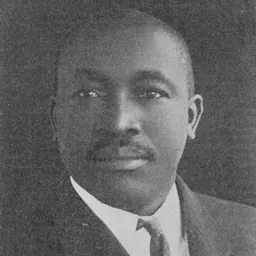
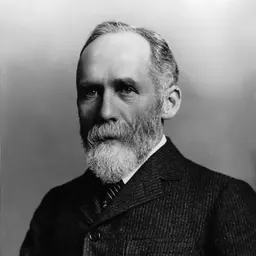


Related people
Same field, nearest in time
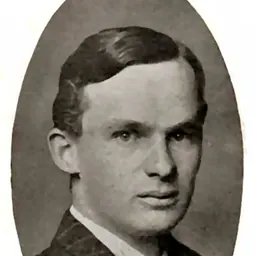



Contemporaries
People whose lives overlapped Donald Ross's


Frequently asked questions
Who was Donald Ross?
Professional golfer, golf course architect (1872–1948)
When was Donald Ross born?
Donald Ross was born on 23 November 1872 in Dornoch.
When did Donald Ross die?
Donald Ross died on 26 April 1948 in Pinehurst.
What was Donald Ross's occupation?
Donald Ross was a golfer and landscape architect.
What nationality was Donald Ross?
Donald Ross was British.
Sources & further reading
· DBpedia: Donald Ross (golf course architect)
Cite this page
APA: Biography.guide. (2026). Donald Ross. https://biography.guide/donald-ross-golfer/
MLA: "Donald Ross." Biography.guide, https://biography.guide/donald-ross-golfer/.
Chicago: "Donald Ross." Biography.guide. https://biography.guide/donald-ross-golfer/.
Data last updated: 2026-09-21 · Spot an error? Report a correction.
Portrait: Wikimedia Commons · author & licence
Page generated 2026-09-27 05:00 UTC