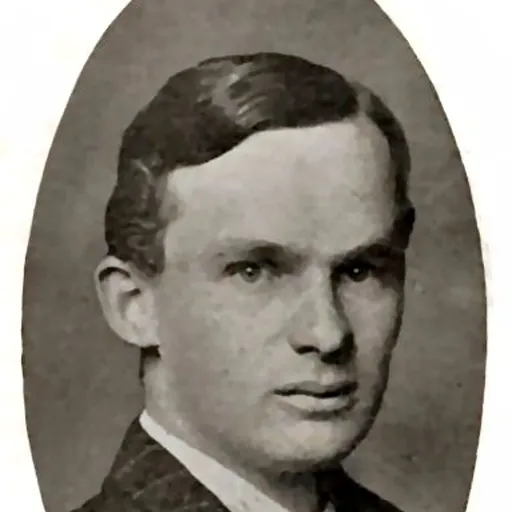
About Robert Hunter
Lived 1874 – 1942 (aged 68). Robert Hunter was an American golfer, writer, socialist, sociologist and golf course architect.
Robert Hunter (né Wiles Robert Hunter; April 10, 1874 – May 14, 1942) was an American sociologist, progressive author, and golf course architect.
Biography Early life and family
Wiles Robert Hunter was born on April 10, 1874, at Terre Haute, Indiana the middle of five children born over thirteen years to William Robert and Caroline "Callie" (née Fouts) Hunter. At war's end William Hunter relocated to Terre Haute where he married and became a manufacturer of horse-drawn carriages and buggies in partnership with his father-in-law, Andrew B. Fouts. Robert Hunter's maternal second great-grandfather was Samuel Hawkins, an American Revolutionary War veteran who had served with General George Rogers Clark at the Battle of Vincennes.
During the 1884 presidential race New York Governor Grover Cleveland made a campaign stop at Terre Haute, where William Hunter had been put in charge of the local reception committee. As a result, his ten-year-old son was given the honor of shaking the candidate's hand after riding a white pony at the head of a parade greeting the Democratic nominee to their city. The couple became parents to two sons and two daughters, Robert, Phelps, Caroline and Helen.
Caroline had four brothers who went on to have noted careers: Isaac Newton Phelps Stokes, an architect and onetime chairman of the New York Municipal Art Commission; James Graham Phelps Stokes, publicist and political activist; Anson Phelps Stokes Jr., clergyman and educator who served as secretary for Yale University; and Harold Phelps Stokes, newspaper correspondent, editorial writer at The New York Times and father-in-law of Nicholas Katzenbach, President Lyndon B. Johnson's Attorney General.
Politics
Hunter's politics were largely affected by the grinding poverty he witnessed during the deep economic depression that hit America in the mid-1890s, juxtaposed to the wealth and privilege of his own family.
In 1905 Hunter joined the Socialist Party of America along with his wife, his brother-in-law, James Stokes, and his sister-in-law, Rose Pastor Stokes, On September 12 of that year he was named to the executive committee of the newly established Intercollegiate Socialist Society in New York. The goal of the organization was to promote discussion of socialist ideals in colleges and universities; it had for its first president writer Jack London and vice president Upton Sinclair. Hunter ran for political office twice on the Socialist ticket, first for Governor of Connecticut in 1910 and then in Connecticut's 4th congressional district in 1912; both campaigns ended in defeat.
After the outbreak of the First World War a rift in the socialist movement led to Hunter's resignation, along with those of a number of other high-profile members, including London and Sinclair. Years later, Hunter would support Republican Wendell Willkie over President Franklin D. Roosevelt during the 1940 presidential campaign. Hunter teamed with famous golf course architect Alister MacKenzie to design and build several northern California golf courses, including the Union League Golf and Country Club of San Francisco (now Green Hills Country Club). He later moved to Pebble Beach, California, where in 1926 he authored what was one of the first comprehensive books on golf course architecture: "The Links". He also was involved with MacKenzie during the design of Cypress Point (1928), and improvements to the Pebble Beach course that same year, in advance of the United States Amateur Championship (golf), which was held there the following year.
Hunter also had a part in the (re)design of other California courses, including the Valley Club of Montecito, Meadow Club, Berkeley Country Club, Northwood Golf Club, and Pittsburgh Golf Club. Hunter proved prophetic when he forecasted the eventual massive increase in golf's popularity, as recreation for all classes and ages of people; this came to fruition in gradual steps following World War II.
Professor, later life, death
He moved to the West Coast in 1918, and lectured in politics and economics at the University of California, Berkeley. Robert Hunter died of a heart attack at his home in Montecito, California, an unincorporated community in Santa Barbara, on May 14, 1942. He was survived by his wife and three of their children.
Caroline Hunter was an active member of the Save the Redwoods League and had worked to preserve the park areas at Point Lobos in Monterey, California. She died in San Francisco on July 6, 1964, at the age of eighty-six.
Works
Tenement Conditions in Chicago: Report by the Investigating Committee of the City Homes Association. Chicago : City Homes Association, 1901. Socialists at Work. New York: Macmillan, 1908. The Crisis: The Unions and the Courts, the Tyranny of Injunctions, the Power of Unity. Chicago: Samuel A. Bloch, 1909. Poverty. New York: Macmillan, 1912. The "Gunmen" of Industry. Chicago: Socialist Party, 1914. Violence and the Labor Movement. New York: Macmillan, 1914. Labor in Politics. Chicago: Socialist Party, 1915. Why We Fail as Christians. New York: Macmillan, 1919. The Links New York: Charles Scribner's Sons, 1926. Revolution: Why, How, When? New York: Harper & Brothers, 1940.
Don’t just read it —
keep it.
Full-length biographies made to live with: read them, listen on the way to work, watch them tonight.
- E-book
- Audio
- Video
Instant download · yours to keep · every purchase keeps this site free
Important facts
People in Robert Hunter's life
Named in this biography and alive at the same time

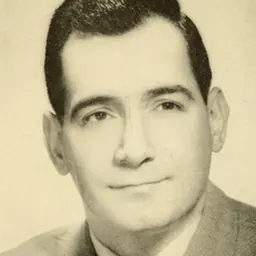


Related people
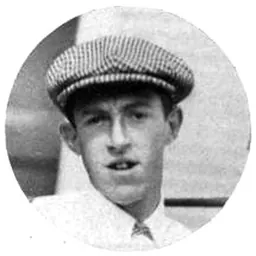
Same field, nearest in time



Contemporaries
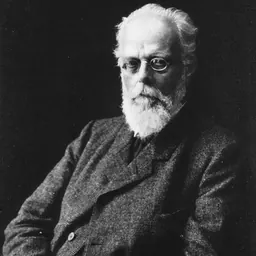
People whose lives overlapped Robert Hunter's
Frequently asked questions
Who was Robert Hunter?
American sociologist, author, golf course architect (1874–1942)
When was Robert Hunter born?
Robert Hunter was born on 10 April 1874 in Terre Haute.
When did Robert Hunter die?
Robert Hunter died on 14 May 1942 in Montecito.
What was Robert Hunter's occupation?
Robert Hunter was a golfer, writer, socialist, sociologist and golf course architect.
What nationality was Robert Hunter?
Robert Hunter was American.
Sources & further reading
· DBpedia: Robert Hunter (author)
Cite this page
APA: Biography.guide. (2026). Robert Hunter. https://biography.guide/robert-hunter-golfer-1874/
MLA: "Robert Hunter." Biography.guide, https://biography.guide/robert-hunter-golfer-1874/.
Chicago: "Robert Hunter." Biography.guide. https://biography.guide/robert-hunter-golfer-1874/.
Data last updated: 2026-09-21 · Spot an error? Report a correction.
Portrait: Wikimedia Commons · author & licence
Page generated 2026-09-27 04:59 UTC