
About Donald Lynden-Bell
Lived 1935 – 2018 (aged 82). Donald Lynden-Bell was a British astronomer, university teacher and astrophysicist.
Donald Lynden-Bell CBE FRS (5 April 1935 – 6 February 2018) was a British theoretical astrophysicist. He was the first to determine that galaxies contain supermassive black holes at their centres, and that such black holes power quasars. Lynden-Bell was President of the Royal Astronomical Society (1985–1987) and received numerous awards for his work, including the inaugural Kavli Prize for Astrophysics. He worked at the University of Cambridge for his entire career, where he was the first director of its Institute of Astronomy.
Biography Lynden-Bell was born at Dover Castle in Dover, Kent, into a military family,
He attended Marlborough College before being admitted to Clare College, Cambridge in 1953. After earning a distinction in the Mathematical Tripos, In 1962, he published research with Olin Eggen and Allan Sandage arguing that the Milky Way originated through the dynamic collapse of a single large gas cloud. In 1969 he published his theory that quasars are powered by massive black holes accreting material. From counting dead quasars, he deduced that most massive galaxies have black holes at their centres.
Lynden-Bell developed a theory for the relaxation of a system of particles in changing potential field known as "violent relaxation." Violent relaxation has many applications in dynamical astronomy, affecting the orbits of stars within star clusters and galaxies. Lynden-Bell is also known for the development of the theory of the gravothermal catastrophe, a phenomenon in star clusters that is the result of the negative heat capacity of gravitational systems. The catastrophe occurs when the core of a cluster shrinks and heats up, causing it to transfer energy to stars in the cluster's halo, leading the cluster core to collapse.
Lynden-Bell authored an influential 1974 paper with James E. Pringle about the evolution of disks around "nebular variables," which were later to become known as T Tauri stars – an early phase in a star's life cycle. The paper predicts the signature of radiation from such disks, which is emitted primarily at infrared wavelengths where it dominates over the emission from the star. Excess infrared emission from young stars has become one of the primary methods used to identify these objects in astronomical surveys.
In 1971, he became Professor of Astrophysics (1909) and later the first director of the Institute of Astronomy, Cambridge, when it formed from the merger of the Institute of Theoretical Astrophysics and the Cambridge Observatories in 1972.
Lynden-Bell, Roger Griffin, Neville Woolf, and Wallace L. W. Sargent were in the 2015 documentary film Star Men that covered some of their professional accomplishments at their fiftieth reunion to redo a memorable hike.
His research in the last years of his life mainly focused on astrophysical jets and general relativity.
Personal life and death Donald was married to Ruth Lynden-Bell, a professor of chemistry at the University of Cambridge, on 1 July 1961.
Lynden-Bell died at his home in Cambridge on 6 February 2018, at the age of 82. Responding to news of his death, John Zarnecki, then President of the Royal Astronomical Society, praised Lynden-Bell's contributions to astronomy, particularly his "incisive questions at scientific meetings and being generous in his support for others".
Honours Awards Karl Schwarzschild Medal (1983) Eddington Medal (1984) Brouwer Award of the American Astronomical Society, Division for Dynamical Astronomy (1991) Gold Medal of the Royal Astronomical Society (1993) Bruce Medal (1998) National Academy of Sciences, John J. Carty Award for the Advancement of Science (2000) Henry Norris Russell Lectureship (2000) The first Kavli Prize for Astrophysics (2008), with Maarten Schmidt Member of the Norwegian Academy of Science and Letters.
Named after him Asteroid 18235 Lynden-Bell
Don’t just read it —
keep it.
Full-length biographies made to live with: read them, listen on the way to work, watch them tonight.
- E-book
- Audio
- Video
Instant download · yours to keep · every purchase keeps this site free
Important facts
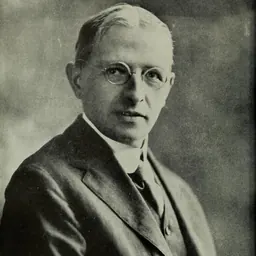
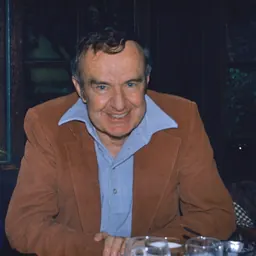
People in Donald Lynden-Bell's life
Named in this biography and alive at the same time






Related people
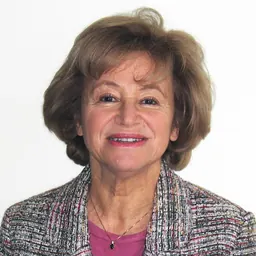
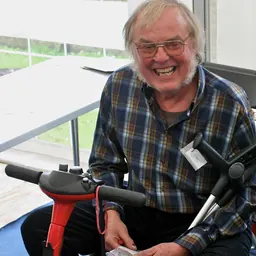
Same field, nearest in time

Contemporaries
People whose lives overlapped Donald Lynden-Bell's


Frequently asked questions
Who was Donald Lynden-Bell?
English astrophysicist (1935–2018)
When was Donald Lynden-Bell born?
Donald Lynden-Bell was born on 5 April 1935 in Dover.
When did Donald Lynden-Bell die?
Donald Lynden-Bell died on 6 February 2018 in Cambridge.
What was Donald Lynden-Bell's occupation?
Donald Lynden-Bell was an astronomer, university teacher and astrophysicist.
What nationality was Donald Lynden-Bell?
Donald Lynden-Bell was British.
Sources & further reading
· Wikipedia: Donald Lynden-Bell
Cite this page
APA: Biography.guide. (2026). Donald Lynden-Bell. https://biography.guide/donald-lynden-bell/
MLA: "Donald Lynden-Bell." Biography.guide, https://biography.guide/donald-lynden-bell/.
Chicago: "Donald Lynden-Bell." Biography.guide. https://biography.guide/donald-lynden-bell/.
Data last updated: 2026-09-26 · Spot an error? Report a correction.
Page generated 2026-09-27 05:15 UTC