
Donald Fagen
American recording artist, musician (born 1948)
About Donald Fagen
Born 1948. Donald Fagen is an American singer-songwriter, singer, pianist, record producer, jazz musician and recording artist.
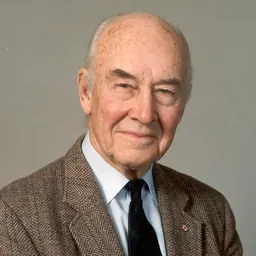
Donald Jay Fagen (, ; born January 10, 1948) is an American retired singer-songwriter and musician who was the co-founder, lead singer, co-songwriter, and keyboardist of the rock band Steely Dan, formed in the early 1970s with musical partner Walter Becker. In addition to his contributions to Steely Dan, Fagen has released four solo albums, beginning with The Nightfly in 1982, which was nominated for seven Grammys.
In 2001, Fagen was inducted into the Rock and Roll Hall of Fame as a member of Steely Dan. Following Becker's death in 2017, Fagen continued to tour using the band name until 2024.
Early life Fagen was born in Passaic, New Jersey, on January 10, 1948 His father was Joseph "Jerry" Fagen, an accountant, and his mother, Elinor (née Rosenberg), a homemaker who had been a swing singer in upstate New York's Catskill Mountains from childhood through her teens. His family moved to Fair Lawn, New Jersey, a small suburb near Passaic. When he was ten years old, he moved with his parents and younger sister to Kendall Park, a newly constructed suburban section of South Brunswick, New Jersey. The transition upset him, and he detested living in the suburbs. He later recalled that it "was like a prison. I think I lost faith in [my parents'] judgment... It was probably the first time I realized I had my own view of life." His life in Kendall Park, including his teenage love of late-night radio, would inspire his 1982 album The Nightfly. In the early 1960s, beginning at age 12, he often went to the Village Vanguard jazz club in Greenwich Village, Manhattan, where he was particularly impressed by Earl Hines, Willie "the Lion" Smith, and Bill Evans. He regularly took the bus to Manhattan to see performances by jazz musicians Charles Mingus, Sonny Rollins, Thelonious Monk, and Miles Davis. He learned to play the piano, and he also played baritone horn in the high school marching band. In his late teens he was drawn to soul music, funk, Motown, and Sly and the Family Stone. He has also expressed admiration for the Boswell Sisters, Henry Mancini, and Ray Charles. Walter Becker in a coffee house in 1967. Becker and Fagen attracted a revolving assortment of musicians, including future actor Chevy Chase, to form the bands Leather Canary, the Don Fagen Jazz Trio, and the Bad Rock Band. Fagen described his college bands as sounding like "the Kingsmen performing Frank Zappa material". None of the groups lasted long, but the partnership between Fagen and Becker did.
The duo's early career included working with Jay and the Americans, for which they used pseudonyms. In the early 1970s they worked as pop songwriters for ABC/Dunhill Records, which released all of Steely Dan's 1970s albums. Fans of Beat Generation literature, Fagen and Becker named the band after a steam-powered vibrator mentioned in the William S. Burroughs novel Naked Lunch. The group's first lineup was assembled in December 1971 in Los Angeles, where Becker and Fagen had relocated to work as staff songwriters for ABC/Dunhill. Becker and Fagen formed the core of the band and wrote all the songs, with Becker on bass, and later lead guitar, and Fagen on keyboards and vocals.
After the release of their third LP in 1974, the other members left or were fired from the band, which evolved into a studio project headed by Becker and Fagen and employing a wide range of session musicians. Steely Dan's best-selling album was 1977's Aja, which was certified platinum. Three years later, they released Gaucho. Their next album was not until 1995, when they released the live album Alive in America. It was followed by the multiple Grammy Award winning Two Against Nature in 2000, and Steely Dan's most recent album Everything Must Go in 2003. A concert DVD, Two Against Nature, included material from much of the band's history.
After Becker's death in 2017, Fagen wished to retire the Steely Dan name out of respect for his bandmate and tour under a different name, but promoters advised him against it for commercial reasons.
Solo career After Steely Dan's breakup in 1981, Fagen released his debut solo album, The Nightfly, in October 1982. It was certified platinum for sales of over a million copies in the U.S. and reached 11 on the Billboard Top 200 albums list. The first single, "I.G.Y.", released in September 1982, peaked at number 26 on the Hot 100. The follow-up single, "New Frontier" (January 1983 ), peaked at number 70 and was accompanied by a music video. The Nightfly was nominated for the Grammy Award for Album of the Year. In 2002, Rhino Records released a DVD-Audio version of The Nightfly in honor of the album's 20th anniversary. The bonus track, "True Companion", from the Nightfly Trilogy MVI Boxed Set is track seven on the Heavy Metal film soundtrack from 1981.
During the rest of the 1980s, Fagen contributed to soundtracks and wrote a column for Premiere magazine. In 1988, he released "Century's End" from the score to the Michael J. Fox film, Bright Lights, Big City. At the close of the decade, he returned to the stage with the New York Rock and Soul Revue. Becker and Fagen reunited in 1986 to work on the debut album by model and singer Rosie Vela. Becker produced Fagen's second album, Kamakiriad (1993), which was nominated for the Grammy Award for Album of the Year and reached number 10 on the Top 200 albums chart.
In 2007, Fagen's first three albums were released in a box set, Nightfly Trilogy, in the MVI (Music Video Interactive) format. Each album features DTS 5.1, Dolby 5.1 and PCM Stereo mix but no MLP encoded track, along with bonus audio and video content.
Fagen's fourth album, Sunken Condos, was released in 2012. It reached 12 on the Billboard Top 200 albums list.
In 2013, Fagen published an autobiography titled Eminent Hipsters. A biography Nightfly: The Life of Steely Dan's Donald Fagen by Peter Jones was published in 2022.
Fagen frequently uses aliases. He wrote the liner notes to Can't Buy a Thrill under the name Tristan Fabriani, which he used on stage when he played keyboards for Jay and the Americans (Becker used Gus Mahler). On his solo albums, when he played or programmed a synthesizer part to replicate a real instrument (bass, vibraphone, horns) he credited one of his aliases: Illinois Elohainu, Phonus Quaver, or Harlan Post. who "doesn't much care about hippies" or the message of his generation's counterculture: "His '60s are the Kennedy years, when a smart, somewhat shallow suburban white kid could dream of Brubeck and bohemia and bomb-shelter wingdings and transoceanic rail links to exotic locales." The songs of Bertolt Brecht and Kurt Weill were an important influence on Fagen's irony.
In 1993 Fagen married songwriter Libby Titus. Although the two attended Bard College at around the same time, they did not become friends until 1987, when they were backstage at a Dr. John concert. On January 4, 2016, Titus sustained injuries after Fagen allegedly shoved her against a marble window frame at their Upper East Side apartment. Police dismissed the case, and the couple issued the following statement to the New York Post: “Despite misleading reports in the press, we’re happily married. Now in our 23rd year of marriage, we’re looking forward to many, many more.”
Titus co-wrote the song "Florida Room" on Fagen's 1993 album Kamakiriad. Fagen has also performed with his stepdaughter Amy Helm, the daughter of Titus and musician Levon Helm. Fagen has no children of his own. Titus died on October 13, 2024. Upon Titus's death, Fagen posted the following statement on Steely Dan's website: "My beautiful wife, Libby Titus Fagen, passed on October 13th surrounded by family. Thanks for keeping us in your thoughts, and for respecting our privacy at this time."
Awards 1985: Honorary Doctor of Arts, Bard College 2001: Honorary Doctor of Music, Berklee College of Music 2001: Steely Dan inducted into the Rock and Roll Hall of Fame 2010: Jazz Wall of Fame, American Society of Composers, Authors and Publishers
Discography
Studio albums Year Album details Peak chart positions Certifications(sales thresholds) US AUS DEN GER NLD NZ NOR SWE SWI UK 1982 The Nightfly Released: October 1, 1982 Label: Warner Bros. 11 19 — 56 16 9 6 8 — 44 RIAA: Platinum BPI: Platinum 1993 Kamakiriad Released: May 25, 1993 Label: Reprise 10 80 — 24 13 30 10 9 — 3 RIAA: Gold 12 — 36 29 13 — 5 10 53 23 "—" denotes releases that did not chart
Live albums
As featured artist
Video albums With the Dukes of September
1969: Terence Boylan, Alias Boona (Verve Forecast) – piano, organ (credited as Don Fagen) 1970–1971: Jay and the Americans, touring band – keyboards 1970: Jay and the Americans, Capture the Moment (United Artists), "Capture the Moment", "Tricia (Tell Your Daddy)", "She’ll Be Young Forever" and "Thoughts That I’ve Taken To Bed" – co-arranger (with Walter Becker) strings and horns 1970: Linda Hoover, I Mean To Shine (Omnivore Recordings), "I Mean To Shine", "Turn My Friend Away", "The Roaring of The Lamb", "Jones" - co-writer (with Walter Becker), "Roll Back The Meaning" - co-writer (with Walter Becker and Dorothy White), keyboards 1971: Barbra Streisand, Barbra Joan Streisand (Columbia), "I Mean to Shine" – Hammond organ, co-writer (with Walter Becker) 1972: Navasota, Rootin''' (ABC Records) – piano, electric piano, co-arranger strings and horns (with Walter Becker); "Canyon Ladies" – co-writer (with Walter Becker) 1973: Tim Moore, Tim Moore (Mooncrest), "A Fool Like You" – backing vocals 1973: Thomas Jefferson Kaye,Thomas Jefferson Kaye (Dunhill Records), "The Door Is Still Open", "Learning How To Fly" and "I’ll Be Leaving Her Tomorrow" – backing vocals 1974: Thomas Jefferson Kaye (ABC Records), First Grade, "Northern California" – piano 1977: Terence Boylan, Terence Boylan (Asylum Records), "Don't Hang Up Those Dancing Shoes" and "Shame" – piano 1977: Poco, Indian Summer (ABC Records), "Indian Summer" and "Win or Lose" – synthesizer 1978: Marc Jordan, Mannequin (Warner Bros.) – piano 1978: Pete Christlieb and Warne Marsh, Apogee (Warner Bros.) – co-producer (with Walter Becker) 1979: Steve Khan, Arrows (Columbia) – liner notes 1980: Far Cry, The More Things Change... (Columbia), "The Hits Just Keep On Comin'", "It's Not As Simple As That" and "Some Things Will Never Change" – background vocals 1981: Rickie Lee Jones, Pirates (Warner Bros.), "Pirates (So Long Lonely Avenue)" – synthesizer 1982: Eye to Eye, Eye to Eye (Warner Bros.), "On The Mend" – synthesizer solo 1982: The King of Comedy (Warner Bros.), film soundtrack, "The Finer Things" – writer, backing vocals, co-producer (with Gary Katz) 1983: Diana Ross, Ross (Motown), "Love Will Make It Right" – writer, synthesizer 1983: Eye to Eye, Shakespeare Stole My Baby (Warner Bros.), "Jabberwokky" – keyboards 1984: Greg Phillinganes, Pulse (Planet), "Lazy Nina" – writer, arranger 1984: Various artists, The Gospel At Colonus Original Cast – The Gospel At Colonus (Asylum Records) – co-producer 1985: Jane Aaron, Traveling Light, film soundtrack – writer and performer 1986: Rosie Vela, Zazu (A&M Records) – synthesizer 1986: Yellowjackets, Shades (GRP Records), "Shades" – writer 1987: Jane Aaron, Set In Motion, film soundtrack – writer and performer 1988: Phil Woods' Little Big Band, Evolution (Concord) – liner notes 1988: The Hoops McCann Band, Plays The Music Of Steely Dan (MCA Records), "Rapunzel" (plus seven Steely Dan songs) – co-writer (with Walter Becker), mixing 1988: Bright Lights, Big City (Warner Bros.), "Bright Lights, Big City" (Jimmy Reed, writer) – vocals, keyboards, programming, arranger, co-producer (with Gary Katz) 1988: Love And Money, Strange Kind Of Love (Mercury Records), "Hallelujah Man" – clavinet (uncredited) 1989: Jane Aaron, This Time Around, film soundtrack – writer and performer 1990: William S. Burroughs, Dead City Radio (Island Records), "A New Standard by Which to Measure Infamy" – musical accompaniment 1991: The Manhattan Transfer, The Offbeat of Avenues (Columbia), "Confide in Me" – writer 1992: Glengarry Glen Ross (Music From & Inspired By The Motion Picture) (Elektra), "Blue Lou", performed by The Joe Roccisano Orchestra with Lou Marini (alto sax) – writer 1992: Jennifer Warnes, The Hunter (Private Music), "Big Noise, New York" – backing vocals 1994: Walter Becker, 11 Tracks of Whack (Giant Records) – producer, arranger, keyboards 1995: Mindy Jostyn, Five Miles From Hope (1-800-Prime-CD), "Too Easy" – melodica 1995: Raw Stylus, Pushing Against the Flow (Geffen), "37 Hours (in the USA)" – synthesizer 1996: Phil Woods, Into the Woods: The Best of Phil Woods (Concord Records) – liner notes 1997: Boz Scaggs, My Time: A Boz Scaggs Anthology (Columbia), "Drowning in the Sea of Love" – producer, vocals, piano, electric piano, melodica 1998: Ricky Lawson, First Things First (Platinum Entertainment ) – piano 2008: Martha Wainwright, I Know You're Married But I've Got Feelings Too (Drowned In Sound Recordings), "So Many Friends" – synthesizer 2009: Sam Butler & the Boys / Clarence Fountain, Stepping Up & Stepping Out (Tyscot Records), "It's a Different World Now" – melodica, liner notes 2012: Jon Herington, Time On My Hands (Wise Axe Inc.), "Caroline Yes" and "Egirl" – piano and electric piano 2015: Peter More, Oh Whitney (EP) – producer 2015: Rudimental, We The Generation (Asylum Records), "Common Emotion" – voice 2018: Derek Smalls, Smalls Change (Meditations Upon Ageing) (BMG), "Memo To Willie" – vocals 2018: Peter More, Beautiful Disrepair (Night Owl Productions) – producer 2019: Peter More, Shoulder (EP) (Devil Hills) – producer, piano, organ, vocals 2021: David Crosby, For Free (BMG), "Rodriguez For A Night" – co-writer (with David Crosby and James Raymond), keyboards
Film and TV appearances 1993: Donald Fagen, Concepts for Jazz/Rock Piano (Homespun Video), instructional video with Warren Bernhardt – piano, electric piano, conversation 2009: Memory Man: A Michael Leonhart Film featuring Donald Fagen, promotional video for the Electro-Harmonix Stereo Memory Man effects pedal – The Memory Man 2016: The Simpsons, Treehouse of Horror XXVII (Season 28, Episode 4) – voice (himself) 2019: Paul Shaffer, Paul Shaffer Plus One (TV) (Series 1, Episode 5) – conversation, electric piano
Writing 1987: "Henry Mancini's Anomie Deluxe", Premiere Magazine. Revised and reprinted in Eminent Hipsters.1988: "In The Throes of Lakmania", Premiere Magazine. 1988: "Tell Blondie To Break Out The Ice", Premiere Magazine. 1989: "A Talk with Ennio Morricone", Premiere Magazine. 1989: "All That Jazz", Harper's Bazaar. Revised and reprinted in Eminent Hipsters. 2007: "The Devil and Ike Turner. Parsing his hits", Slate. 2013: Eminent Hipsters. 2016: "Neutron Sunday. In 1956, Ed Sullivan showed America what nuclear holocaust looks like. We were never the same again", Slate. 2016: "Something of Value: How I fell in love with horror movies, and what their terrors taught me", Slate. 2020: "Ukulele Ike, a.k.a. Cliff Edwards, Sings Again", Jazz Times.
Don’t just read it —
keep it.
Full-length biographies made to live with: read them, listen on the way to work, watch them tonight.
- E-book
- Audio
- Video
Instant download · yours to keep · every purchase keeps this site free
Important facts
People in Donald Fagen's life
Named in this biography and alive at the same time





Related people
Same field, nearest in time



Contemporaries
People whose lives overlapped Donald Fagen's

Frequently asked questions
Who is Donald Fagen?
American recording artist, musician (born 1948)
When was Donald Fagen born?
Donald Fagen was born on 10 January 1948 in Passaic.
What is Donald Fagen's occupation?
Donald Fagen is a singer-songwriter, singer, pianist, record producer, jazz musician and recording artist.
What nationality is Donald Fagen?
Donald Fagen is American.
Sources & further reading
Cite this page
APA: Biography.guide. (2026). Donald Fagen. https://biography.guide/donald-fagen/
MLA: "Donald Fagen." Biography.guide, https://biography.guide/donald-fagen/.
Chicago: "Donald Fagen." Biography.guide. https://biography.guide/donald-fagen/.
Data last updated: 2026-09-26 · Spot an error? Report a correction.
Page generated 2026-09-27 05:13 UTC