
About Domingo del Monte
Lived 1804 – 1853 (aged 49). Domingo del Monte was a Cuban journalist, poet, literary critic, jurist and writer.
Domingo del Monte (August 4, 1804 — November 4, 1853) was a writer, lawyer, arts patron, and literary critic, known primarily for contributing to Cuban literature and advocating for public education throughout the country.
Del Monte attended preschool while living in Venezuela, before his parents moved to Dominican Republic, and thereafter to Cuba in 1810. A few years later, when Del Monte was a twelve-year-old, his parents enrolled him into the Seminary of San Carlos, a catholic alma mater of Leonardo Gamboa in the city of Havana. He completed studies at the University of Havana and right after graduation, around the 1820s, he had a notable influence as an associate for a prominent lawyer in Havana, who shortly after, financed a trip throughout Europe and the United States for the young Del Monte. As an advocate for the promulgation of Cuban culture, he organized meetings which would be held at his house, and where important figures, like José Jacinto Milanés, Anselmo Suárez y Romero, and Cirilo Villaverde would later attend, to discuss topics like literature, and other issues related to social reform, and the autonomy of the country.
The period between 1830 and 1840 has been considered as the Golden Age of literature in Cuba. No other intellectual of the period was as influential as Del Monte. He was in the middle of the flourishing of the Romanticism movement throughout Cuba, which included the best exponents of the epoch.
He auspices, among other writers, Juan Francisco Manzano, whom he meets in 1830. Still a slave, and whose freedom was attainable only later, on July 23, 1836, through the funds that were raised by Del Monte's group.
Manzano's talent as an outspoken author was impressive. Del Monte helped him and promoted all his works, after considering him as one of the best writers in Cuba.
Del Monte accomplished the publication of Manzano's masterpiece. In 1839 the manuscript Autobiography of a slave (1839) was published in England, through a British official by the name of Richard Robert Madden, an abolitionist, who after corresponding through letters with Del Monte, showed an interest to include Manzano's work in an antislavery tract soon to be published. In 1837, José Antonio Saco, another writer, wrote a tract about the English colonies and the republic of Cuba. His main argument consisted of the advantages of Cuba with Britain or the United States.
Del Monte and other contemporary writers like Félix Varela, José Antonio Saco, and José de la Luz y Caballero, identified themselves as autonomous nationalists. Most of them envisioned a Cuba without black or mixed Cuban races. In that sense they all had patriarchal beliefs. For them being Cuban implied being a Catholic, as well as an exclusive descendant from white Spaniards, since the rest of the peoples, those of mixed and black races were just uncultured.
For Del Monte though, the solution for economic advancement lied in suppressing slavery, by either repatriating African blacks or by gradually ceasing the black slave trade that was in effect at the time. On October 17, 1848, he wrote a letter stating his opinions where he said:
For Del Monte, the development of Cuba as an autonomous country had to come from within, but only through the direct involvement of white Cubans in the affairs of the country. That is, Del Monte was neither in favor of yielding Cuba's autonomy under Spanish rule, nor in favor of annexation under the United States. In both cases, in his opinion, the black race would become the majority group, and as a result, would run the country either under Spanish or Anglo-American authority. In Del Monte's view, white Cubans' involvement in governmental affairs was tantamount to the autonomy of Cuba.
In that sense Del Monte's beliefs leaned more toward an assimilationist Europhile than an annexationist.
In 1838, José Zacarías González del Valle, a philosopher, professor, and a member of the literary salon group which Del Monte founded, and also a close friend of Del Monte who would correspond later with him during the years when Del Monte lived in Spain, said that the group, of which he also was part of: "consisted of young men imbued with the principles of liberty, equality, and fraternity, who exchanged books and ideas in a clandestine manner, and who dedicated their noble and generous hearts to end the slave trade and slavery."
Conspiracy of La Escalera Del Monte was in the center of the conspiracy of La Escalera (1844) . He was accused, along with José de la Luz y Caballero, and Félix Tanco, of conspiring with black slaves to revolt against the colonial government. The conspiracy was an uprising among black slaves to denounce the injustices by the government, and against the sanctions imposed upon them by the colonial authorities. Many of the slaves were savagely tortured, while others, like "Plácido", were killed.
1844 was known as the Year of the Lash, or "Year of the whip". . The conspiracy acquired its name from a wooden ladder where slaves would be strapped into, and henceforth punished by whipping.
Although there is speculation whether the revolt was indeed a conspiracy or just an excuse from the government to inflict despotism onto the black population, it is a fact that the rebellion, which started in 1843, erupted in Cárdenas in March of that year, and in Matanzas, in November, throughout sugar mills in both municipalities.
According to some sources, in December 1843, a white planter in Matanzas, discovered the plot that aimed to overthrow the Spanish government. They corresponded with each other thereafter, and in 1842 Del Monte wrote a letter to Everett, warning him of a conspiracy by slaves to undertake control of the country and possibly to end slavery, with the supposed backing of British abolitionists, and especially of David Turnbull, British consul in Havana from 1841 to 1843, who at the time was living in Jamaica, a safe haven from Spanish forces in Cuba. His assistant, Francis Ross Cocking, was supposedly implicated in the conspiracy, although he was never accused of any wrongdoing. In 1843, Everett forwarded a copy of the letter that Del Monte wrote, to Robert Campbell, U.S. consul in Havana, and to Washington Irving, the U.S. minister in Spain. Irving replied that the Spanish authorities were not concerned, since the forces counted with the capabilities and henceforth were fully prepared to face any uprising. Webster also passed on the information to John Calhoun, who assured him that President John Tyler had been informed on the matter.
Don’t just read it —
keep it.
Full-length biographies made to live with: read them, listen on the way to work, watch them tonight.
- E-book
- Audio
- Video
Instant download · yours to keep · every purchase keeps this site free
Important facts
People in Domingo del Monte's life
Named in this biography and alive at the same time
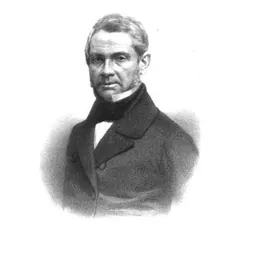
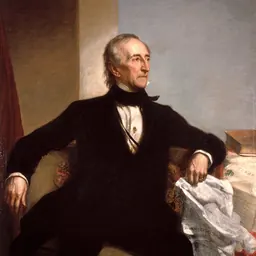




Related people
Same field, nearest in time


Contemporaries
People whose lives overlapped Domingo del Monte's





Frequently asked questions
Who was Domingo del Monte?
Cuban writer (1804-1853)
When was Domingo del Monte born?
Domingo del Monte was born on 4 August 1804 in Maracaibo.
When did Domingo del Monte die?
Domingo del Monte died on 4 November 1853 in Madrid.
What was Domingo del Monte's occupation?
Domingo del Monte was a journalist, poet, literary critic, jurist and writer.
What nationality was Domingo del Monte?
Domingo del Monte was Cuban.
Sources & further reading
· Wikipedia: Domingo del Monte
Cite this page
APA: Biography.guide. (2026). Domingo del Monte. https://biography.guide/domingo-del-monte/
MLA: "Domingo del Monte." Biography.guide, https://biography.guide/domingo-del-monte/.
Chicago: "Domingo del Monte." Biography.guide. https://biography.guide/domingo-del-monte/.
Data last updated: 2026-09-20 · Spot an error? Report a correction.
Page generated 2026-09-27 05:20 UTC