
About Domenico Giuliotti
Lived 1877 – 1956 (aged 78). Domenico Giuliotti was an Italian writer, journalist and poet.
Domenico Giuliotti was an Italian writer and essayist. He was a dedicated Catholic and his rigidity and severity are reflected in his numerous works.
Biography Domenico Giuliotti was born in San Casciano in Val di Pesa, on 18 February 1877, on a farm only a few miles from the city of Florence. When he was barely old enough to go to school his parents sent him to live with an uncle, in a little hamlet near his birthplace. This uncle, Virgilio, was a notary public who had become the vice pretore of the district. As a magistrate he took pride in his judicial duties, and he and his wife, having no children of their own, hoped that some day their young nephew would follow in the footsteps of his jurist uncle. Consequently, Giuliotti, much against his inclinations, eventually went to Siena to study law. Before taking a degree he moved to Rome, under the pretext, as he explained to his family, that a degree conferred by the University of Rome, whose professors were renowned, carried with it more prestige than a degree from that of Siena.
During his university years Giuliotti began to exhibit strong anarchist and radical leanings. As the years went by, however, his outlook changed. He was terrified at the sight of the havoc wrought by the godless principles of a godless society with its worship of wealth and of everything that wealth can buy. The situation seemed hopeless, and Giuliotti was depressed almost to the point of despair, for it seemed to him that these diabolical principles were "preparing a generation capable of making hell turn pale." In his endeavor to find something to counteract these evils, Giuliotti wandered from one ideology to the other.
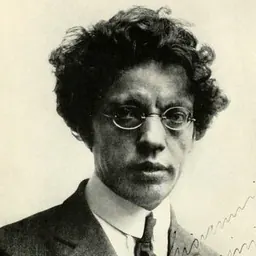
In 1913 Giuliotti founded the journal La Torre with his friend Federigo Tozzi and used it to express deeply reactionary Catholic views. The periodical was founded by Giuliotti and Tozzi with the express purpose of combatting socialism, anarchism, and everything opposed to the principles of the "Throne and the Altar." Giuliotti was also one of the major collaborators of Il Frontespizio, an important cultural magazine which gathered together noteworthy Italian writers like Piero Bargellini, Giovanni Papini and Ardengo Soffici.
Besides the well-known Dizionario dell'omo salvatico, written in collaboration with Papini, Giuliotti has published a score of books of poetry, tales and novels. Most of these are of a fragmentary nature, consisting of essays, sketches, book reviews, and journalistic articles such as an editor or a columnist might write. As one would expect, the spirit and the tone of these writings vary with the purpose and the content of the work. So much so, that as the French critic Marcel Brion says of Giuliotti, "in him one finds the sweetness of Jacopone da Todi, the severe and serious naturalism of Giotto's frescoes, the winged flight of Dante's terzine, and, often enough, a violence of reproach and satire that reminds one of Savonarola."
Works
L'ora di Barabba (1920; nuova ed. a cura di Luigi Castiglione, Roma, Logos, 1982).
Il cavallo volante, illustrazioni di Alessandro Brissoni, ed. Bernardo Cennini, Tip. Vallecchi, Firenze, 1945.
Giri d'arcolaio, disegni in nero di Piero Bernardini, tavole a colori di Giovanni Colacicchi, Le Monnier, Tip. E. Ariani, Firenze, 1948
Lettere agli amici, a cura di Massimo Baldini, Piergiovanni Permoli, Ettore Tirinnanzi; introduzione di Geno Pampaloni, La Locusta, Vicenza, 1980.
Domenico Giuliotti e Giovanni Papini, Carteggio I (1913-1927), a cura di Nello Vian, prefazione di Carlo Bo, Edizioni di Storia e Letteratura, Roma, 1984; Carteggio II (1928-1939), a cura di Nello e Paolo Vian, ibidem, 1989; Carteggio III (1940–1955), a cura di Nello e Paolo Vian, ibidem, 1991.
Il Natale, a cura di Massimo Baldini, illustrazioni di Giacomo Napoli, Chegai, Firenze, 2001.
Don’t just read it —
keep it.
Full-length biographies made to live with: read them, listen on the way to work, watch them tonight.
- E-book
- Audio
- Video
Instant download · yours to keep · every purchase keeps this site free
Important facts
People in Domenico Giuliotti's life
Named in this biography and alive at the same time



Related people
Same field, nearest in time



Contemporaries
People whose lives overlapped Domenico Giuliotti's


Frequently asked questions
Who was Domenico Giuliotti?
Italian writer (1877–1956)
When was Domenico Giuliotti born?
Domenico Giuliotti was born on 18 February 1877 in San Casciano in Val di Pesa.
When did Domenico Giuliotti die?
Domenico Giuliotti died on 12 January 1956 in Greve in Chianti.
What was Domenico Giuliotti's occupation?
Domenico Giuliotti was a writer, journalist and poet.
What nationality was Domenico Giuliotti?
Domenico Giuliotti was Italian.
Sources & further reading
· Wikipedia: Domenico Giuliotti
Cite this page
APA: Biography.guide. (2026). Domenico Giuliotti. https://biography.guide/domenico-giuliotti/
MLA: "Domenico Giuliotti." Biography.guide, https://biography.guide/domenico-giuliotti/.
Chicago: "Domenico Giuliotti." Biography.guide. https://biography.guide/domenico-giuliotti/.
Data last updated: 2026-09-20 · Spot an error? Report a correction.
Page generated 2026-09-27 05:18 UTC