
About Dmitry Blokhintsev
Lived 1907 – 1979 (aged 71). Dmitry Blokhintsev was a Russian physicist and university teacher.
Dmitry Ivanovich Blokhintsev (; 11 January 1907 – 27 January 1979) was a Soviet physicist whose career was mostly spent in advancing the Soviet program of nuclear weapons.
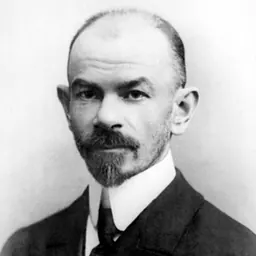
Biography Blokhintsev was born to the family of an agronomist and from a young age showed interest in engineering. Blochintsev attended the Technical College for Industrial Economics and studied physics at Moscow State University from 1926 to 1930. Among others, he studied with Leonid Mandelstam, Sergei Ivanovich Vavilov, Nikolai Lusin, Dmitri Egorov and Igor Tamm. He then worked at the Research Institute for Applied Chemistry (NIIPh), where he completed his habilitation under Tamm in 1934 (Russian doctorate). In a 1934 paper co-authored with Fyodor Galperin, the term graviton was used for the first time.
In 1935 he moved to the Lebedev Physical Institute (FIAN). At the same time he became a professor of theoretical physics at Moscow State University. When Tamm was temporarily transferred there in 1937, he headed the theory department at FIAN. From 1951 he was head of the nuclear research center at the Obninsk nuclear power plant, where under his leadership the first Soviet prototype nuclear power plant with 5 MW of electrical output went into operation in 1954. Blokhintsev received the Lenin Prize for this in 1957.
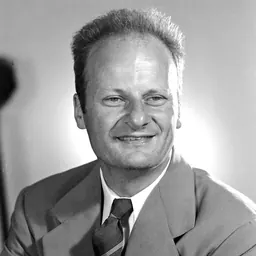
Blochintsev is also known as the author of a quantum mechanics textbook and he also wrote a book on the philosophy of quantum mechanics, where he represented an interpretation in the spirit of Marxist–Leninist materialism. His quantum mechanics textbook, first published in 1944, was translated into many languages and he received the Stalin Prize for it. In addition to reactor physics and quantum mechanics, he dealt with many other areas of physics such as solid state physics, nuclear physics, quantum field theory, nonlinear optics and acoustics. In 1938 he presented the derivation of the Lamb shift in a seminar, using a similar approach as Hans Bethe later did in his well-known work. Since the Journal for Experimental and Theoretical Physics refused publication, his contribution did not appear in a collection of his work until 1958. During the Second World War he became a leading acoustics expert, including for the localization of submarines and aircraft using acoustic means. He was scientific advisor to the UN Secretary General and from 1963 Vice President and 1966 to 1969 President of the International Union of Pure and Applied Physics (IUPAP). In 1964 he was elected a member of the Leopoldina. He was a corresponding member of the Ukrainian Academy of Sciences.
Don’t just read it —
keep it.
Full-length biographies made to live with: read them, listen on the way to work, watch them tonight.
- E-book
- Audio
- Video
Instant download · yours to keep · every purchase keeps this site free
Important facts
People in Dmitry Blokhintsev's life
Named in this biography and alive at the same time


Related people
Same field, nearest in time


Contemporaries
People whose lives overlapped Dmitry Blokhintsev's



Frequently asked questions
Who was Dmitry Blokhintsev?
Soviet physicist and university teacher (1908-1979)
When was Dmitry Blokhintsev born?
Dmitry Blokhintsev was born on 29 December 1907 in Moscow.
When did Dmitry Blokhintsev die?
Dmitry Blokhintsev died on 27 January 1979 in Dubna.
What was Dmitry Blokhintsev's occupation?
Dmitry Blokhintsev was a physicist and university teacher.
What nationality was Dmitry Blokhintsev?
Dmitry Blokhintsev was Russian.
Sources & further reading
· Wikipedia: Dmitry Blokhintsev
Cite this page
APA: Biography.guide. (2026). Dmitry Blokhintsev. https://biography.guide/dmitry-blokhintsev/
MLA: "Dmitry Blokhintsev." Biography.guide, https://biography.guide/dmitry-blokhintsev/.
Chicago: "Dmitry Blokhintsev." Biography.guide. https://biography.guide/dmitry-blokhintsev/.
Data last updated: 2026-09-20 · Spot an error? Report a correction.
Page generated 2026-09-27 05:24 UTC