
About Dmitry Alexandrovich Zavadsky
Lived 1972 – 2000 (aged 27). Dmitry Alexandrovich Zavadsky was a Belarusian and Russian cinematographer and journalist.
Dmitry Alexandrovich Zavadsky or Dzmitry Aliaksandravich Zavadski (; 28 August 1972 – declared dead 3 December 2003) was a Belarusian journalist who disappeared and was presumably murdered in 2000. Zavadsky worked as journalist and cameraman for Russian Public Television Channel One (ORT). From 1994 to 1997, he was the personal cameraman of Belarusian president Alexander Lukashenko.
1997 border-crossing incident In 1997, Zavadsky and ORT reporter Pavel Sheremet were arrested and imprisoned after filming a report about security vulnerability on the Belarus–Lithuania border. Zavadsky filmed the report with Sheremet (along with his drivers) crossing illegally from Belarus to Lithuania and back again, to demonstrate the ease with which smugglers could cross the border. They were charged with Article 17 of the Criminal Code (conspiracy to commit a crime) and Article 80 (intentional violation of the state border), which carried a maximum five-year prison sentence.
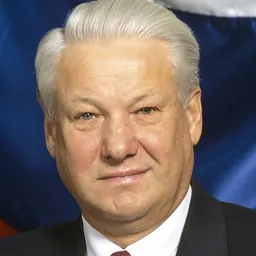
The arrests resulted in a diplomatic fallout between Russia and Belarus. The Russian authorities criticized Belarus over the arrests and Russian president Boris Yeltsin cancelled Lukashenko's scheduled trip to Moscow in protest. Lukashenko's invitation was revoked after he had already left Belarus; his plane was denied access to enter Russian airspace.
The trial began on 17 December 1997 in Ashmyany, from the Lithuanian capital of Vilnius. The selection of the location was highly publicized in both Belarus and Russia. Ashmyany, as a border city, required special permission to access, which complicated the situation for journalists wishing to cover the case. Additionally, the courtroom was too small to accommodate all the interested parties, but the request to transfer the trial to a larger location was denied.
In addition to Zavadsky, Belarusian authorities failed to determine the fates of leading opposition figures Yury Zakharanka and Viktar Hanchar, and businessman Anatol Krasouski, who also disappeared in 1999 and 2000.
Belarus came under international criticism and human rights monitors regarded the behind-closed-doors trial and convictions as flawed. Journalists were banned from observing the proceedings except for the sentencing.
Subsequent investigations and fallout In December 2003, the Parliamentary Assembly of the Council of Europe alleged that top government officials were involved in the disappearances and subsequent cover-ups. In 2004, the assembly filed a resolution calling for Belarus to initiate a proper criminal investigation into the disappearances, and stated that until "significant process" was made in the cases, it would not reconsider its 1997 suspension of Belarus as a guest member of the council.
In September 2004, the European Union and the United States issued travel bans for fоur Belarusian officials suspected in being involved in the kidnapping of Zavadsky: Interior Affairs Minister Vladimir Naumov, Prosecutor General Viktor Sheiman, Minister for Sports and Tourism Yuri Sivakov, and Colonel Dmitry Pavlichenko from the Belarus Interior Ministry. Naumov had been tasked with leading the investigation despite suspicions he was directly involved.
Belarusian officials have twice re-opened the investigation into Zavadsky's disappearance—in 2003 and 2005—but no further details have been released about his whereabouts.
In 2007, the U.N. Human Rights Council (UNHRC) denied Belarus a seat on after heavy international criticism of the country's poor human rights and press freedom record, including the disappearances of the four men and the 2005 murder of Veronika Cherkasova.
Legacy In 2004, his wife, Sviatlana Zavadskaya, and Iryna Krasouskaya, the wife of Anatol Krasouski, co-founded the We Remember Foundation, dedicated to bringing justice to the disappeared and exposing human rights violations in Belarus.
Don’t just read it —
keep it.
Full-length biographies made to live with: read them, listen on the way to work, watch them tonight.
- E-book
- Audio
- Video
Instant download · yours to keep · every purchase keeps this site free
Important facts
People in Dmitry Alexandrovich Zavadsky's life
Named in this biography and alive at the same time




Related people
Same field, nearest in time


Contemporaries
People whose lives overlapped Dmitry Alexandrovich Zavadsky's

Frequently asked questions
Who was Dmitry Alexandrovich Zavadsky?
Belarusian journalist (1972–2000)
When was Dmitry Alexandrovich Zavadsky born?
Dmitry Alexandrovich Zavadsky was born on 28 August 1972 in Minsk.
When did Dmitry Alexandrovich Zavadsky die?
Dmitry Alexandrovich Zavadsky died on 7 July 2000 in Minsk.
What was Dmitry Alexandrovich Zavadsky's occupation?
Dmitry Alexandrovich Zavadsky was a cinematographer and journalist.
What nationality was Dmitry Alexandrovich Zavadsky?
Dmitry Alexandrovich Zavadsky was Belarusian and Russian.
Sources & further reading
· Wikipedia: Dmitry Alexandrovich Zavadsky
Cite this page
APA: Biography.guide. (2026). Dmitry Alexandrovich Zavadsky. https://biography.guide/dmitry-alexandrovich-zavadsky/
MLA: "Dmitry Alexandrovich Zavadsky." Biography.guide, https://biography.guide/dmitry-alexandrovich-zavadsky/.
Chicago: "Dmitry Alexandrovich Zavadsky." Biography.guide. https://biography.guide/dmitry-alexandrovich-zavadsky/.
Data last updated: 2026-09-22 · Spot an error? Report a correction.
Page generated 2026-09-27 05:09 UTC