
About Pavel Sheremet
Lived 1971 – 2016 (aged 44). Pavel Sheremet was a Russian and Belarusian journalist, presenter, television presenter, editing staff, editor-in-chief and television journalist.
Pavel Grigorievich Sheremet (, ; 28 November 1971 – 20 July 2016) was a Belarusian-born Russian and Ukrainian journalist who was imprisoned by the government of Belarus in 1997, sparking an international incident between Belarus and Russia. The New York Times has described him as "known for his crusading reports about political abuses in Belarus" and "a thorn in the side of Lukashenko's autocratic government". He was awarded the Committee to Protect Journalists' International Press Freedom Award in 1999 and the Organization for Security and Co-operation in Europe's Prize for Journalism and Democracy in 2002.
Pavel Sheremet died in Kyiv on 20 July 2016 in a car explosion. The Ukrainian Prosecutor's Office stated in July 2016 that the explosion was caused by a bomb and labelled the death of Sheremet a murder.
Biography
Early career From 1994 to April 1995, Sheremet was the anchor and producer of Prospekt, a weekly news and analysis program on Belarus state television. The program was banned by Belarusian president Alexander Lukashenko one week before a referendum to increase the president's powers. Yeltsin canceled a planned trip for Lukashenko to visit Moscow after he was already on his way; his plane was denied entry into Russian airspace. but given suspended sentences and a "nominal" fine of US$15.
Further journalistic career In November 1997, Sheremet was one of the signatories of Charter Ninety-Seven, a pro-democracy manifesto demanding an end to "the infringement of basic human rights and liberties by the administration of President Alexander Lukashenko". Sheremet also acted as the movement's spokesman.
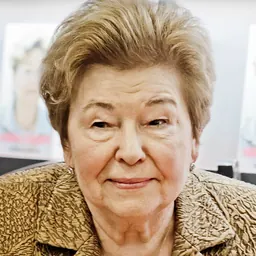
In 1999, he conducted a rare television interview with Naina Yeltsina, which The New York Times criticized as "indulgent" and "[doing] its best to present Mrs. Yeltsin in a sympathetic light"; Sheremet's station ORT was largely controlled by oligarch Boris A. Berezovsky, a Yeltsin ally. later alleging that he had been informed of government "death squads" by former Belarusian General Prosecutor Oleg Bazhelko. Zavadsky was declared legally dead in 2003.
In 2012 Sheremet started working at the Internet newspaper Ukrainska Pravda (Ukrainian Truth), where he launched a journalistic blog. In 2015 he led a Ukrainian radio programme , first on weekends in the program "Show of Pavel Sheremet», and then on weekdays in the "Morning of Pavel Sheremet".
Sheremet resigned from the Public Television of Russia (OTR) in July 2014, saying that journalists who didn't follow the "style of Kremlin propaganda" while covering the Russo-Ukrainian War were "hounded". He publicly criticized the Annexation of Crimea by the Russian Federation and the Russian military intervention in Ukraine.
Personal life Sheremet was married with two children, a son and a daughter. He was in a red Subaru XV and partner, the former editor-in-chief of Ukrainska Pravda Olena Prytula. She was not in the car at the time. According to Novaya Gazeta, Sheremet and Prytula had recently told friends they were under surveillance. The day before a procession through Kyiv was held for him attended by friends, colleagues, lawmakers, and government officials—among them President Petro Poroshenko.
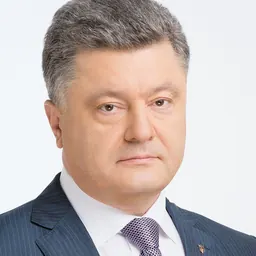
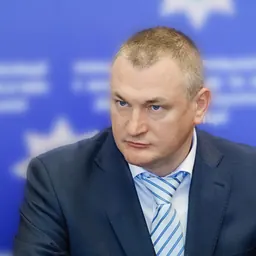
Reaction Ukrainian President Petro Poroshenko called Sheremet's death a "terrible tragedy". Prime Minister Volodymyr Groysman called the death of Sheremet "terrible news" in a statement on Facebook. On 23 July 2019, Head of the National Police Serhiy Knyazev told that the murder of Pavel Sheremet still remained unsolved, and the newly elected President of Ukraine Volodymyr Zelensky told that those responsible for the murder of Pavel Sheremet would be found.
In December 2019 five veterans of the war in Donbas were arrested on the suspicion of killing Sheremet. Reporters without borders point to the fact that Minister of Interior Avakov has had a personal reason to be in haste with this. According to Ukrainian authorities the aim for the murder was "to destabilise the political situation in Ukraine". Ukrainian journalists were sceptical about the evidence that was disclosed and the alleged motive.
As the investigation in Ukraine unveils, 10 January 2020 Reporters Without Borders have expressed their concern over "inconsistencies in the evidence for the Ukrainian authorities' claim to have solved (…) editor Pavel Sheremet’s 2016 murder", and pointed toward "a series of revelations (…) that has cast further doubt on the investigation". Despite appeals for more clement preventive measure (i.e. home arrest, or bail), and of guarantees from esteemed citizens, in subsequent court sessions the term of pre-trial remand in custody for Kuzmenko and Antonenko was extended until 30 May, and subsequently until 13 September 2020.
Possible involvement of Belarusian special agencies On 4 January 2021, the EU Observer reported that new evidence, including documents and audio recordings, was found in connection with Sheremet's murder. An audio file, allegedly being a recording from a bugged meeting in 2012, reveals Vadim Zaitsev, the KGB chairman at the time, discussing the murder plot with two officers from the KGB's Alpha Group, an elite counter-terrorism unit. Translated from Russian, one of the voices in the recording says, "We should be working with Sheremet, who is a massive pain in the arse [inaudible]. We'll plant [a bomb] and so on and this fucking rat will be taken down in fucking pieces, legs in one direction, arms in the other direction. If everything [looks like] natural causes, it won't get into people's minds the same way." "an annual recognition of courageous journalism". Because Sheremet was denied permission to travel to New York City to attend the scheduled ceremony with fellow winners Ruth Simon, Goenawan Mohamad, Gustavo Gorriti, and Grémah Boucar, the CPJ held a special ceremony in Minsk on 8 December to present his award.
On 22 April 2002, the Organization for Security and Co-operation in Europe Parliamentary Assembly announced Sheremet as the winner of its 2002 Prize for Journalism and Democracy, which he would share with Austrian television journalist Friedrich Orter, cited for his human rights reporting in the Balkans and Afghanistan. The award cited the pair as having "promoted OSCE principles on human rights, democracy and the unimpeded flow of information". The two split a US$20,000 prize.
Legacy In 2016 Pavel Sheremet Award was established by the Eastern Partnership Civil Society Forum in order to recognize courage in journalism and outstanding achievement in the cause of media freedom in Eastern Europe.
A Pavel Sheremet Square is located in Kyiv's Shevchenkivskyi District. A monument to Sheremet at his place of death was unveiled on 20 July 2020.
Don’t just read it —
keep it.
Full-length biographies made to live with: read them, listen on the way to work, watch them tonight.
- E-book
- Audio
- Video
Instant download · yours to keep · every purchase keeps this site free
Important facts
People in Pavel Sheremet's life
Named in this biography and alive at the same time



Related people
Same field, nearest in time



Contemporaries
People whose lives overlapped Pavel Sheremet's



Frequently asked questions
Who was Pavel Sheremet?
Belarusian journalist (1971–2016)
When was Pavel Sheremet born?
Pavel Sheremet was born on 28 November 1971 in Minsk.
When did Pavel Sheremet die?
Pavel Sheremet died on 20 July 2016 in Kyiv.
What was Pavel Sheremet's occupation?
Pavel Sheremet was a journalist, presenter, television presenter, editing staff, editor-in-chief and television journalist.
What nationality was Pavel Sheremet?
Pavel Sheremet was Russian and Belarusian.
Sources & further reading
Cite this page
APA: Biography.guide. (2026). Pavel Sheremet. https://biography.guide/pavel-sheremet/
MLA: "Pavel Sheremet." Biography.guide, https://biography.guide/pavel-sheremet/.
Chicago: "Pavel Sheremet." Biography.guide. https://biography.guide/pavel-sheremet/.
Data last updated: 2026-09-20 · Spot an error? Report a correction.
Page generated 2026-09-27 05:19 UTC