
About Ditlev Gothard Monrad
Lived 1811 – 1887 (aged 75). Ditlev Gothard Monrad was a Danish and New Zealand diplomat, farmer, prelate, collector, bishop and politician.
Ditlev Gothard Monrad (24 November 1811 – 28 March 1887) was a Danish politician and bishop, and a founding father of Danish constitutional democracy; he also led the country as Council President in its catastrophic defeat during the Second Schleswig War. Later, he became a New Zealand pioneer before returning to Denmark to become a bishop and politician once more.
Monrad's father, Otto Sommer Monrad, an attorney, suffered from mental illness, and spent some years in institutions. From time to time Monrad was himself on the brink of, or had, emotional breakdowns.
Career Monrad studied theology, learned Semitic and Persian languages, and became a Lutheran priest while beginning to participate in politics. He became a co-editor of the publication Fædrelandet in 1840, was a leading figure in the National Liberal Party and spearheaded the movement towards a constitutional Denmark. Monrad wrote the draft of the liberal 1849 Constitution of Denmark , with structure and many phrases similar to the current version. In it he coined the term people's church. The constitution was quite democratic for its time, largely a result of the political and philosophical positions formulated by Monrad.
Monrad became the first Minister of School and Church Affairs in 1848; he held the same position in 1859 as well as from 1860 to 1863. He was also Minister of the Interior 1860–1861, and a member of Parliament from 1849 to 1865 (except for three months between two elections in 1853). He was the bishop of the Lolland–Falster diocese from 1849 to 1854, and then a permanent secretary in the department of from 1855 to 1859.
With war approaching, against the advice of the other National Liberal leaders, Monrad formed a government after the resignation of Hall, due to disagreement with Christian IX. As Council President (1863–1864), Monrad was the Danish state leader during the early part of the Second Schleswig War against the German Confederation led by Otto von Bismarck. With none of the other National Liberal leaders wanting to continue in office, Monrad became the most, and arguably often the only, important figure for cabinet decision-making. Yet, at critical moments during the war, Monrad was indecisive. Thus, during an armistice, he let the king decide on a peace proposal at the London Conference to divide Schleswig approximately along the language line between majorities of Danish and German speakers (see also the Schleswig-Holstein Question). The king, who held an unrealistic hope to maintain a personal union with the duchies, rejected, the conference ended with no result, and war resumed resulting in further military defeat. Next, the king dismissed Monrad and his government.
Monrad published throughout most of his life on political and religious matters. His book from 1876 about prayer came in many reprints, is still cited and used in religious practice and was translated into five languages, including English. Monrad became one of the earliest and most outspoken Danish opponents of Darwin's new theories on evolution.
Legacy Monrad was respected for his intellect, idealism, and industriousness.
Literature Claus Bjørn and Carsten Due-Nielsen. Second edition, Copenhagen, Gyldendal. 2006. . D. G. Monrad, The World of Prayer; or, Prayer in relation to personal religion. Translated from the fourth German edition by J.S. Banks. Edinburgh 1879, 239 pages. T. & T. Clark [Danish original 1876]. https://archive.org/stream/worldofprayerorp00monr#page/n1/mode/2up G.C. Petersen, D.G. Monrad : Scholar, statesman, priest and New Zealand pioneer and his New Zealand descendants, Kerslake, Billens & Humphrey. 1965. Johan Schioldann-Nielsen, The life of D.G. Monrad (1811-1887) : manic-depressive disorder and political leadership, Odense University Press, 1988. . Kaare R. Skou, , Copenhagen, Lindhardt og Ringhof. 2008. . Svend Thorsen, , Copenhagen. 1967.
Don’t just read it —
keep it.
Full-length biographies made to live with: read them, listen on the way to work, watch them tonight.
- E-book
- Audio
- Video
Instant download · yours to keep · every purchase keeps this site free
Important facts
People in Ditlev Gothard Monrad's life
Named in this biography and alive at the same time
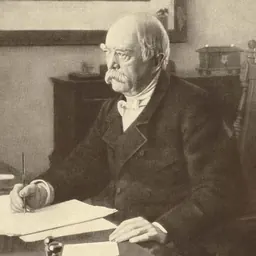
Related people
Same field, nearest in time




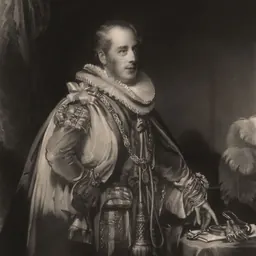
Contemporaries
People whose lives overlapped Ditlev Gothard Monrad's





Frequently asked questions
Who was Ditlev Gothard Monrad?
Danish politician (1811–1887)
When was Ditlev Gothard Monrad born?
Ditlev Gothard Monrad was born on 24 November 1811 in Copenhagen.
When did Ditlev Gothard Monrad die?
Ditlev Gothard Monrad died on 28 March 1887 in Nykøbing Falster.
What was Ditlev Gothard Monrad's occupation?
Ditlev Gothard Monrad was a diplomat, farmer, prelate, collector, bishop and politician.
What nationality was Ditlev Gothard Monrad?
Ditlev Gothard Monrad was Danish and New Zealand.
Sources & further reading
· Wikipedia: Ditlev Gothard Monrad
· DBpedia: Ditlev Gothard Monrad
Cite this page
APA: Biography.guide. (2026). Ditlev Gothard Monrad. https://biography.guide/ditlev-gothard-monrad/
MLA: "Ditlev Gothard Monrad." Biography.guide, https://biography.guide/ditlev-gothard-monrad/.
Chicago: "Ditlev Gothard Monrad." Biography.guide. https://biography.guide/ditlev-gothard-monrad/.
Data last updated: 2026-09-20 · Spot an error? Report a correction.
Page generated 2026-09-27 05:23 UTC