
Dion Diamond
Civil Rights Activist
About Dion Diamond
Born 1941.
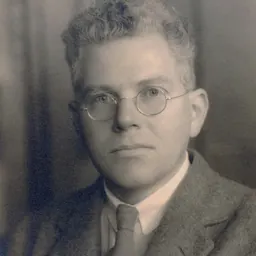
Dion Tyrone Diamond (born February 7, 1941) is an American civil rights activist.
Early life Dion Diamond was born February 7, 1941, in Petersburg, Virginia. This is where Diamond spent the first 18 years of his life before attending Howard University in Washington D.C. Segregation was common in Petersburg, Virginia, and something Dion Diamond saw a lot of while he was growing up. In Petersburg, Diamond began to oppose segregation by going to white only restaurants, bathrooms, water fountains and other white only areas to annoy people. He said he would go to white only areas, and when he was instructed to leave, he would not listen until the police were called. Diamond describes these events as the beginning of his activism. His leadership qualities started at a young age as he was president of his high school class and member of their student council.
College Life Diamond was the president of the Howard freshman class. While at Howard University, Dion Diamond noticed how segregation was prominent when crossing into Maryland or Virginia, but not very segregated in Washington D.C. Dion Diamond and others at Howard organized a group called the Nonviolent Action Group. This group attended sit-ins in Virginia and North Carolina to come up with methods to oppose segregation. Sit-ins included going to white only areas with a group of black people to try to desegregate that area. The group desegregated an entire area in Alexandria, Virginia in two weeks. They also had a run in with American Nazi party leader, George Lincoln Rockwell. During this sit in, other American Nazi members came in and surrounded Diamond and the Non Violent Action Group. In 1963, he transferred to the University of Wisconsin, where he majored in history and sociology. He noted that while attending the University of Wisconsin there were approximately 50 black students out of 18,000 students. After the University of Wisconsin, Diamond attended Harvard University in Cambridge, Massachusetts, where he got involved with race relations and sociology. Similar to Wisconsin, he was typically the only black student in his classes at Harvard, where students and professors would always defer to him when talking about race relations. Diamond said at times he felt uncomfortable by this role, but he came to embrace it because he was able to influence others. he says he regrets not forming many relationships at Wisconsin or Harvard.
Personal life Diamond started his own consulting firm. He worked for a company called HEW and helped design an instrument that helped determine fraud in the Medicare and Medicaid program. This exposed doctors and pharmacies who were getting away with theft. He also worked as a consultant for different government agencies, where he worked in race relations. While working for government agencies, his job consisted of discerning segregated powers and influencing companies to have a more diverse clientele. Diamond retired around age 60, and has now been retired for around 20 years. Diamond mentioned how if he was not involved with civil rights, he would not have attended Wisconsin, Harvard or been able to have his own consulting firm, in which he worked with companies in race relations.
Comments on Black Lives Matter When asked about the Black Lives Matter protests, which have been common within the 2010s and 2020s, Diamond said he sees it as a continuation of his work and others of the 1960s civil rights movement. Diamond also acknowledges the people who came before him in the post World War II generation. Diamond believes they largely influenced his generation to be strong enough to start the Civil Rights movement. Diamond also mentions the importance of generational activism. He explains how he has not been as active with protesting or educating the youth in his older age, but stresses the importance of how activism needs to be passed down through generations. He mentioned the similarities between Trump rallies and Ku Klux Klan rallies. He notes that the United States has come a long way, but still does not believe they are close to having a total integrated society. Diamond said that what came before these newer generations is important to note because your past defines your future. Diamond is proud to see the amount of elected black governmental officials in the 21st century, which he notes is a large progression from when he was growing up. The Civil Rights Act of 1964 and the election of President Barack Obama are the highlights of his life because he never expected to see the amount of black elected officials that are in office today. Diamond has mentioned that he does not regret anything he has done, but instead regrets not doing more in his older age. He says it is important for younger people to educate him, and feels he can learn more from them, than they can from him.
Don’t just read it —
keep it.
Full-length biographies made to live with: read them, listen on the way to work, watch them tonight.
- E-book
- Audio
- Video
Instant download · yours to keep · every purchase keeps this site free
Important facts
People in Dion Diamond's life
Named in this biography and alive at the same time



Contemporaries
People whose lives overlapped Dion Diamond's



Frequently asked questions
Who is Dion Diamond?
Civil Rights Activist
When was Dion Diamond born?
Dion Diamond was born on 7 February 1941.
Sources & further reading
Cite this page
APA: Biography.guide. (2026). Dion Diamond. https://biography.guide/dion-diamond/
MLA: "Dion Diamond." Biography.guide, https://biography.guide/dion-diamond/.
Chicago: "Dion Diamond." Biography.guide. https://biography.guide/dion-diamond/.
Data last updated: 2026-09-20 · Spot an error? Report a correction.
Page generated 2026-09-27 05:03 UTC