
About Dilly Knox
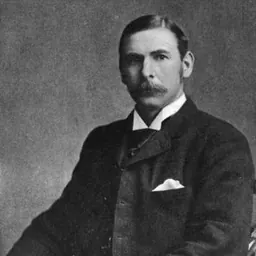
Lived 1884 – 1943 (aged 58). Dilly Knox was a British cryptographer, mathematician, papyrologist, linguist, translator and philologist.
Alfred Dillwyn "Dilly" Knox, CMG (23 July 1884 – 27 February 1943) was an English classics scholar and papyrologist at King's College, Cambridge and a codebreaker. As a member of the Room 40 codebreaking unit he helped decrypt the Zimmermann Telegram which brought the USA into the First World War. He then joined the Government Code and Cypher School (GC&CS).
As chief cryptographer, By the end of the war, Intelligence Service Knox had disseminated 140,800 Abwehr decrypts, was the son of Edmund Knox, tutor at Merton College and later Bishop of Manchester; he was the brother of E. V. Knox, Wilfred Knox, Ronald Knox, and uncle of the novelist Penelope Fitzgerald. His father was a descendant of John Arbuthnott, 8th Viscount of Arbuthnott.
Dillwyn—known as "Dilly"—Knox was educated at Summer Fields School, Oxford, and then Eton College. and in 1909 was elected a Fellow Knox privately coached Harold Macmillan, the future Prime Minister, at King's for a few weeks in 1910, but Macmillan found him "austere and uncongenial". The couple had two sons, Oliver and Christopher.
He was an atheist.
Academic scholarship Between the two World Wars Knox worked on the great commentary on Herodas that had been started by Walter Headlam, damaging his eyesight while studying the British Museum's collection of papyrus fragments, but finally managing to decipher the text of the Herodas papyri. The Knox-Headlam edition of Herodas finally appeared in 1922.
Codebreaking First World War
Soon after war broke out in 1914, where some of his work was done in the bath. He persuaded his superiors to have a bathtub installed in his office in the cryptanalysis section of the British Admiralty (in Room 53). Knox bought the Enigma 'C' machine evaluated by Hugh Foss in 1927 on behalf of GC&CS. Foss found "a high degree of security" but wrote a secret paper describing how to attack the machine if cribs – short sections of plain text – could be guessed. When – a decade later – Knox picked up this work, he developed a more effective algebraic system (rodding) based on the principles described by Foss.
Although Marian Rejewski, the Polish cryptographer and mathematician who solved the plugboard-equipped Enigma used by Nazi Germany, approached the problem through permutation theory (whereas Knox applied linguistics), a good personal relationship was quickly established at the conference. The good impression made by Rejewski on Knox played an important role in increasing recruitment of mathematicians to Bletchley Park.
Second World War Knox's rodding method To break non-ed Enigma machines (those without a plugboard), Knox (building on earlier research by Hugh Foss) developed a system known as 'rodding', a linguistic as opposed to mathematical way of breaking codes. Knox worked in 'the Cottage', next door to the Bletchley Park mansion, as head of a research section, which contributed significantly to cryptanalysis of the Enigma. Intelligence Services Knox (ISK) was established to decrypt communications. When he became unable to travel to Bletchley Park, he continued his cryptographic work from his home in Hughenden, Buckinghamshire, where he received the CMG. He died on 27 February 1943.
Classified poetry
Knox celebrated the victory at Battle of Cape Matapan with poetry, which remained classified until 1978.
Don’t just read it —
keep it.
Full-length biographies made to live with: read them, listen on the way to work, watch them tonight.
- E-book
- Audio
- Video
Instant download · yours to keep · every purchase keeps this site free
Important facts
Family & relationships
People in Dilly Knox's life
Named in this biography and alive at the same time



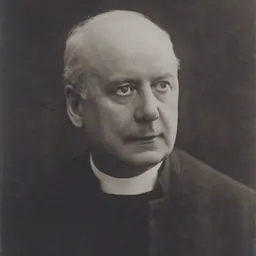



Related people
Same field, nearest in time

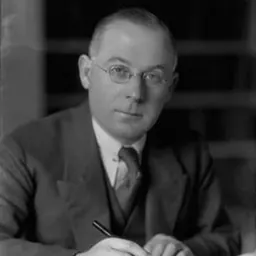
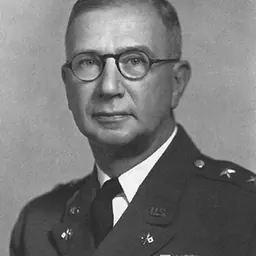
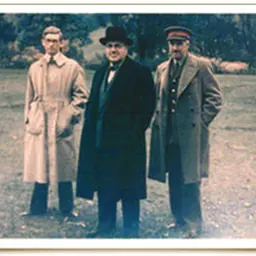


Contemporaries
People whose lives overlapped Dilly Knox's
Frequently asked questions
Who was Dilly Knox?
British cryptographer (1884-1943)
When was Dilly Knox born?
Dilly Knox was born on 23 July 1884 in Oxford.
When did Dilly Knox die?
Dilly Knox died on 27 February 1943 in Hughenden.
What was Dilly Knox's occupation?
Dilly Knox was a cryptographer, mathematician, papyrologist, linguist, translator and philologist.
What nationality was Dilly Knox?
Dilly Knox was British.
Sources & further reading
Cite this page
APA: Biography.guide. (2026). Dilly Knox. https://biography.guide/dilly-knox/
MLA: "Dilly Knox." Biography.guide, https://biography.guide/dilly-knox/.
Chicago: "Dilly Knox." Biography.guide. https://biography.guide/dilly-knox/.
Data last updated: 2026-09-20 · Spot an error? Report a correction.
Page generated 2026-09-27 05:33 UTC