
About Dietrich Hrabak
Lived 1914 – 1995 (aged 80). Dietrich Hrabak was a German aircraft pilot and major general.
Dietrich "Dieter" Hrabak (19 December 1914 – 15 September 1995) was a German Luftwaffe military aviator and wing commander during World War II. Following the war, he became a Generalmajor (major general) in the German Air Force of West Germany. As a fighter ace, he claimed 125 enemy aircraft shot down in over 1000 combat missions. The majority of his aerial victories were claimed over the Eastern Front with 16 claims over the Western Allies.
Born in Großdeuben, Hrabak grew up in the German Empire and the Weimar Republic. Following graduation from school, he volunteered for military service in the Reichsmarine in 1934. In November 1935, he transferred to the Luftwaffe. Following flight training, he was posted to a Jagdgeschwader (fighter wing). In 1939, Hrabak was made a Staffelkapitän (squadron leader) and with Jagdgeschwader 76 (JG 76—76th Fighter Wing) participated in the Invasion of Poland and Battle of France and claimed his first aerial victory on 13 May 1940. In July 1940, JG 76 was integrated into Jagdgeschwader 54 (JG 54—54th Fighter Wing). During the Battle of Britain, Hrabak was made a Gruppenkommandeur in JG 54 and awarded the Knight's Cross of the Iron Cross in October 1940. In 1941, he participated in Operation Barbarossa, the German invasion of the Soviet Union. In November 1942, Hrabak left JG 54 and was appointed Geschwaderkommodore (wing commander) of Jagdgeschwader 52 (JG 52—52nd Fighter Wing). There, following his 118th aerial victory, he was awarded the Knight's Cross of the Iron Cross with Oak Leaves on 25 November 1943. In October 1944 Hrabak, returned to JG 54, serving as its last Geschwaderkommodore until the end of the war.
Following World War II, Hrabak initially worked in the private industry. During the Wiederbewaffnung (rearmament) of West Germany, Hrabak joined the newly established German Air Force in 1955. He then went on to command the Advanced Pilot Training Center at Fürstenfeldbruck. Following further command positions, Hrabak was named NATO's Chief of Air Defense/Central Europe until becoming special manager for the Lockheed F-104 Starfighter programme. Hrabak retired in September 1970 and died on 15 September 1995.
Early life and career Hrabak was born on 19 December 1914 in Großdeuben, part of Böhlen, in the Kingdom of Saxony, a federated state of the German Empire, the son of a real estate developer. Following his graduation from the Königin-Carola-Gymnasium, a secondary school, he volunteered for military service. On 8 April 1934, Hrabak joined the Reichsmarine, the German navy of the Weimar Republic and in November 1935 transferred to the newly emerging Luftwaffe (German air force) as an Oberfähnrich (officer candidate). On 1 April 1936, Hrabak was promoted to Leutnant (second lieutenant).
Following the Anschluss, Austria's annexation into Nazi Germany on 12 March 1938, Hrabak was posted to I. Gruppe (1st group) of Jagdgeschwader 138 (JG 138—138th Fighter Wing) stationed in Wien-Aspern also referred to as the "Wiener-Jagdgruppe" ("Vienna fighter group"). There, he was promoted to Oberleutnant (first lieutenant) on 1 January 1939 and was made Staffelkapitän (squadron leader) of 1. Staffel (1st squadron) of JG 138. On 1 May 1939, his unit I./JG 138 was re-designated I./Jagdgeschwader 76 (I./JG 76—1st group of the 76th Fighter Wing).
World War II World War II in Europe began on Friday 1 September 1939 when German forces invaded Poland. In preparation of the invasion, I. Gruppe of JG 76 had been moved to an airfield at Stubendorf, present-day Izbicko in Poland, in mid-August 1939 and supported the German advance on the central and southern sectors of the front. On 3 September, Hrabak made a forced landing behind enemy lines following combat with PZL.23 light bombers and returned to his unit the next day.
On 14 September, I. Gruppe was withdrawn from combat operations and returned to its home airfield at Wien-Aspern where it arrived on 26 September. On 26 October, the Gruppenstab and 1. Staffel were ordered to Frankfurt Rhein-Main where it was united again with 2. and 3. Staffel on 2 November. From Frankfurt Rhein-Main, the Gruppe flew fighter protection during the "Phoney War" for the Frankfurt, Rhine and Saar region. In April 1940, I. Gruppe moved to an airfield at Mainz-Finthen, originally named Fliegerhorst Ober-Olm. The Gruppe stayed at Ober-Olm until the Battle of France began.
On 13 May 1940, he claimed his first victory, and he claimed five more victories before the Armistice of 22 June 1940. On 26 June 1940, I. Gruppe of JG 76 was moved to the airfield at Waalhaven in the Netherlands and subordinated to Jagdgeschwader 54 (JG 54—54th Fighter Wing). There, the Gruppe was tasked with providing aerial protection over the Dutch coastal area. On 5 July, I./JG 76 was officially integrated into JG 54 and was renamed to II./JG 54 and 1./JG 76 became 4./JG 54.
On 25 August 1940 during the Battle of Britain, Hrabak was made Gruppenkommandeur of II./JG 54. In consequence, Oberleutnant Hans Philipp was given command of 4./JG 54. During the Battle of Britain he added ten victories against Royal Air Force (RAF) fighters. On 21 October 1940 Hrabak was awarded the Knight's Cross of the Iron Cross . The presentation was made by Reichsmarschall Hermann Göring in his personal command train at Beauvais on 23 October.
On 29 March 1941, II./JG 54 was withdrawn from the English Channel and was ordered to Graz-Thalerhof. There the various squadrons were split up and became part of Fliegerführer Arad. 4. Staffel was subordinated to III. Gruppe of Jagdgeschwader 77 (JG 77—77th Fighter Wing) and 6. Staffel assigned to II. Gruppe of JG 77. Both Staffeln were ordered to Deta in Romania while 5. Staffel went to Arad. On 6 April, all three Staffeln flew combat missions in the Invasion of Yugoslavia. The next day, they flew combat air patrols on the Hungarian-Yugoslavian border. On 9 April, II./JG 54 was united again at Kecskemét, Hungary and returned to Deta on 11 April. The Gruppe was withdrawn from this theater on 19 April and ordered to an airfield at Zemun near Belgrade.
Operation Barbarossa alt=A map of Eastern Europe depicting the movement of military units and formations. Following the surrender of the Royal Yugoslav Army on 17 April 1941, JG 54 received orders on 3 May 1941 to turn over all Bf 109-Es so they could receive the new Bf 109-F variant. Transition training was completed at Airfield Stolp-Reitz in Pomerania. Following intensive training, the Geschwader was moved to airfields in Eastern Prussia. II. Gruppe under command of Hrabak was moved to Trakehnen on 20 June 1941. The Wehrmacht launched Operation Barbarossa, the invasion of the Soviet Union, on 22 June with II. Gruppe supporting Army Group North in its strategic goal towards Leningrad.
In early November, the Gruppe was withdrawn from the Eastern Front for a period of rest and replenishment where they were based at airfields in Döberitz, and later at Uetersen. On 20 January 1942, the Gruppe began relocating to the Eastern Front where they would be based at Siverskaya near Leningrad. In August to early September 1941, Hrabak was on home leave. He was promoted to Major (major) on 1 October 1942.
Wing commander On 1 November 1942, Hrabak left JG 54 and took over command of Jagdgeschwader 52 (JG 52—52nd Fighter Wing) as Geschwaderkommodore (wing commander). At the time, JG 52 was based at Prokhladny and Gonschtakowka and operated over the front at the Terek River in the Northern Caucasus. In consequence, command of II. Gruppe of JG 54 was given to Major Hans Hahn. Under Hrabak's leadership, JG 52 claimed its 10,000th aerial victory on 2 September 1944.
On 23 November, the Geschwaderstab (headquarters unit) of JG 52 began its retreat from the Caucasus region and moved to Maykop. There, Hrabak claimed his first aerial victory as Geschwaderkommodore on 13 December over a Petlyakov Pe-2 bomber. While the Battle of Stalingrad was coming to end, Hrabak and the Geschwaderstab were ordered to Rostov-on-Don on 20 January 1943 to organize fighter protection over the retreating Army Group A.
Hrabak was promoted to Oberstleutnant on 1 July 1943. On 2 August, Hrabak claimed his 100th victory. He was the 48th Luftwaffe pilot to achieve the century mark. On 25 November 1943, Hrabak was awarded the Knight's Cross of the Iron Cross with Oak Leaves . He was the 337th member of the German armed forces to be so honored and at the time was credited with 118 aerial victories. The presentation was made by Adolf Hitler at the Wolf's Lair, Hitler's headquarters in Rastenburg, present-day Kętrzyn in Poland, on 9 December. Also presented with awards that day by Hitler were Hauptmann Hans-Ulrich Rudel, who received the Swords to his Knight's Cross with Oak Leaves. Rudel's air gunner and radio operator Oberfeldwebel (Master Sergeant) Erwin Hentschel was honored with the Knight's Cross.
On 20 September 1944, Hrabak scored the last of his 125 victories. In October 1944 Hrabak returned to JG 54, serving as its last Geschwaderkommodore until the end of the war. His greatest contribution to the Luftwaffe was not his combat record however but his command, tactical and leadership qualities, which endeared him to the men under his command and sealed his reputation within the Luftwaffe leadership.
Later life In 1956, he commanded the Advanced Pilot Training Center at Fürstenfeldbruck. In 1962, he took charge of the air defense covering northern Germany and the Netherlands. In 1964, he was named NATO's Chief of Air Defense/Central Europe until becoming special manager for the Lockheed F-104 Starfighter programme. As a major general, he commanded the GAF's tactical command. Hrabak died on 15 September 1995 at the age of in Pfaffenhofen which is part of Jesenwang, Germany.
Summary of career Aerial victory claims According to US historian David T. Zabecki, Hrabak was credited with 125 aerial victories. Spick also lists Hrabak with 125 aerial victories, claimed in 820 combat missions, 109 of which on the Eastern Front and 16 on the Western Front, and a mission-to-claim ratio of 6.56. Mathews and Foreman, authors of Luftwaffe Aces — Biographies and Victory Claims, researched the German Federal Archives and found documentation for 125 aerial victory claims, all of which confirmed. This number includes 109 on the Eastern Front and 16 on the Western Front.
Victory claims were logged to a map-reference (PQ = Planquadrat), for example "PQ 54291". The Luftwaffe grid map covered all of Europe, western Russia and North Africa and was composed of rectangles measuring 15 minutes of latitude by 30 minutes of longitude, an area of about . These sectors were then subdivided into 36 smaller units to give a location area in size.
Chronicle of aerial victories Claim Date Time Type Location Claim Date Time Type Location – 1. Staffel of Jagdgeschwader 76 –Battle of France — 10 May – 25 June 1940 1 13 May 1940 11:05 Potez 63 Authe, south of Sedan 4 25 May 1940 16:45 Spitfire Gravelines 2 18 May 1940 16:25 Curtiss west of Rethel 5 3 June 1940 15:20 Curtiss west of Épernay 3 19 May 1940 18:30 M.S.406 west of Laon 6 6 June 1940 21:00 Curtiss northwest of Amiens – 4. Staffel of Jagdgeschwader 54 –At the Channel and over England — 26 June – August 1940 7 11 August 1940 11:00 Spitfire off Dover – Stab II. Gruppe of Jagdgeschwader 54 –At the Channel and over England — August 1940 – 29 March 1941 8 26 August 1940 13:25 Spitfire Canterbury 13 5 October 1940 12:25 Hurricane Rochester 9 14 September 1940 17:00 Hurricane south of London 14 8 October 1940 11:45 Spitfire north of Folkestone 10 14 September 1940 11:35 Spitfire Ashford 15 12 October 1940 11:05 Hurricane Tonbridge 11 27 September 1940 13:00 Hurricane? south of London 16 20 October 1940 11:00 Hurricane Ashford 12 27 September 1940 16:20 Hurricane? Hastings – Stab II. Gruppe of Jagdgeschwader 54 –Operation Barbarossa — 22 June – 5 December 1941 17 23 June 1941 11:10 SB-2 north of Schlossberg 21 22 July 1941 18:30 I-18 (MiG-1) Gogolewo 18 30 June 1941 15:15 DB-3 northwest of Dünaburg 22 25 July 1941 07:56 DB-3 Ssabsk 19 30 June 1941 17:17 DB-3 northeast of Dünaburg 23 25 July 1941 18:30 I-18 (MiG-1) south of Ropcha 20 6 July 1941 18:30 DB-3 southeast of Ostrov 24 30 July 1941 11:20 I-18 (MiG-1) Wladimirskaja – Stab of II. Gruppe of Jagdgeschwader 54 –Eastern Front — 20 January – 30 April 1942 25 5 February 1942 15:35 I-18 (MiG-1) northwest of Orelje 38 16 March 1942 11:42 Pe-2 forest south of Lyuban 26 6 February 1942 09:35 I-18 (MiG-1) southeast of Malaya Vishera 39 19 March 1942 17:10 I-18 (MiG-1) southeast of Gremjatschewo 27 26 February 1942 16:40 I-26 (Yak-1) southeast of Grusino 40 22 March 1942 14:59 Pe-2 southeast of Staraya Russa 28 27 February 1942 08:20 I-18 (MiG-1) southeast of Kirishi 41 28 March 1942 15:23 P-40 northwest of Ramushevo 29 27 February 1942 08:35 I-16 south-southwest of Kirishi 42 29 March 1942 15:39 I-18 (MiG-1) northeast of Staraya Russa 30 5 March 1942 08:05 I-18 (MiG-1) southeast of Chudovo 43 31 March 1942 14:58 I-18 (MiG-1) north of Parfino 31 7 March 1942 07:29 Pe-2 southwest of Dubzy 44 1 April 1942 15:14 Il-2 northwest of Ramushevo 32 13 March 1942 17:47 I-18 (MiG-1) west of Dubownik 45 4 April 1942 12:07 I-18 (MiG-1) Gremjatschewo 33 13 March 1942 16:48 I-18 (MiG-1) west of Chudovo 46 4 April 1942 15:15 Il-2 east of Budogoschtsch 34 14 March 1942 11:20 Il-2 north of Kholm 47 19 April 1942 18:20 Yak-1 south of Ramushevo 35 14 March 1942 16:20 I-26 (Yak-1) forest northeast of Karlivka 48 25 April 1942 08:20 Yak-1 east of Parfino 36 14 March 1942 16:22 I-26 (Yak-1) forest east of Sawisha 49 25 April 1942 18:20 Yak-1 Jam Jedrowo 37 16 March 1942 08:20 I-26 (Yak-1) southwest of Gladi – Stab of II. Gruppe of Jagdgeschwader 54 –Eastern Front — 1 May – 31 October 1942 50 30 May 1942 09:15 MiG-3 west of Wyschitino 59 22 August 1942 11:00 LaGG-3 north of Kozelsk 51 30 May 1942 16:10 MiG-3 southwest of Malaya Vishera 60 22 August 1942 15:00 Il-2 PQ 54291 west of Belyov 52 8 June 1942 15:05 MiG-3? northeast of Kresttsy 61 22 August 1942 17:58 Il-2 northeast of Uljanowo west of Belyov 53 16 June 1942 10:50 MiG-3 southwest of Pola train station 62 23 August 1942 06:55 Pe-2 PQ 64183, east of Belyov 54 26 June 1942 16:50 MiG-3 east of Spasskaja-Polist 63 23 August 1942 11:05 U-2 PQ 55881, Kozelsk 55 28 June 1942 11:18 P-40 northeast of Kirishi 64 1 September 1942 09:04 Yak-1 PQ 10164, Putilowo 56 4 July 1942 21:00 Il-2 east of Podberesje 65 2 September 1942 06:55 Yak-1 PQ 10221, north of Wysta 57 17 July 1942 19:02 Yak-1 southeast of Pola train station 66 2 September 1942 10:16 Il-2 PQ 00254northeast of Mga 58 19 July 1942 17:40 Yak-1 west of Beglowo 67 12 September 1942 11:05 LaGG-3 PQ 10291, Pogotje – Stab of Jagdgeschwader 52 –Eastern Front — 1 November 1942 – 3 February 1943 68 13 December 1942 07:30 Pe-2 PQ 5463Adler airfield – Stab of Jagdgeschwader 52 –Eastern Front — 4 February – 31 December 1943 69 10 March 1943 10:25 LaGG-3 PQ 34 Ost 88143, southwest of Abinskaja 94 16 July 1943 17:40 La-5 PQ 35 Ost 61251, southeast of Prokhorovka 70 10 March 1943 15:05 Il-2 PQ 34 Ost 88154, east of Abinskaja 95 1 August 1943 11:10 Il-2 m.H. PQ 34 Ost 88282, Kalinowka 71 12 March 1943 08:35 Il-2 PQ 34 Ost 76584, northwest of Temrjuk 96 1 August 1943 11:12 Il-2 m.H. PQ 34 Ost 88282, Kalinowka 72 13 March 1943 13:10 I-16 PQ 34 Ost 86351, Griwenskaja 97 1 August 1943 18:45 Il-2 m.H. PQ 34 Ost 88261, Marinowka 73 18 March 1943 15:45 LaGG-3 PQ 34 Ost 86541, south of Petrowskaja 98 1 August 1943 18:47 Il-2 m.H. PQ 34 Ost 88261, Marinowka 74 18 March 1943 15:47 LaGG-3 PQ 34 Ost 86541, southeast of Petrowskaja 99 2 August 1943 17:00 La-5? PQ 34 Ost 98142, east of Dmitriyevka 75 19 March 1943 09:25 LaGG-3 PQ 34 Ost 85574, north of Sslawjanskaja 100 2 August 1943 17:04 Il-2 m.H. PQ 34 Ost 98112, east of Dmitriyevka 76 20 March 1943 08:00 P-39 PQ 34 Ost 86841, southwest of Popowitschewskaja 101 20 August 1943 10:00 La-5? PQ 35 Ost 61538, Warwarowka 77 20 March 1943 08:01 P-39 PQ 34 Ost 86841, Popowitschewskaja 102 20 August 1943 17:40 Il-2 PQ 34 Ost 88254, west of Dmitriyevka 78 16 April 1943 08:18 P-39 southeast of Abinskaja 103 20 August 1943 17:46 Il-2 PQ 34 Ost 88262, east of Dmitriyevka 79 20 April 1943 16:14 Il-2 PQ 34 Ost 75463, southwest of Kabardinka 104 21 August 1943 08:05 La-5? PQ 34 Ost 88292, east of Kuibyschewo 80 21 April 1943 11:05 Il-2 PQ 34 Ost 75371, west of Kabardinka 105 21 August 1943 17:10 Il-2 PQ 34 Ost 88238, northwest of Stepanowka 81 21 April 1943 09:05 La-5? PQ 34 Ost 85152, east of Abinskaja 106 21 August 1943 17:20 Il-2 PQ 34 Ost 88228, west of Stepanowka 82 8 May 1943 16:00 P-39 northwest of Krymskaja 107 20 September 1943 08:30 Il-2 m.H. PQ 34 Ost 58131, northeast of Zaporizhia 83 5 July 1943 07:32 Yak-1? PQ 35 Ost 61156, north of Tomarowka 108 24 September 1943 15:45 LaGG-3 PQ 34 Ost 58423, southeast of Zaporizhia 84 5 July 1943 11:32 La-5? PQ 35 Ost 61331, north of Tomarowka 109 25 September 1943 16:35 P-39 PQ 34 Ost 58473, southeast of Zaporizhia 85 5 July 1943 18:00 Boston? PQ 35 Ost 61552, southeast of Belgorod 110 26 September 1943 10:40 P-39 PQ 34 Ost 58571, southeast of Zaporizhia 86 6 July 1943 16:20 Il-2 PQ 35 Ost 61243, northwest of Belgorod 111 27 September 1943 16:00 La-5 PQ 34 Ost 59573, north of Zaporizhia 87 6 July 1943 18:00 Boston PQ 35 Ost 61152, northwest of Belgorod 112 27 September 1943 16:30 P-39 PQ 34 Ost 58672, northwest of Bolschoj Tokmak 88 6 July 1943 18:05 Il-2 PQ 35 Ost 61132, northwest of Belgorod 113 5 October 1943 15:20 P-39 PQ 34 Ost 58813, west of Bolschoj Tokmak 89 8 July 1943 08:10 Il-2 PQ 35 Ost 61622, southeast of Belgorod 114 8 October 1943 08:40 La-5 PQ 34 Ost 66662, east of Saporoshskaja 90 8 July 1943 08:13 Il-2 PQ 35 Ost 61633, southeast of Belgorod 115 8 October 1943 15:10 La-5? PQ 34 Ost 66651, northwest of Kossa Tschuschka 91 16 July 1943 06:45 La-5? PQ 35 Ost 61251, northeast of Belgorod 116 23 October 1943 09:15 La-5? PQ 34 Ost 58551, southeast of Wassijewka 92 16 July 1943 11:15 Il-2 PQ 35 Ost 61254, northeast of Belgorod 117 25 October 1943 14:25 La-5? PQ 34 Ost 57154, west of Melitopol 93 16 July 1943 11:33 Il-2 PQ 35 Ost 61223, north of Belgorod 118 25 October 1943 14:30 La-5? PQ 34 Ost 57324, south of Melitopol – Stab of Jagdgeschwader 52 –Eastern Front — 1 January – 30 September 1944 119 21 March 1944 15:20? P-39 PQ 18631 northeast of Troitskoye 122 2 June 1944 11:32 Il-2 m.H. PQ 78733 northwest of Iași 120 3 May 1944 15:00 Yak-7 PQ 68833north of Târgu Frumos 123 8 June 1944 15:52 La-5 north of Iași west of Țuțora 121 31 May 1944 18:55 P-39 PQ 78643 south of Țuțora 124 8 June 1944 19:20 P-39 PQ 78674 north of Iași – Stab of Jagdgeschwader 54 –Eastern Front — 1 October 1944 – 8 Maz 1945 125 30 October 1944 10:05 P-39 east-southeast of Libau
Awards Iron Cross (1939) 2nd class (15 September 1939) 1st class (28 May 1940) Honour Goblet of the Luftwaffe (28 September 1940) German Cross in Gold on 10 July 1944 as Oberstleutnant in Jagdgeschwader 52 Knight's Cross of the Iron Cross with Oak Leaves Knight's Cross on 21 October 1940 as Hauptmann and Gruppenkommandeur of the II./Jagdgeschwader 54 337th Oak Leaves on 25 November 1943 as Oberstleutnant and Geschwaderkommodore of Jagdgeschwader 52
Don’t just read it —
keep it.
Full-length biographies made to live with: read them, listen on the way to work, watch them tonight.
- E-book
- Audio
- Video
Instant download · yours to keep · every purchase keeps this site free
Important facts
People in Dietrich Hrabak's life
Named in this biography and alive at the same time

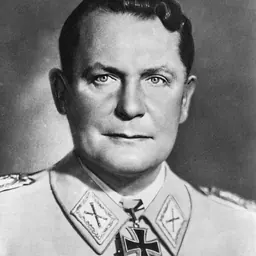
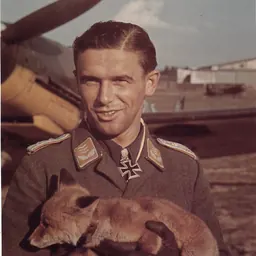

Related people
Same field, nearest in time

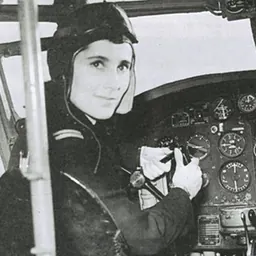

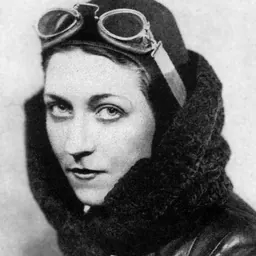

Contemporaries
People whose lives overlapped Dietrich Hrabak's



Frequently asked questions
Who was Dietrich Hrabak?
German flying ace (1914–1995)
When was Dietrich Hrabak born?
Dietrich Hrabak was born on 19 December 1914 in Großdeuben.
When did Dietrich Hrabak die?
Dietrich Hrabak died on 15 September 1995 in Jesenwang.
What was Dietrich Hrabak's occupation?
Dietrich Hrabak was an aircraft pilot and major general.
What nationality was Dietrich Hrabak?
Dietrich Hrabak was German.
Sources & further reading
Cite this page
APA: Biography.guide. (2026). Dietrich Hrabak. https://biography.guide/dietrich-hrabak/
MLA: "Dietrich Hrabak." Biography.guide, https://biography.guide/dietrich-hrabak/.
Chicago: "Dietrich Hrabak." Biography.guide. https://biography.guide/dietrich-hrabak/.
Data last updated: 2026-09-20 · Spot an error? Report a correction.
Page generated 2026-09-27 05:08 UTC