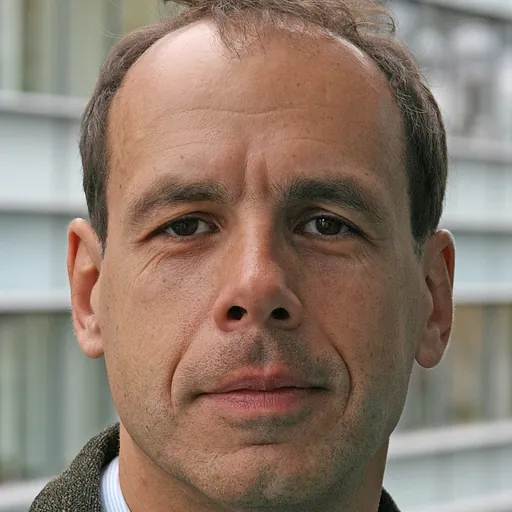
About Didier Stainier
Born 1963. Didier Stainier is a Belgian chemist, researcher, geneticist and university teacher.
Didier Stainier (born 1963) is a Belgian/American developmental geneticist who is currently a director at the Max Planck Institute for Heart and Lung Research in Bad Nauheim, Germany.
Scientific career Didier Stainier studied biology in Wales (United World College of the Atlantic), Belgium (University of Liège) and the USA (Brandeis University) where he got a BA in 1984. He has a PhD in biochemistry and biophysics from Harvard University (1990). During his PhD work, he investigated axon guidance and target recognition in the developing mouse with Walter Gilbert. Subsequently, he initiated the studies on zebrafish cardiac development as a Helen Hay Whitney postdoctoral fellow with Mark Fishman at the Massachusetts General Hospital (Boston).
Scientific interests Together with the many students and postdocs in his laboratory, Stainier helped pioneer the use of the zebrafish model to study a wide range of questions pertaining to vertebrate organ development and function, and has published extensively. His forward genetic analyses of heart development revealed the unexpected role of several signaling pathways including sphingosine 1-phosphate signaling and the discovery of the long-elusive sphingosine 1-phosphate transporter. Additional genetic screens led to the elucidation of transcriptional networks regulating endoderm formation and endothelial cell specification as well as extracellular signals regulating liver induction. He pushed the frontiers of in vivo microscopy to reveal new insights into cardiac valve formation and cardiac trabeculation, and used cellular approaches to gain a detailed understanding of these processes. Stainier developed and used single-cell analyses to provide the first in vivo demonstration of the hemangioblast, a formerly hypothetical cell that gives rise to both endothelial and blood cells, as well as the discovery of a new mode of blood vessel formation. His studies on gut looping morphogenesis revealed the importance of tissue-level physical forces in shaping organs, and his studies on gut lumen formation revealed the importance of fluid flow in this process. He developed a number of cell ablation models that allowed him and others to gain new insights into the process of organ regeneration, with potential implications for novel disease therapies. Most recently, he has also made significant contributions to the understanding of genetic compensation.
Selected awards and honors Wien International Scholar, Brandeis University 1982–1984 Helen Hay Whitney Foundation Postdoctoral Fellow 1991-1994 Packard Foundation Fellow in Science and Engineering 1995-2000 Established Investigator, American Heart Association 2000–2003 Mossman Award in Developmental Biology, American Association of Anatomists 2002 Annual Byers Award in Basic Science, UCSF 2003–2004 Outstanding Faculty Mentorship Award, UCSF 2003 NIH DEV1, study section founding Chair 2003–2006 Elected Fellow of the American Association for the Advancement of Science 2008 Officier dans l'ordre de Léopold de Belgique 2013 European Research Council (ERC) Advanced Grant 2015 Elected Member of European Molecular Biology Organization (EMBO) 2016 Elected Member of Academia Europaea 2016 Christiane Nüsslein-Volhard Award (European Zebrafish Society) 2017 President, International Zebrafish Society (IZFS) 2020 European Research Council (ERC) Advanced Grant 2020
Don’t just read it —
keep it.
Full-length biographies made to live with: read them, listen on the way to work, watch them tonight.
- E-book
- Audio
- Video
Instant download · yours to keep · every purchase keeps this site free
Important facts
more
D Y R Stainier, DYR Stainier, D. Stainier, D Stainier, Stainier, Stainier D, Stainier D., Stainier D. Y., Stainier DY, Stainier D. Y. R., Stainier DYR, D. Y. Stainier, D Y StainierPeople in Didier Stainier's life
Named in this biography and alive at the same time

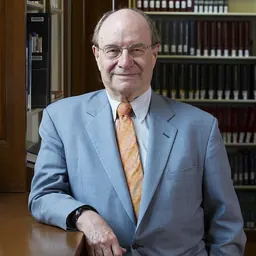


Related people
Same field, nearest in time


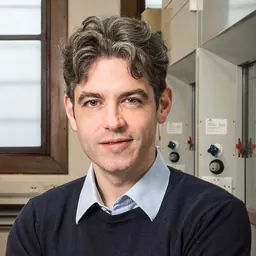
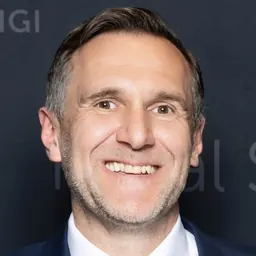

Contemporaries
People whose lives overlapped Didier Stainier's



Frequently asked questions
Who is Didier Stainier?
geneticist
When was Didier Stainier born?
Didier Stainier was born on 31 October 1963 in Liège.
What is Didier Stainier's occupation?
Didier Stainier is a chemist, researcher, geneticist and university teacher.
What nationality is Didier Stainier?
Didier Stainier is Belgian.
Sources & further reading
Cite this page
APA: Biography.guide. (2026). Didier Stainier. https://biography.guide/didier-stainier/
MLA: "Didier Stainier." Biography.guide, https://biography.guide/didier-stainier/.
Chicago: "Didier Stainier." Biography.guide. https://biography.guide/didier-stainier/.
Data last updated: 2026-09-21 · Spot an error? Report a correction.
Portrait: Wikimedia Commons · author & licence
Page generated 2026-09-27 04:59 UTC