
Christiane Nüsslein-Volhard
German biologist (1995 Nobel Prize)
About Christiane Nüsslein-Volhard
Born 1942. Christiane Nüsslein-Volhard is a German biologist, biochemist, geneticist, psychologist, university teacher and physiologist.
A preparation of the cuticle from a Drosophila embryo, similar to those examined by Nüsslein-Volhard. Note the bands of denticles on the left hand side (towards the head) of each segment.
Christiane (Janni) Nüsslein-Volhard (; born 20 October 1942) is a German developmental biologist and a 1995 Nobel Prize in Physiology or Medicine laureate. She is the only woman from Germany to have received a Nobel Prize in the sciences.
Nüsslein-Volhard earned her PhD in 1974 from the University of Tübingen, where she studied protein-DNA interaction. She won the Albert Lasker Award for Basic Medical Research in 1991 and the Nobel Prize in Physiology or Medicine in 1995, together with Eric Wieschaus and Edward B. Lewis, for their research on the genetic control of embryonic development.
Early life and education Nüsslein-Volhard was born in Magdeburg on 20 October 1942, the second of five children to Rolf Volhard, an architect, and Brigitte Haas Volhard, a nursery school teacher. She has four siblings: three sisters and one brother. She grew up and went to school in south Frankfurt, Her great-grandfather was the chemist Jacob Volhard, and her grandfather was the known internist Franz Volhard. She is also the aunt of the Nobel laureate in chemistry Benjamin List.
After the Abitur in 1962, she briefly considered pursuing medicine, but dropped the idea after doing a month-long nursing course in a hospital. Instead, she opted to study biology at Goethe University Frankfurt.
Career In 1975, Nüsslein-Volhard became a postdoctoral researcher in Walter Gehring´s laboratory at the Biozentrum, University of Basel. She was a specialist in the developmental biology of Drosophila melanogaster (fruit fly) supported by a long-term fellowship from the European Molecular Biology Organization (EMBO). In 1977, she continued in the laboratory of Klaus Sander at University of Freiburg, who was an expert in embryonic patterning. In 1978, she set up her own lab in the newly founded European Molecular Biology Laboratory in Heidelberg with Eric Wieschaus, whom she had met in Basel. Over the next three years they examined about 20,000 mutated fly families, collected about 600 mutants with an altered body pattern and found that out of the approximately 5,000 essential genes only 120 were essential for early development. In October 1980, they published the mere 15 genes controlling the segmented pattern of the Drosophila larva. Later, researchers Pavel Tomancak, Amy Beaton, et al., identified exactly which gene had been affected by each mutation, thereby identifying a set of genes crucial for Drosophila embryogenesis.
The subsequent study of these mutants and their interactions led to important new insights into early Drosophila development, especially the mechanisms that underlie the step-wise development of body segments. These experiments are not only distinguished by their sheer scale (with the methods available at the time, they involved an enormous workload), but more importantly by their significance for organisms other than fruit flies.
Her findings led to important realizations about evolution – for example, that protostomes and deuterostomes are likely to have had a relatively well-developed common ancestor with a much more complex body plan than had been conventionally thought.
Additionally, they greatly increased our understanding of the regulation of transcription, as well as cell fate during development.
Nüsslein-Volhard is associated with the discovery of Toll, which led to the identification of toll-like receptors.
, Nüsslein-Volhard has an h-index of 104 according to Scopus.
Personal life Nüsslein-Volhard married in the mid-1960s while studying at the Goethe University Frankfurt, but divorced soon afterward and did not have any children. She has said that she loves to sing, play the flute and do chamber music.
Awards and honors
1986: Gottfried Wilhelm Leibniz Prize of the German Research Foundation 1986: Franz Vogt Award of the University of Giessen 1991: Albert Lasker Award for Basic Medical Research 1991: Keith R. Porter Lecture 1992: Alfred P. Sloan, Jr. Prize 1992: Louis-Jeantet Prize for Medicine 1992: Otto Warburg Medal of the German Society for Biochemistry and Molecular Biology 1992: Otto Bayer Award 1993: Sir Hans Krebs Medal from the Federation of European Biochemical Societies 1993: Ernst Schering Prize 1994: Merit Cross of the Federal Republic of Germany 1995: Nobel Prize in Physiology or Medicine 1996: Order of Merit of Baden-Württemberg 1997: Pour le Mérite for Sciences and Arts 2005: Grand Merit Cross with Star and Sash of the Federal Republic of Germany (Großes Verdienstkreuz mit Stern und Schulterband) 2007: German Founder Award of the Federation of German Foundations 2009: Austrian Decoration for Science and Art 2013–2021: Chancellor of the order Pour le Mérite for Sciences and Arts 2019: Schiller Prize of the City of Marbach The asteroid 15811 Nüsslein-Volhard is named in her honour
Honorary degrees Nüsslein-Volhard has been awarded honorary degrees by the following Universities: Yale, Harvard, Princeton, Rockefeller, Utrecht, University College London, Oxford (June 2005), Sheffield, St Andrews (June 2011), Freiburg, Munich and Bath (July 2012). 1991: Honorary doctorate from Princeton University 1993: Honorary doctorate from the University of Freiburg 1993: Honorary doctorate from Harvard University 2001: Honorary doctorate from Rockefeller University 2002: Honorary doctorate from University College London 2005: Honorary doctorate from University of Oxford 2007: Honorary doctorate from Weizmann Institute of Science 2008: Mercator Professorship, University of Duisburg-Essen 2011: Honorary doctorate from the University of St Andrews 2012: Honorary doctorate from the University of Bath
Memberships 1989: Founding member of the Academia Europaea 1989: Corresponding member of the Heidelberg Academy of Sciences 1990: Corresponding member of North Rhine-Westphalia Academy for Sciences and Arts 1990: Elected a Foreign Member of the Royal Society (ForMemRS), London 1990: Member of the National Academy of Sciences, Washington 1991: Member of the German Academy of Sciences Leopoldina 1992: Member of the American Academy of Arts and Sciences 1995: Member of the American Philosophical Society 2001–2006: Member of the National Ethics Council of the Federal Government (German Ethics Council) Member of the French Academy of Sciences Member of the Scientific Committee of the Ingrid zu Solms Foundation Member of the European Molecular Biology Organization
Don’t just read it —
keep it.
Full-length biographies made to live with: read them, listen on the way to work, watch them tonight.
- E-book
- Audio
- Video
Instant download · yours to keep · every purchase keeps this site free
Important facts
more
Christiane Nusslein-Volhard, Christiane Nüesslein Volhard, Christiane Nüesslein-Volhard, Christiane Nuesslein-Volhard, C Nuesslein-Volhard, Christiane Nuesslein Volhard, C. Nuesslein Volhard, Nüsslein-Volhard, Nuesslein-Volhard, Nüsslein-Volhard C, Nuesslein-Volhard C, Nüsslein-Volhard C., CNVPeople in Christiane Nüsslein-Volhard's life
Named in this biography and alive at the same time




Related people
Same field, nearest in time
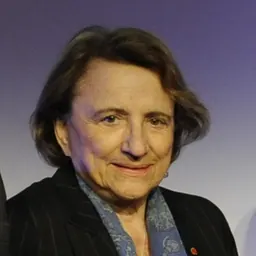
Contemporaries
People whose lives overlapped Christiane Nüsslein-Volhard's


Frequently asked questions
Who is Christiane Nüsslein-Volhard?
German biologist (1995 Nobel Prize)
When was Christiane Nüsslein-Volhard born?
Christiane Nüsslein-Volhard was born on 20 October 1942 in Magdeburg.
What is Christiane Nüsslein-Volhard's occupation?
Christiane Nüsslein-Volhard is a biologist, biochemist, geneticist, psychologist, university teacher and physiologist.
What nationality is Christiane Nüsslein-Volhard?
Christiane Nüsslein-Volhard is German.
Sources & further reading
· Wikipedia: Christiane Nüsslein-Volhard
· DBpedia: Christiane Nüsslein-Volhard
Cite this page
APA: Biography.guide. (2026). Christiane Nüsslein-Volhard. https://biography.guide/christiane-nusslein-volhard/
MLA: "Christiane Nüsslein-Volhard." Biography.guide, https://biography.guide/christiane-nusslein-volhard/.
Chicago: "Christiane Nüsslein-Volhard." Biography.guide. https://biography.guide/christiane-nusslein-volhard/.
Data last updated: 2026-09-20 · Spot an error? Report a correction.
Page generated 2026-09-27 05:33 UTC